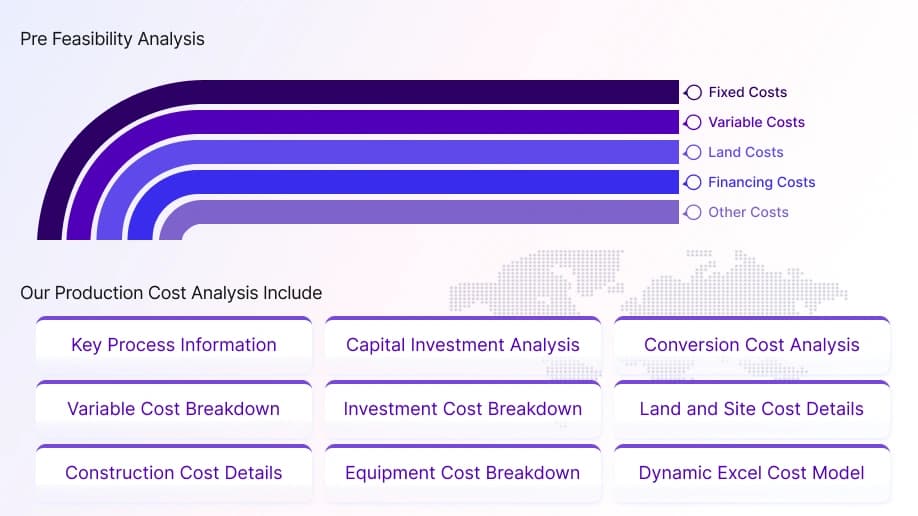
The report provides a detailed analysis essential for establishing a steam production plant. It encompasses all critical aspects necessary for steam production, including the cost of steam production, steam plant cost, steam production costs, and the overall steam production plant cost. Additionally, the study covers specific expenditures associated with setting up and operating a steam production plant. These encompass production processes, raw material requirements, utility requirements, infrastructure needs, machinery and technology requirements, manpower requirements, packaging requirements, transportation requirements, and more.
Steam refers to the water in the gaseous state. It is created when water is heated to a boiling temperature, which emits saturated or hardly perceptible steam. It is widely used for sterilizing equipment, containers, etc., in the medical sector. It is also employed in industrial settings for the cleaning of machinery and equipment.
Steam jets help turbines like steam turbine, impulse turbine to rotate and turn the heat energy found in hot vapors & gases into mechanical work and produce energy, which significantly increases the efficiency in a combined-cycle power plant. It also finds its applications in gas turbines and extraction turbines, that are used in the power sector to produce electricity in hydroelectric facilities and steam-based thermal power plants and sugar, chemical processing industries, respectively.
The market for steam worldwide is dominated by its usage in the impulse turbine category, which is widely used to generate energy. The chemical and power industries make extensive use of steam turbines to transform the heat energy found in hot vapors & gases into mechanical work and electricity, respectively. It is also a vital commodity for the food, textile, pharmaceutical, and medical industries as it is widely used for pasteurization, dyeing & printing, and sterilization purposes.
Also, it is extensively utilized to clean machinery and equipment. Additionally, steam is majorly used in the generation of electricity, which positively impacts its demand in the market for the power sector, thermal power plants, and hydroelectric facilities. The government's increased investments in expanding infrastructure and the surge in demand from end-user sectors like power generation are the main reasons boosting the demand for steam turbines. Furthermore, the rapid industrialization and population migration in developing nations from rural to urban regions created a huge demand for power(electricity).
Variations in demand (of steam) have a prominent impact on industrial steam procurement in the global chemical market on a large scale. Depending on the demands and specifications of every industry, there might be a wide range of factors influencing industrial steam procurement, like fuel prices, the efficiency of boilers and steam generation systems, waste quality, regulatory compliance (including environmental regulations & fuel usage), energy market trends (like changes in supply chains), etc.
Raw Material for Steam Production
According to the Steam production plant project report, the major raw materials for Steam production include water.
Production Process of Steam
The extensive Steam production cost report consists of this major industrial production process:
- Production of Steam from Water: In this procedure, heat energy is added to water under standard pressure. At 100°C, the water boils and then evaporates. The evaporating water is what we call steam.
The water starts to steam when it hits 100 degrees Celsius. A litre of water that is boiled produces 1600 litres of steam. It is produced from water and is clean, odourless and tasteless. It can be easily controlled and distributed. It gives up its heat at a constant temperature. It has highly unstable heat content. The chemical formula of steam is H2O, and its molar mass is 18.015 kg/kmol. Recent developments have made it possible to produce steam using solar energy in addition to the more traditional methods of heating a boiler or igniting coal and other fuels.