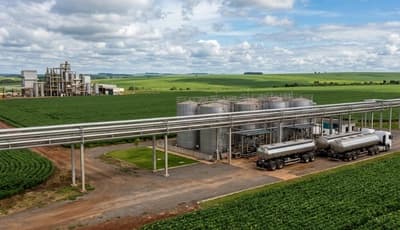
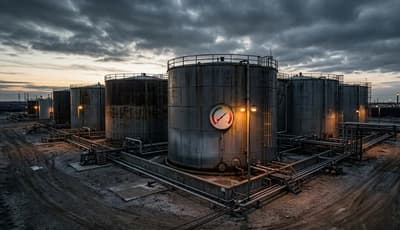
Recently, numerous companies are making significant promises regarding decarbonization solutions as the world continues to control the impact of climate change. Renewable natural gas (RNG), also known as biomethane, is a quite effective alternative to traditional fossil fuels in the transportation sector. This versatile fuel source has the ability to replace both diesel and gasoline or alternatively be used as a feedstock for bioproducts in industries with high emissions.
Request Access For the Latest Price Trends of Natural Gas
Renewable natural gas is generated from biogas, which is captured during the decomposition of organic waste in landfills, livestock manure, and wastewater treatment facilities. This biogas is then cleaned and upgraded to pipeline specifications, allowing it to be used interchangeably with fossil gas in natural gas transmission systems.
The vast majority of renewable natural gas in the United States is currently used in the transport fuels sector, where it is compressed or liquified and used as a fuel for natural gas vehicles. Incentive programs, such as the California Low Carbon Fuel Standard and the US EPA's Renewable Fuel Standard, have been instrumental in driving the concentration of renewable natural gas usage in the transportation sector.
Read More About Natural Gas Production Cost Reports - Get Free Sample Copy in PDF
According to a joint report released in April by Natural Gas Vehicles for America and the Coalition for Renewable Natural Gas, Renewable Natural Gas played an important role in the on-road fuel consumption of natural gas vehicles in the US in 2022, accounting for approximately 69% of it.
It has been gaining popularity as a "fuel of the future" due to its wide range of applications as an alternative to fossil fuels as well as reduced carbon intensity. Renewable natural gas production capacity in 2022 experienced a rise of 218 percent in comparison with the 2018 production capacity.
Currently, over 280 RNG facilities are in operation across the United States, with an additional 500 facilities currently in various stages of development and construction. While the increase in production capacity is a positive development, it is observed that the production of renewable natural gas still accounts for only a small fraction of total US natural gas production. Moreover, the cost of producing RNG is significantly higher than that of conventional natural gas.
According to Procurement Resource, RNG (renewable natural gas) is gaining popularity as a transportation fuel due to its low-to-negative carbon content. Industries are focussing on controlling the impact of fossil fuels on the environment, due to which there is a significant rise in the demand for RNG as an alternative to traditional fuels.