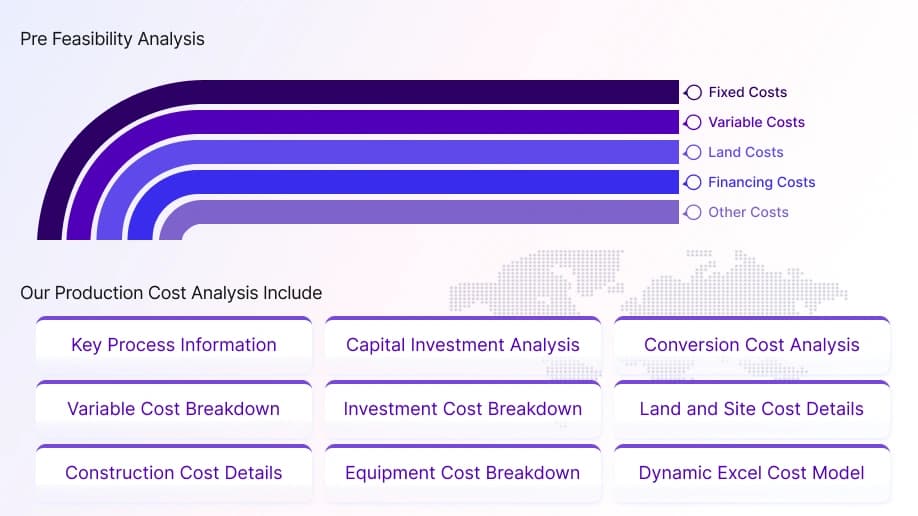
The report provides a detailed analysis essential for establishing a Bexagliflozin production plant. It encompasses all critical aspects necessary for Bexagliflozin production, including the cost of Bexagliflozin production, Bexagliflozin plant cost, Bexagliflozin production costs, and the overall Bexagliflozin production plant cost. Additionally, the study covers specific expenditures associated with setting up and operating a Bexagliflozin production plant. These encompass production processes, raw material requirements, utility requirements, infrastructure needs, machinery and technology requirements, manpower requirements, packaging requirements, transportation requirements, and more.
Bexagliflozin is an inhibitor of the sodium-glucose co-transporter 2 (SGLT2) and is used to treat type-2 diabetes mellitus and lower blood sugar levels in patients. It reduces blood glucose levels by inhibiting SGLT2, which increases urine glucose excretion and reduces renal reabsorption of glucose. It is also used as an antihypertensive, hypoglycemic, and as an inhibitor of sodium-glucose transport protein subtype 2. Thus, it finds its application in the pharmaceutical and medical industries.
Procurement of Bexagliflozin is directly dependent on its usage in the pharmaceutical and medical industries as an antihyperglycemic medication for the treatment of type 2 diabetes mellitus. The demand for Bexagliflozin is also increasing due to the rising cases of diabetes. It witnesses a significant demand from the aging population as they are more likely to be affected by diabetes.
Besides, factors like poor diet and disturbed lifestyle are boosting the demand for antidiabetic drugs like Bexagliflozin. It is also used with other antidiabetic drugs, which increases its application in controlling the blood glucose level in patients, thus increasing its market growth. It has fewer side effects which makes it safe to be used for a more extended period. In general, the industrial Bexagliflozin procurement directly depends on its usage in the pharmaceutical and medical industries, rising cases of type-2 diabetes mellitus, the aging population, poor diet, disturbed lifestyle, usage with other antidiabetic drugs, increasing healthcare awareness among people, cost-efficiency, rising technological advancements, research & development, and regulatory approvals.
Raw Material for Bexagliflozin Production
According to the Bexagliflozin production plant project report, the key raw material used in the production of Bexagliflozin includes D-gluconolactone.
Production Process of Bexagliflozin
The extensive Bexagliflozin production cost report consists of the following major industrial production process:
- Production from D-gluconolactone: The production process of Bexagliflozin involves several steps. In the first step, D-gluconolactone is treated with trimethylsilyl chloride in the presence of N-methylmorpholine to form fully protected lactone. Then, the protected lactone is reacted with 4-bromo-1-chloro-2-(4-(2-cyclopropoxyethoxy)benzyl)benzene in the presence of n-butyllithium to produce crude lactol. The crude lactol is then reacted with methanol in the presence of hydrochloric acid to form desilyated methyl β-lactol. The compound is subjected to reduction to finally produce Bexagliflozin.
Bexagliflozin, commercially known as Brenzavvy, is a white to pale yellow powder, having the molecular formula C24H29ClO7 and a molecular weight of 464.9 g/mol. It is slightly soluble in water with a solubility of 0.0565 mg/mL. It is easily soluble in methanol, acetone, ethylene glycol, and propylene glycol and soluble to some extent in heptane, cyclohexane, and toluene. It has a log P value of 2.33. The value of its dissociation constant, pKa, is 12.57. It belongs to the class of diethers, cyclopropanes, monochlorobenzenes, aromatic ethers, and C-glycosyl compounds. It is an extremely selective inhibitor of sodium-glucose co-transporter 2 (SGLT2) used to reduce the blood sugar level in patients with type-2 diabetes mellitus.