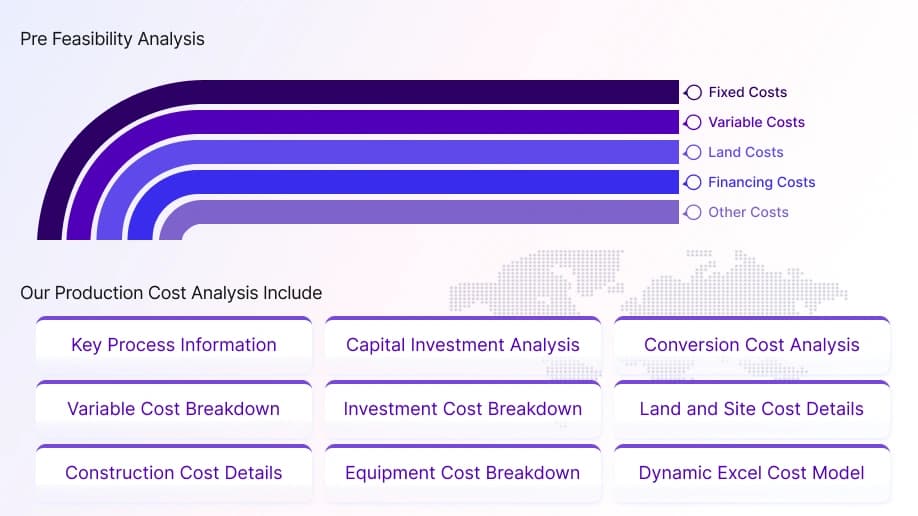
The report provides a detailed production cost analysis for Coffee. It encompasses all critical aspects necessary for Coffee production, including the cost of Coffee production, Coffee production cost model, and other extensive details. These encompass production processes, raw material requirements, utility requirements, infrastructure needs, machinery and technology requirements, manpower requirements, packaging requirements, transportation requirements, and more.
Coffee is an organic product obtained from the fruits of the coffee plant. It is a processed powder that majorly serves as a flavoring component in beverages and food products. Coffee is a beverage with many benefits as it promotes mental alertness and treats cancer, diabetes, heart disease, dementia, high blood pressure, etc., and hence, it is consumed with milk and sugar. It can also be used in the production of other food products, including dairy products and beverages, including flavored milk, smoothies, and more.
Similarly, it is used in baked products such as coffee-flavored cakes, pastries, and cookies, along with desserts and sweets, including chocolates, toffees, and more. Coffee serves as an additive in processed food products, adding a slightly bitter taste and an earthy aroma to the prepared food product. Moreover, it can be used in cosmetics formulations and used to produce creams, lotions, cleansers, and more.
The market for coffee is majorly driven by its strong demand as a flavoring additive in the food, beverages, and cosmetics industries. It is an organic product, included in the production of edible and non-edible products. Its major application in the preparation of processed edible products, including smoothies, spreads, chocolates, cakes, cookies, etc, fuels its demand in the food and beverages sector.
Similarly, the usage of coffee as a flavoring agent in cosmetics formulations boosts its overall demand in the cosmetics industry. The rise in demand plays a prominent role in influencing industrial coffee procurement across borders. Hence, the variation in its demand as an organic flavoring agent in food, beverages, and cosmetics industries, along with other factors such as its prices, regional availability (covering regions such as Brazil, etc.), and supply, altogether govern its procurement around the world.
Raw Material for Coffee Production
According to the coffee production cost report, the key raw material for coffee production includes fruits of coffee plant.
Production Process of Coffee
The extensive coffee production cost report consists of the major industrial production process:
- From Coffee Plant: Coffee bean is produced by harvesting the fruit of coffee plant. The fruit obtained is then processed to separate the pulp and beans. The beans collected are then washed, dried, and polished and roasted to obtain coffee as the final product.
Coffee is a cold or hot brewed beverage made from roasted and ground seeds of the tropical evergreen coffee plant. It's among the most popular beverages consumed worldwide. The coffee bean is the seed or pit present inside a coffee cherry, which is the fruit (Coffea arabica, Coffea canephora) produced by a coffee plant.
Coffee is a dark-colored, bitter, and mildly acidic beverage. It is usually consumed with sugar, sugar substitutes, milk, and cream. The commodity is rich in caffeine and chlorogenic acid. It functions by stimulating the central nervous system (CNS), heart, and muscles. It comprises of calories, fat, carbohydrates, protein, niacin, riboflavin, calcium, potassium, magnesium, folate, manganese, caffeine, and water.