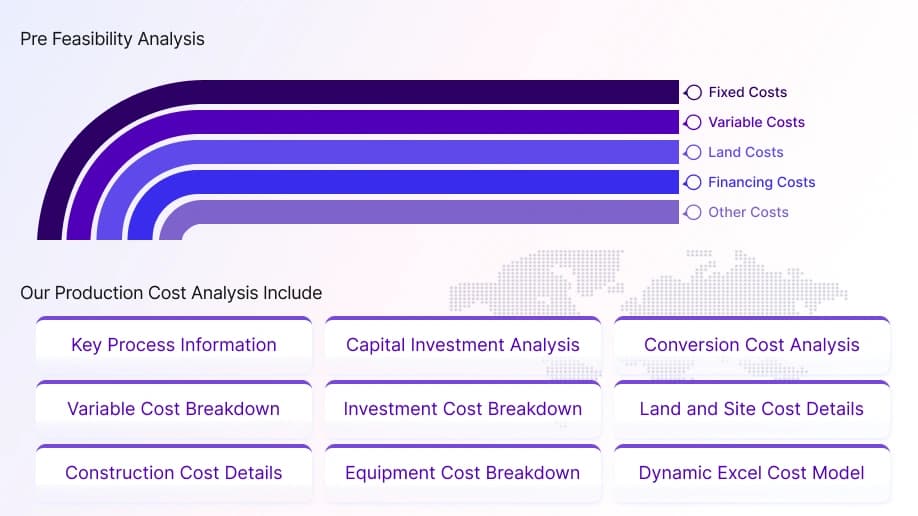
The report provides a detailed analysis essential for establishing a Danazol production plant. It encompasses all critical aspects necessary for Danazol production, including the cost of Danazol production, Danazol plant cost, Danazol production costs, and the overall Danazol production plant cost. Additionally, the study covers specific expenditures associated with setting up and operating a Danazol production plant. These encompass production processes, raw material requirements, utility requirements, infrastructure needs, machinery and technology requirements, manpower requirements, packaging requirements, transportation requirements, and more.
Danazol is a synthetic steroid that is similar to testosterone and is widely known for its anti-estrogenic and anti-gonadotropic actions. It is mainly utilized as a medication for the treatment of endometriosis, uterine fibroids, and fibrocystic breast disease. Moreover, it also finds its application in alleviating the symptoms, such as tenderness and severe pain associated with benign fibrocystic breasts. Additionally, it is also employed for the symptomatic treatment of hereditary angioedema.
The demand for Danazol is largely driven due to its role as an antigonadotropin for the treatment of endometriosis and some benign breast disorders, which significantly fuels its market expansion. Moreover, its employment as a medication for relieving the symptoms of a certain congenital disease (hereditary angioedema) further accentuates its demand in the medical, healthcare, and pharmaceutical industries. Additionally, multiple factors, including the availability of raw materials (androstenedione, ethyne, etc.), cost and pricing, and maintaining quality standards, significantly influence industrial Danazol procurement globally. Furthermore, optimized distribution and logistics, new advances in science or technology, and powerful sustainability practices lead to variations in the requirements for procurement.
Raw Material for Danazol Production
According to the Danazol production plant project report, the major raw materials for Danazol production include Androstenedione-Ethyne-Ethyl Formate-Hydroxylamine Hydrochloride.
Production Process of Danazol
The extensive Danazol production cost report consists of the following industrial production process:
- Production from Androstenedione: This method of production involves the use of androstenedione and its derivatives, along with multiple intermediates, to obtain danazol as the final product. The process is initiated by the reaction of androstenedione (17α-ethynyl-2-hydroxymethylene4-androsten-17β-ol-3-one) or DANA-001 or TEST-001 and ethyne to form an addition compound DANA-002 (intermediate). Further, the obtained intermediate compound undergoes condensation with ethyl formate (DANA-003) in the presence of sodium methoxide to give an enol DANA-004. Then, the obtained enol DANA-004 undergoes cyclization with hydroxylamine hydrochloride and recrystallization in methanol, which results in the formation of danazol as the final product.
Danazol is a terminal acetylenic compound that serves as a synthetic androgen. It is a synthetic analog of 17α-ethynyl testosterone. The molecular formula of the compound is C22H27NO2, and its molecular weight is 337.5 g/mol. Moreover, the compound is majorly sold under the brand name Danocrine. The melting of the compound ranges between 224.4-226.8°C, and the boiling point of the compound is around 473.76°C. Additionally, it appears in the form of a whitish-pale yellow solid that is partly soluble in water but completely dissolves in chloroform. The density of the compound is 1.0909 gm/cm3 and is stored in a freezer at -20°C.