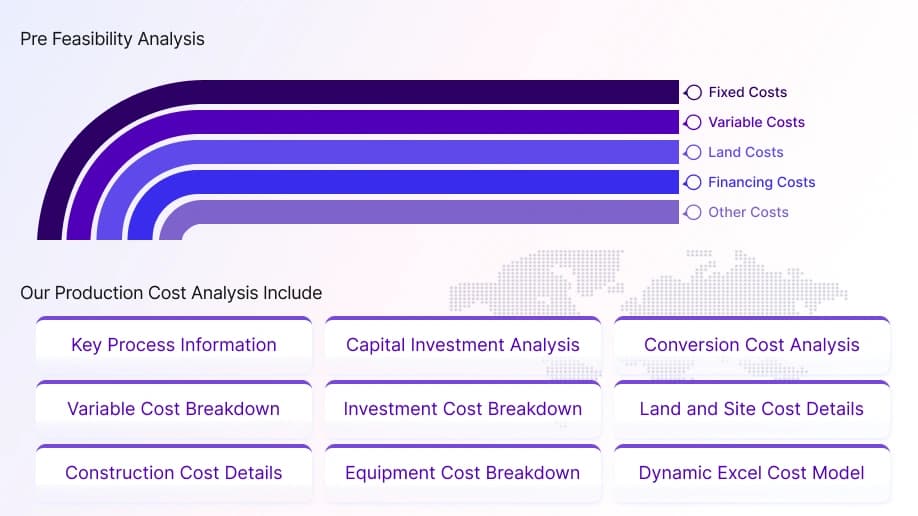
The report provides a detailed analysis essential for establishing a Dostarlimab production plant. It encompasses all critical aspects necessary for Dostarlimab production, including the cost of Dostarlimab production, Dostarlimab plant cost, Dostarlimab production costs, and the overall Dostarlimab production plant cost. Additionally, the study covers specific expenditures associated with setting up and operating a Dostarlimab production plant. These encompass production processes, raw material requirements, utility requirements, infrastructure needs, machinery and technology requirements, manpower requirements, packaging requirements, transportation requirements, and more.
Dostarlimab is a monoclonal antibody used in the treatment of different types of endometrial cancers and solid tumors. It works by attaching to a protein (PD-1) on the surface of immune cells. It stops the protein from interacting with other proteins, helping the immune system to recognize and attack cancer cells more efficiently. It is used to treat recurrent or advanced mismatch repair deficient (dMMR) endometrial cancers.
In different countries it is combined with other drugs like carboplatin and paclitaxel for treating dMMR or microsatellite instability-high (MSI-H) in adult patients. It is found to be effective for those patients who have no satisfactory alternative treatment options. It has shown great results for treating rectal cancer patients. Dostarlimab is also being explored for treating other cancers, such as colorectal, lung, gastric, prostate, and pancreatic cancers.
The Dostarlimab market is mainly driven by its use in treating different types of cancer. It is effective in treating recurrent or advanced dMMR endometrial cancers in adults, making it a sought-after drug in the medical field. Its use in combination with other drugs for treating dMMR and MSI-H in adults has contributed to its rising demand across the world.
Dostarlimab works as a successful alternative for those patients who are not responsive to other medications. Its effectiveness in treating rectal cancer and its potential use in treating several other cancers further contributes to its demand. The changes in its demand for medical applications, along with its production prices, market prices, and logistics, directly influence industrial Dostarlimab procurement in the market globally.
Raw Material for Dostarlimab Production
According to the Dostarlimab production plant project report, the key raw materials used in the production of Dostarlimab include Chinese Hamster Ovary (CHO) cells -Nutrients- Stabilizers- Excipients.
Production Process of Dostarlimab
The extensive Dostarlimab production cost report consists of the following major industrial production processes:
- From CHO cells, Nutrients, Stabilizers, and Excipients: The industrial production of Dostarlimab consists of several steps. First, CHO cells are genetically modified to express antibody's heavy and light chains. Then, the engineered CHO cells are cultivated in bioreactors. The conditions inside the bioreactor are optimized by providing a nutrient-rich medium leading to growth and antibody production. After that, the culture is harvested and purified to obtain Dostarlimab using chromatography. The pure Dostarlimab is then formulated into a concentrate for intravenous infusion by adding stabilizers and excipients.
Dostarlimab is an opalescent, colorless, pale-yellow liquid. Its molecular formula is C6420H9832N1690O2014S44, and it has a molar mass of approximately 144,325.73 g·mol?¹. It has a volume of distribution of about 5.3 L and a half-life of approximately 25.4 days. It is formulated containing 50 mg of the active ingredient per mL. It has a mean clearance at about 0.007 L/h at steady state. It works by minimizing effector functions, making it successful in clinical trials and reducing tumor size in patients with endometrial cancer. All these properties make it an efficient drug in cancer treatment.