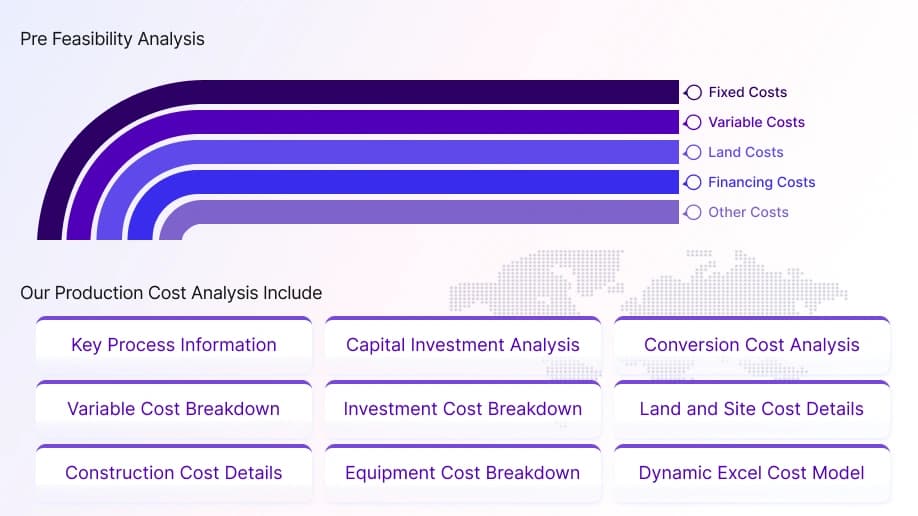
The report provides a detailed analysis essential for establishing a Doxepin production plant. It encompasses all critical aspects necessary for Doxepin production, including the cost of Doxepin production, Doxepin plant cost, Doxepin production costs, and the overall Doxepin production plant cost. Additionally, the study covers specific expenditures associated with setting up and operating a Doxepin production plant. These encompass production processes, raw material requirements, utility requirements, infrastructure needs, machinery and technology requirements, manpower requirements, packaging requirements, transportation requirements, and more.
Doxepin is a tricyclic antidepressant used to treat various mental health problems. It works by blocking the reuptake of norepinephrine and serotonin, thus improving mood and relieving depressive symptoms. It also has moderate antihistaminic effects that underpin its sedative properties. It is used in the treatment of major depressive disorders, panic attacks, and insomnia related to anxiety. It is utilized in chronic skin syndrome that includes chronic dermatitis and late lumbar lichen planus. Doxepin is also used in the management of neuropathic pain, chronic pain syndromes, alcohol dependence, and post-traumatic stress disorder (PTSD). It requires close monitoring during the treatment period, and its withdrawal symptoms can be avoided with a gradual reduction in dosage.
The market for Doxepin is driven by several factors. Its use in the management of several mental health conditions, including its use for treating depression, anxiety, and insomnia, adds up to its growing demand. Its use in the treatment of other problems like neuropathic pain and chronic pain syndromes, alcohol dependence, and PTSD makes it a very popular product. Also, the development of new formulations and delivery technologies further contributes to its demands. Thus, industrial doxepin procurement is influenced by its use as an antidepressant in treating various mental health disorders, along with better formulations and delivery technologies, stable supply chains, and compliance with regulatory standards.
Raw Material for Doxepin Production
According to the Doxepin production plant project report, the key raw materials used in the production of Doxepin include Dimethylaminopropyl chloride-benzothiazolinone.
Production Process of Doxepin
The extensive Doxepin production cost report consists of the following major industrial production process:
- From Dimethylaminopropyl chloride and Benzothiazolinone: The industrial production process for Doxepin involves several steps. First, Dimethylaminopropyl chloride is reacted with Benzothiazolinone, forming an intermediate compound. This intermediate goes through cyclization, forming dibenzoxepin. After that, methylation of a nitrogen atom in dibenzoxepin is done, forming Doxepin. The final product is purified by crystallization or distillation to get pure Doxepin.
Doxepin appears as a white crystalline powder. Its molecular formula is CHNO, and it has a molecular weight of around 279.38 g/mol. It is soluble in water and in lower alcohols, and chloroform. Its melting point is at 172°C, and it has a log P (partition coefficient) value of about 5.07, making it hydrophobic. Its strongest acidic pKa value is about 8.63, and its strongest basic pKa is around -6.5. Its 76% binds to plasma protein. These physical and chemical properties determine its pharmacological activity in its therapeutic uses.