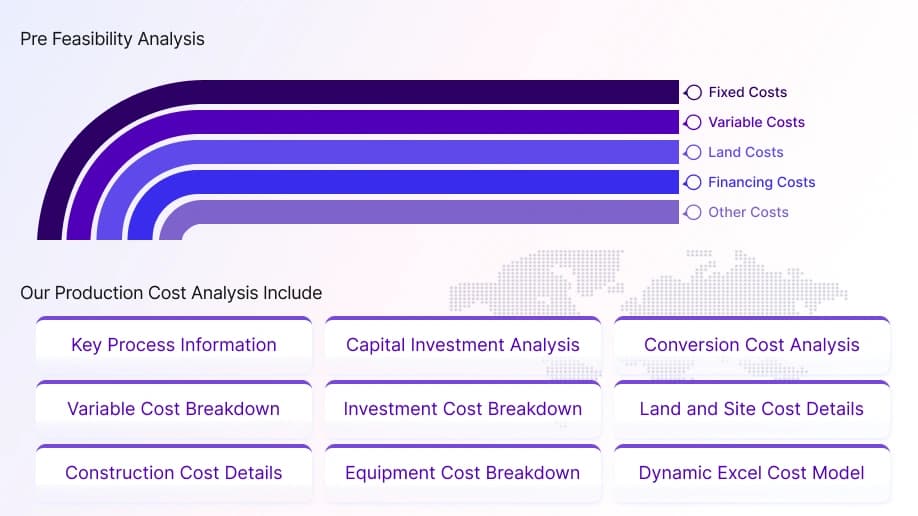
The report provides a detailed production cost analysis for herbal infusion tea. It encompasses all critical aspects necessary for herbal infusion tea production, including the cost of herbal infusion tea production, herbal infusion tea production cost model, and other extensive details. These encompass production processes, raw material requirements, utility requirements, infrastructure needs, machinery and technology requirements, manpower requirements, packaging requirements, transportation requirements, and more.
Herbal infusion tea is a tea variety obtained by processing parts of herbs, including its leaves, roots, peels, etc., providing a mixed taste, aroma, and nutrients. It is considered a traditional medicine, promoting good health and induce activeness. It possesses antimicrobial, antidiabetic, and anti-inflammatory properties that are highly beneficial for the good health of an individual.
These teas have great medicinal and health benefits such as improving digestion, stimulating the body, soothing symptoms of the common cold, helping relax and sleep, stimulating brain function, helping ease pain and soreness and chronic diseases, and improving the overall immune system. It is free from calories and is a healthy beverage variety that is consumed all over the world.
Herbal infusion tea has a wide range of medicinal and health benefits. It also offers a refreshing and delicious taste, and its popularity among consumers is rising and boosting its demand in the market. Furthermore, these infusions are a great replacement for sugary and fizzy drinks, which boosts its market growth. Additionally, it is calorie-free, which makes it ideal for consumption for pregnant ladies, kids etc. Industrial herbal infusion tea procurement is greatly influenced by its demand in the global market.
It is also influenced by factors including the variations in its market prices, supply, and regional availability of its raw materials (including herbs such as orange, hibiscus, rose, red tea, green tea, etc.) across countries like China, etc., along with its logistics, trade, governmental policies, etc. These factors, especially its demand among tea consumers, as well as its distribution across borders, are highly essential to determining its procurement around the world.
Raw Material for Herbal Infusion Tea Production
According to the herbal infusion tea production cost report, the key raw material for herbal infusion tea production includes peppermint, hibiscus, red tea, orange peel, rose hips etc.
Production Process of Herbal Infusion Tea
The extensive herbal infusion tea production cost report consists of the following industrial production process:
- By Harvesting, Cleaning, Drying, Grinding and Blending: The production process of herbal infusion tea is carried out by processing the tea leaves, roots, peels, etc. The tea leaves are harvested and then cleaned, dried, ground, and blended to obtain the herbal infusion tea powder at the end.
Herbal Infusion Tea or herbal teas, herbal infusions, or tisanes are made using the extract of a wide range of herbs, flowers, roots, spices, or fruits. These teas have been prepared since thousands of years ago due to their various health benefits.
Herbal Infusion Tea is usually caffeine-free and can be brewed like normal tea leaves. They don't go through oxidization or any such complex process, but they are just herbs, flowers, or fruits that are picked and laid out to dry to retain all of their natural flavors. Their color and flavor range ranges from light and fruity to vibrant and spicy, including fruit teas (rose hips, hibiscus, dried apple, orange peel, etc.); herbal blends (cinnamon, orange peel, and peppermint); rooibos tea (Red Tea, a caffeine-free plant found in South Africa); other herbs like spearmint, yerba mate, and more.