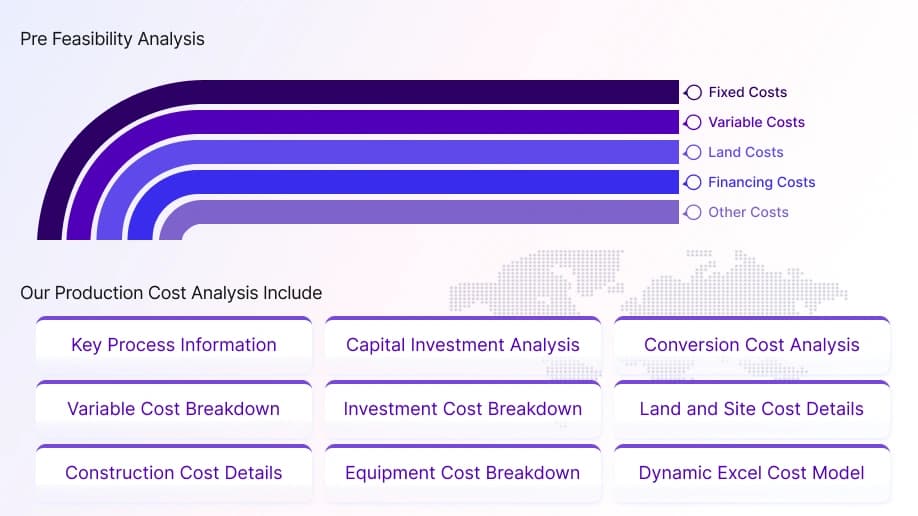
The report provides a detailed analysis essential for establishing a liquiritin production plant. It encompasses all critical aspects necessary for liquiritin production, including the cost of liquiritin production, liquiritin plant cost, liquiritin production costs, and the overall liquiritin production plant cost. Additionally, the study covers specific expenditures associated with setting up and operating a liquiritin production plant. These encompass production processes, raw material requirements, utility requirements, infrastructure needs, machinery and technology requirements, manpower requirements, packaging requirements, transportation requirements, and more.
Liquiritin is a flavonoid found in licorice, an herb used in Chinese medicine that possesses potent antioxidant and anti-inflammatory properties. It is widely used as a medicine for the treatment of rheumatoid arthritis, arrhythmia, myocardial ischemia, etc., by reducing inflammation. Moreover, it also finds its application in the treatment of various respiratory and gastrointestinal disorders, due to its antimicrobial and anti-inflammatory activities. Additionally, it is also employed as a skin-lightening agent in the manufacture of various skincare and cosmetic products, as the substance is extremely rich in antioxidants.
The market for liquiritin is majorly driven by its broad usage in the medical and pharmaceutical industries due to its neuroprotective, anti-cancer, and anti-inflammatory properties, which significantly accentuates its market expansion. Moreover, its application in the treatment of rheumatoid arthritis, gastric ulcers, and other inflammatory conditions further enhances its demand in the medical and pharmaceutical industries.
Additionally, its employment in the cosmetic industries for the production of skin-whitening and anti-pigmentation products remarkably boosts its market growth. Furthermore, several factors influence industrial liquiritin procurement, such as the source and its purity, cost and pricing, compliance with medical and pharmaceutical regulations, quality standards, technological advancements, environmental considerations, sustainability practices, distribution (including trading and shipping), logistics, safety standards, etc.
Raw Material for Liquiritin Production
According to the Liquiritin production plant project report, the major raw material for Liquiritin production includes Glycyrrhiza glabra (Licorice).
Production Process of Liquiritin
The extensive liquiritin production cost report consists of the following industrial production process:
- Production via Solid-phase Extraction: This method of production involves using an effective separation and determination procedure to separate the liquiritin and glycyrrhizin from the licorice extract. The process utilizes certain processes of polymerization and modification to develop a porous ionic liquid-based polymer, which is coupled with HPLC to separate and analyze liquiritin and glycyrrhizin in licorice.
Liquiritin is a bioactive substance that is found in licorice (root of Glycyrrhiza glabra). The molecular formula of the compound is C21H22O9, and its molecular weight is 418.4 g/mol. The compound is also known by some of its other names, which are Liquiritoside or Likviritin. Moreover, the compounds have anti-inflammatory properties, anti-cancer, and anti-osteoporosis properties. Additionally, the compound appears as an odorless white crystalline powder, and its flash point is 4.0. It is recommended to store the compound at the temperature range of 2-10 °C. The melting point of the compound is about 210 °C.