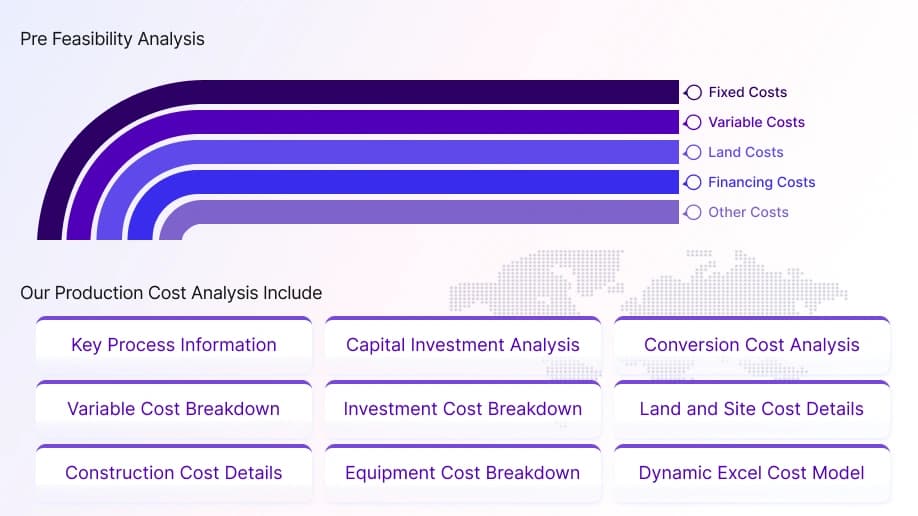
The report provides a detailed analysis essential for establishing a Miglitol (Glyset) production plant. It encompasses all critical aspects necessary for Miglitol (Glyset) production, including the cost of Miglitol (Glyset) production, Miglitol (Glyset) plant cost, Miglitol (Glyset) production costs, and the overall Miglitol (Glyset) production plant cost. Additionally, the study covers specific expenditures associated with setting up and operating a Miglitol (Glyset) production plant. These encompass production processes, raw material requirements, utility requirements, infrastructure needs, machinery and technology requirements, manpower requirements, packaging requirements, transportation requirements, and more.
Miglitol (Glyset) is an oral medication that is widely used for the treatment and management of type 2 diabetes. It is mainly used in the form of oral tablets for managing blood glucose levels in diabetic patients. Moreover, it is often utilized in combination with other antidiabetic medications to enhance its ability. Additionally, it is also employed in research studies and certain clinical trials to explore more about its effectiveness in manging diabetes and other therapeutic applications.
The market for Miglitol (Glyset) is primarily led by its extensive application as an alpha-glucosidase Inhibitor for its usage in the management of non-insulin-dependent diabetes mellitus (NIDDM), which remarkably boosts its demand in the medical industry. Moreover, its utilization as medicine for the treatment of type 2 diabetes and improving glycemic control further enhances its demand in the medical and pharmaceutical industries.
Additionally, its employment for research and comparative studies for making new advancements in the treatment protocols effectively promotes its demand in biotechnology and research & development industries. Furthermore, several factors, such as the availability of raw materials, cost, and pricing, compliance with pharmaceutical regulations, quality standards, technological advancements, environmental considerations, sustainability practices, distribution (including trading and shipping), logistics, safety standards, etc., largely influence industrial miglitol procurement.
Raw Material for Miglitol (Glyset) Production
According to the Miglitol (Glyset) production plant project report, the major raw material for Miglitol (Glyset) production includes Nojirimycin.
Production Process of Miglitol (Glyset)
The extensive Miglitol (Glyset) production cost report consists of the following industrial production process:
- Production from Nojirimycin: This method involves the extraction of nojirimycin, which is a natural product found in the leaves of mulberry trees. The structure of Nojirimycin is similar to D-glucose, which has a secondary amino group in place of ether linkage. In this method, a hydrogen atom is removed from nojirimycin's first carbon position through regioselective oxidation by using Gluconobacter oxydans to produce 1-deoxynojirimycin, followed by the removal of the hydroxyethyl group and replacing it with amine hydrogen atom to form miglitol as the final product.
Miglitol (Glyset) is readily soluble in water and has a pKa of 5.9. The drug is mainly available in the form of tablets for oral use. The molecular formula of the compound is C8H17N05, and its molar mass is 207.22 g/mol. This drug is majorly prescribed for the treatment of diabetes mellitus type 2. The IUPAC name of the compound is (2R,3R,4R,5S)-1-(2-hydroxyethyl)-2-(hydroxymethyl)piperidine-3,4,5-triol. Moreover, it appears as a whitish pale-yellow powder. The melting point of the compound is 114 °C. It belongs to the group of piperadines.