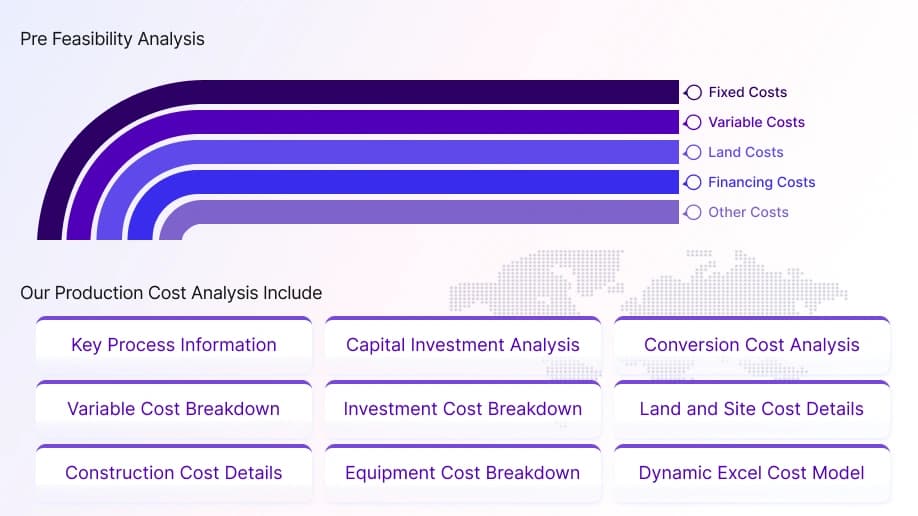
The report provides a detailed analysis essential for establishing a Naloxone (Narcan) production plant. It encompasses all critical aspects necessary for Naloxone (Narcan) production, including the cost of Naloxone (Narcan) production, Naloxone (Narcan) plant cost, Naloxone (Narcan) production costs, and the overall Naloxone (Narcan) production plant cost. Additionally, the study covers specific expenditures associated with setting up and operating a Naloxone (Narcan) production plant. These encompass production processes, raw material requirements, utility requirements, infrastructure needs, machinery and technology requirements, manpower requirements, packaging requirements, transportation requirements, and more.
Naloxone (Narcan) is an FDA-approved medication that effectively reverses opioid overdose. It is mainly used to rapidly reverse and block the effects of other opioids, such as heroin, morphine, etc. Moreover, it finds its application as a central nervous system depressant to slow down brain activity and promote relaxation. Additionally, it is also employed in drug development studies and research to understand opioid receptor interactions better. It is often used in the healthcare industry to respond to emergency overdose conditions quickly.
The market for Naloxone (Narcan) is predominantly driven by its extensive usage as an opioid antagonist to counteract opioid overdoses or an overdose of any narcotic medicine, which significantly fuels its demand in the medical and pharmaceutical industries. Moreover, its employment in research and drug development to learn more about addiction, antidotes, and the development of new overdose treatments. Furthermore, several factors influence industrial Naloxone (Narcan) procurement, such as the availability of raw materials, cost, and pricing, compliance with medical regulations, quality standards, technological advancements, environmental considerations, sustainability practices, distribution (including trading and shipping), logistics, safety standards, etc.
Raw Material for Naloxone (Narcan) Production
According to the Naloxone (Narcan) production plant project report, the major raw materials for Naloxone (Narcan) production include 14-Hydroxydihydronormorphinane-Allyl Bromide; Oxymorphone- Allyl Bromide-Ethanol-Sodium Bicarbonate.
Production Process of Naloxone (Narcan)
The extensive Naloxone (Narcan) production cost report consists of the following industrial production processes:
- Production via Alkylation: This production process involves the alkylation of 14-hydroxydihydronormorphinane by using allyl bromide, which results in the formation of (−)-17-(allyl)-4,5-epoxy-3,14-dihydroxymorphinan-6-one or Naloxone as the product. In this method, 14-hydroxydihydronormorphinane is N-alkylated with allyl bromide forming (−)-17-(allyl)-4,5-epoxy-3,14-dihydroxymorphinan-6-one (Naloxone) along with hydrogen bromide as a byproduct.
- Production from Oxymorphone: This method of production involves the synthesis of (−)-17-(allyl)-4,5-epoxy-3,14-dihydroxymorphinan-6-one or Naloxone from oxymorphone by forming noroxymorphone as an intermediate. In this method, oxymorphone is demethylated to produce 4,5alpha-epoxy-3,14-dihydroxymorphinan-6-one, followed by N-allylation by its reaction with allyl bromide in ethanol in the presence of sodium bicarbonate, which results in the formation of Naloxone.
Naloxone (Narcan) is a morphinane alkaloid and a heteropentacyclic compound. The molecular formula of the compound is C19H21NO4, and its molar mass is 327.4 g/mol. The IUPAC name of the compound is (5α)-4,5-epoxy-3,14-dihydroxy-17-(prop-2-en-1-yl)morphinan-6-one. It is readily soluble in water, dilute acids, and chloroform. The melting point of the compound is 178 °C. It releases toxic fumes of nitrogen oxides when exposed to heat. It is also considered to have potential endocrine disruptors.