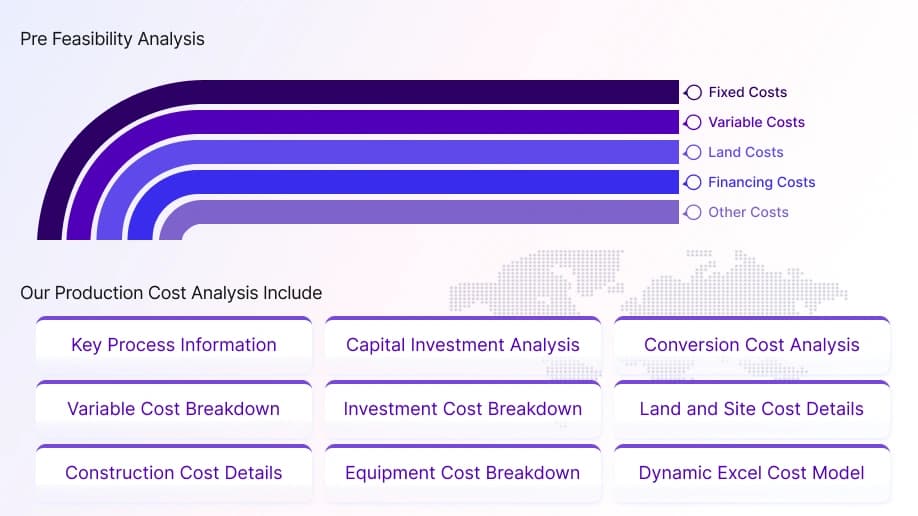
The report provides a detailed analysis essential for establishing an Osimertinib Mesylate production plant. It encompasses all critical aspects necessary for Osimertinib Mesylate production, including the cost of Osimertinib Mesylate production, Osimertinib Mesylate plant cost, Osimertinib Mesylate production costs, and the overall Osimertinib Mesylate production plant cost. Additionally, the study covers specific expenditures associated with setting up and operating an Osimertinib Mesylate production plant. These encompass production processes, raw material requirements, utility requirements, infrastructure needs, machinery and technology requirements, manpower requirements, packaging requirements, transportation requirements, and more.
Osimertinib Mesylate is an FDA-approved third-generation oral drug known for its potential antineoplastic activity. It is widely used for the treatment of cancer, particularly non-small cell lung cancer (NSCLC). Moreover, it also finds its application for the treatment of EGFRT790M mutation-positive non-small cell lung cancer. Additionally, it is often employed in the treatment of advanced NSCLC, especially in patients whose tumors have developed resistance to earlier generations of EGFR inhibitors.
The demand for Osimertinib Mesylate is primarily driven by its role as an antineoplastic agent for the treatment of non-small cell lung cancer (NSCLC), with specific mutations in the EGFR (epidermal growth factor receptor), which significantly boosts its market expansion. Moreover, it mainly finds its employment as a drug in targeted cancer therapy, further enhancing its demand in the medical and pharmaceutical industries. Additionally, its employment in the medical industry, the availability and cost of raw materials like N-Methylindole, etc. regulatory compliance, quality standards, supplier relationships, efficient distribution, and logistics are certain crucial factors that globally influence industrial Osimertinib Mesylate procurement.
Raw Material for Osimertinib Mesylate
According to the Osimertinib Mesylate production plant project report, the major raw materials for Osimertinib Mesylate production include N-Methylindole and Dichloropyrimidine.
Production Process of Osimertinib Mesylate
The extensive Osimertinib Mesylate production cost report consists of the following industrial production process:
- Production via Chemical Synthesis: This method of production is initiated by the process of Friedel-Crafts arylation of N-methylindole with dichloropyrimidine to give 3-pyrazinyl indole, followed by nucleophilic aromatic substitution (SNAr) with nitroaniline, which synthesizes aminopyrazine. Further, the obtained compound undergoes SNAr reaction by using N,N,N'-trimethylethylenediamine, followed by nitro reduction with iron in the presence of an acid to produce triaminated arene. Then, the obtained compound undergoes a two-step acylation/ elimination sequence by using 3-chloropropanoyl chloride, followed by mesylate salt formation, which results in the formation of osimertinib mesylate as the final product.
Osimertinib Mesylate is an orally available compound that is the mesylate salt form of Osimertinib. The molecular formula of the compound is C29H37N7O5S, and its molecular weight is 595.72 g/mol. It is a third-generation epidermal growth factor receptor (EGFR) tyrosine kinase inhibitor (TKI) drug. Moreover, the melting point of the compound is >232°C, and it is stored frozen at -20°C under an inert atmosphere. It exists in the form of a yellowish-white solid that is slightly soluble in DMSO and Methanol. Additionally, the oral bioavailability of the drug is around 70%.