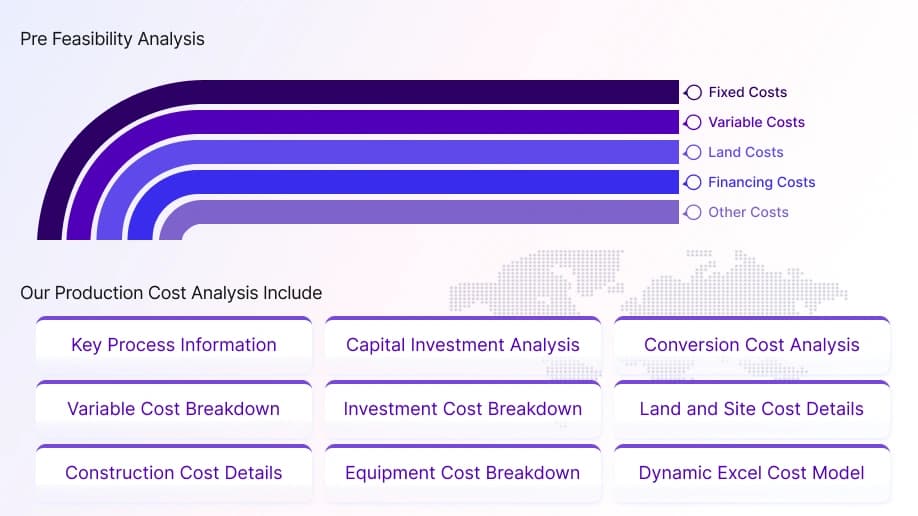
The report provides a detailed production cost analysis for raw milk. It encompasses all critical aspects necessary for raw milk production, including the cost of raw milk production, raw milk production cost model, and other extensive details. These encompass production processes, raw material requirements, utility requirements, infrastructure needs, machinery and technology requirements, manpower requirements, packaging requirements, transportation requirements, and more.
Raw milk is obtained from milking animals, including cows, buffaloes, and camels. The milk obtained is majorly associated with the food and beverages industries, for the production of dairy products. It is utilized for the preparation and production of milk-based products, including cheese, yogurt, curd, cream, etc.
It serves as the primary raw material for the production of desserts and confectionaries. It is used to produce milk chocolates, diary-based spreads, ice creams, beverage varieties such as smoothies, flavored milk, and more. Its use in the preparation of milk powder, coffee creamers, and other such milk-based mixes, is also one of the major applications of raw milk in the food and beverages industries.
The demand for raw milk covering the food and beverages industries, drives its market growth. Its applications in the production of desserts, baked goods, and processed products, including ice creams, yogurt, curd, cheese, cream, and more, increase its demand in the food industries.
Its usage in the preparation of desserts such as chocolate, beverages varieties such as smoothies etc., drives its demand in the beverages and food industries. Moreover, its applications in the production of milk-based mixes, including milk powder, infant food products, coffee creamers, etc., increase its demand in the market. Industrial raw milk procurement is influenced by factors such as its production across prominent regions such as the United States, India, China, etc., along with its demand, supply, and distribution.
Other factors, such as the market prices of raw milk as well as its trade and governmental policies, also impact its overall procurement. Therefore, demand for raw milk in the food and beverages sectors, along with its market prices and distribution across various regions, plays a crucial role and governs its procurement around the world.
Production Process of Raw Milk
The extensive raw milk production cost report consists of the following industrial production process:
- By Clarification, Fat Separation, Pasteurization, and Homogenisation: Raw milk is obtained from milking animals such as camel, cow, buffalo, goat, etc. The milk is then processed through these complex sequential steps, including clarification, fat separation, pasteurization, and homogenization. The process results in the production of consumable milk, which is processed further for packaging.
Raw milk generally refers to milk that has not been pasteurized or homogenized, also known as milk that has not been processed (Pasteurization is a technique for heating liquid meals in order to sterilize them and eradicate bacteria for safe consumption.). In order to be used commercially, raw milk is further purified and processed. Within a farming system, the milking business complements other commercial agricultural operations.
The water content of raw milk ranges between 85.5-89.5 and its total solids range between 10.5-14.5. The fat content of raw milk ranges between 2.5-6.0, and its protein content is 2.9-5.0. The lactose content of raw milk ranges between 3.6-5.5, and its mineral content ranges between 0.6-0.9.