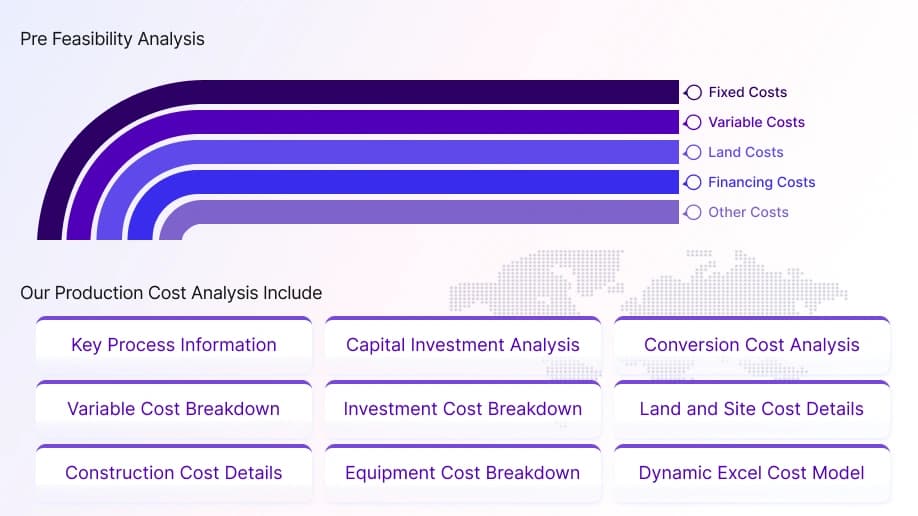
The report provides a detailed analysis essential for establishing a sorbitol production plant. It encompasses all critical aspects necessary for sorbitol production, including the cost of sorbitol production, sorbitol plant cost, sorbitol production costs, and the overall sorbitol production plant cost. Additionally, the study covers specific expenditures associated with setting up and operating a sorbitol production plant. These encompass production processes, raw material requirements, utility requirements, infrastructure needs, machinery and technology requirements, manpower requirements, packaging requirements, transportation requirements, and more.
Sorbitol, also known as glucitol, is a type of carbohydrate that falls in the category of sugar alcohols (Polyols). It is widely used as a non-stimulant laxative to relieve constipation, given through an oral suspension or enema. It is typically used as a humectant and thickener in modern cosmetics, mouthwash, toothpaste, and other personal care products. Moreover, it is also employed in food products to add texture and sweetness.
It is mainly used in diet foods, cough syrups, mints, confectionery, baked goods, and chewing gum. Additionally, it is also used as a bulking agent in production oral dosage forms like capsules and tablets, contributing to the mass of the formulation. It also serves as a solvent in the production of paints, coatings, and printing inks.
The rising demand for sorbitol as a laxative to combat constipation and as a bulking agent in production oral dosage formulations largely supports the market for sorbitol. It increases its demand in the healthcare & pharmaceutical industry. Its usage in the food, cosmetics, and personal care industries for its favorable functional properties, including sweetness and texturizing effects, to produce cough syrups, chewing gum, mouthwash, and other cosmetic products further promotes its market expansion. Moreover, its application as a solvent in the production of printing inks and coatings fuels its demand in the paints & coatings, and printing industries. Furthermore, the availability and cost of production of sorbitol’s feedstock (Glucose), sorbitol market prices, regulatory compliances, distribution (including trading and shipping), logistics, etc., are some of the elements that influence industrial sorbitol procurement.
Raw Material for Sorbitol Production
According to the Sorbitol production plant project report, the major raw material for Sorbitol production includes Glucose.
Production Process of Sorbitol
The extensive Sorbitol production cost report consists of the following industrial production process:
- Production from Hydrogenation: This production process involves the hydrogenation of glucose in the presence of nickel and ruthenium, followed by a purification process, which results in the formation of sorbitol as the final product.
Sorbitol or D-sorbitol (C6H14O6) is a sugar alcohol, a kind of carbohydrate derived by the reduction of glucose, altering its aldehyde group to a hydroxyl group. It is naturally available in foods like pears, apples, peaches, and prunes but can be produced synthetically from glucose. It functions like a sweetening agent, a metabolite, a laxative, a cathartic, a human metabolite, a food humectant, a Saccharomyces cerevisiae metabolite, an Escherichia coli metabolite and a mouse metabolite.
It is an enantiomer of a L-glucitol. It is a water-soluble compound which sinks and mixes with water. It looks like a white crystalline powder that is odourless in a solid form. It has a molar mass of 182.17 g/mol and a density of 1.489 g/cm3. Its respective boiling and melting points are 296 °C and 95 °C. It is water soluble as well as has a high solubility in glycerin and propylene glycol. It has slight solubility in ethanol, methanol, acetic acid, phenol and acetamide solutions. It is basically insoluble in most other organic solvents.