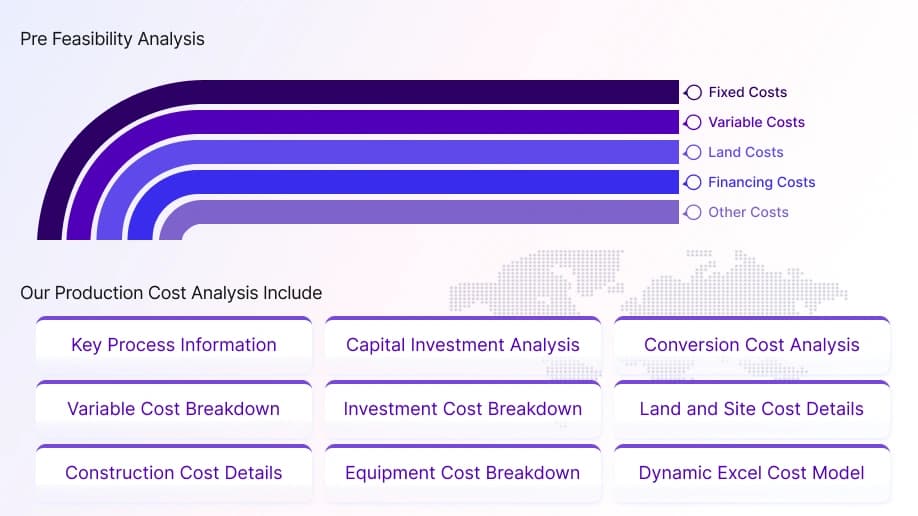
The report provides a detailed production cost analysis for Soybean. It encompasses all critical aspects necessary for Soybean production, including the cost of Soybean production, Soybean production cost model, and other extensive details. These encompass production processes, raw material requirements, utility requirements, infrastructure needs, machinery and technology requirements, manpower requirements, packaging requirements, transportation requirements, and more.
Soybean (Glycine max), or soja bean/soya bean, is a type of edible bean that is categorized as the most rich and inexpensive protein source. It is used to make fermented bean paste, miso, tempeh, and soy sauce. It is also commonly consumed as soy milk, tofu, curd, and cottage cheese. Vegetable or vegan cheeses, margarine, and shortening can all be made with the oil derived from beans. Additionally, being rich in protein, soybean meal can replace meat in many food products, including baby foods and vegetarian foods. Also, it can be utilized to produce certain medicines and dietary products for human consumption.
It is also extensively used as an animal feed ingredient. Also, the oil of soybean has industrial usage as a key ingredient in the manufacture of products like adhesives, paints, fertilizers, linoleum backing, sizing for cloth, and fire-extinguisher fluids etc.
The primary driver of the soybean market's expansion is the increasing demand for the product, as it is widely consumed as a staple food item across the globe. Due to its versatility and nutritional value, it is considered a highly sought-after commodity in the food industry, as it is extensively used in making soy milk, tofu, tempeh, soy sauce, etc. Similarly, its application as a rich protein source, along with many biologically active compounds in the production of dietary products and medicines, significantly boosts its demand in the health foods and pharmaceutical industry.
Moreover, the cosmetics industry also uses soybean oil because of its nourishing and hydrating qualities which enhances its demand in this sector. Furthermore, industrial soybean procurement is governed by various factors, including the demand, availability, and production cost of its raw materials, which include soybean seeds, the market of soybeans, technology advancements, environmental regulations, and sustainability requirements, its distribution (covering transportation and trading activities), and logistics, etc.
The variety of uses for soybean in different sectors accentuates its value as a raw resource that makes major contributions to the animal feed, food, cosmetics, paint, pharmaceutical, and wellness industries.
Raw Material for Soybean Production
According to the Soyabean production cost report, the major raw materials for Soyabean production include Soyabean Seeds.
Production Process of Soybean
The extensive Soyabean production cost report consists of this major industrial production process:
- Production via Sowing, Fertilizing, Irrigation, Harvesting, and Cleaning: The procedure entails row-by-row spreading of the soybean seeds using the seed drill method, followed by soil fertilization and irrigation. A threshing machine or manual harvesting is used to gather the crop once its leaves turn yellow. After the crop is harvested, the soybeans are removed and subsequently dried, cleaned, and sieved to produce soybeans, which are further processed.
Soybean is from the legume family native to East Asia. It is among the most economical bean worldwide and provides vegetable protein to millions. The beans are available in many forms, like fresh, frozen, canned, and dried. It is an erect branching plant which can grow up to 2 metres (6.5 feet) and more in height. It produces white or slightly purple self-fertilizing flowers that have seeds which are green, yellow, brown, black, or bicoloured.
It has one to four seeds per pod. It is the most rich and inexpensive protein source. Its seeds comprise oil (17 percent), meal (63 percent), and protein (50 percent). As they have no starch, they are an essential source of protein for diabetics. They are a rich source of fibre, omega-3 fatty acids, antioxidants, phytoestrogens, molybdenum, vitamin K1, vitamin B9, copper, manganese, phosphorus, thiamine, isoflavones, phytic acid (phytate), and saponins; have low saturated fat, and is free of lactose and cholesterol.