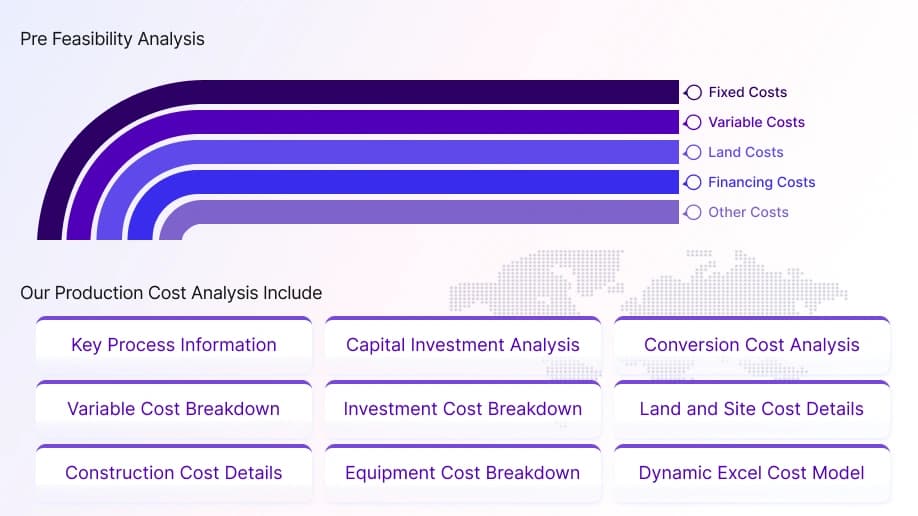
The report provides a detailed production cost analysis for Stevia. It encompasses all critical aspects necessary for Stevia production, including the cost of Stevia production, Stevia production cost model, and other extensive details. These encompass production processes, raw material requirements, utility requirements, infrastructure needs, machinery and technology requirements, manpower requirements, packaging requirements, transportation requirements, and more.
Stevia is a natural, calorie-free sweetener obtained from the leaves of the South American plant Stevia Rebaudiana. Stevia extract is hundreds of times sweeter than sugar, making it a popular alternative sweetener for individuals looking to cut back on sugar or avoid artificial sweeteners. It is also utilized as a sugar substitute in several culinary and beverage products. It has recently acquired appeal as a natural alternative to artificial sweeteners, and it is available in a variety of forms, including liquid drops, powder, and tablets.
The market for Stevia is driven by its usage as a natural sweetener in culinary and beverage products. As people become more health-conscious, there is a greater demand for natural sweeteners such as Stevia, which are seen as healthier alternatives to artificial sweeteners. The rising cases of diabetes and obesity elevates the need for low-calorie sweeteners like Stevia. Its approval by regulatory authorities such as the FDA and EFSA has helped to boost consumer confidence in the sweetener's safety, which results in greater demand. Because Stevia is produced from a plant, it is a popular choice among customers seeking plant-based alternatives to standard sweets. Overall, industrial Stevia procurement is influenced by its application as a natural sweetener in food, beverage, and pharmaceutical industries, the availability of its raw material (leaves of Stevia Rebaudiana), the cost of its raw material, the rising awareness of health consciousness among consumers, the rising cases of diabetes and obesity, and regulatory approvals.
Raw Material for Stevia Production
According to the Stevia production cost report, the various raw material for Stevia production includes leaves of Stevia Rebaudiana.
Production Process of Stevia
The extensive Stevia production cost report consists of the major industrial production process:
- Production via water extraction process: The production process of Stevia occurs via the water extraction process. In this process, the dry leaves of Stevia Rebaudiana are immersed in hot water to extract steviol glycosides. The glycoside is the main sweetening element in stevia. Finally, the steviol glycosides get filtered, purified, and crystallized.
Stevia is a sweet-tasting white crystalline powder. It has a melting point of 238-239° Celsius and a density of roughly 1.5 grams per cubic centimeter. It is water and ethanol-soluble but insoluble in most organic solvents. Stevia's sweetness is attributed to the existence of natural chemicals known as steviol glycosides, which are 400 times sweeter than sugar. Other components in stevia extract, such as rebaudioside A, C, D, E, and F, add to its sweetness and flavor.