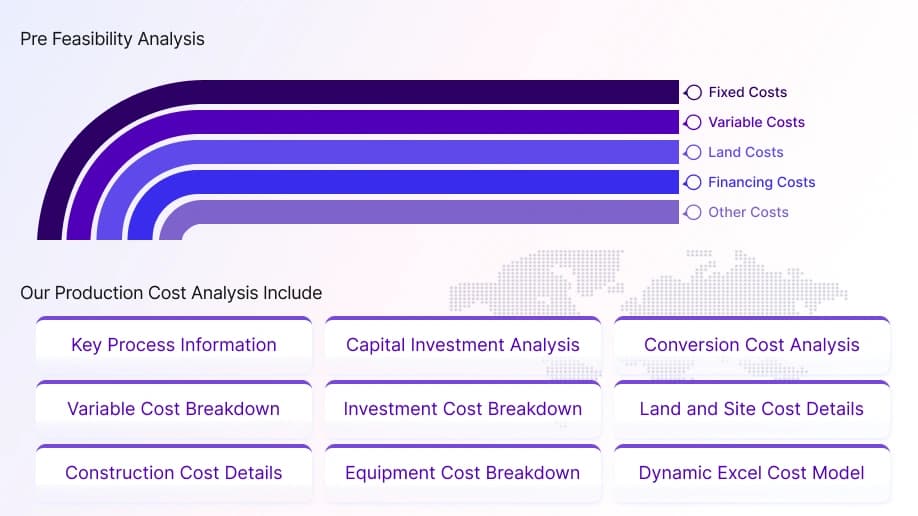
The report provides a detailed analysis essential for establishing a Toremifene production plant. It encompasses all critical aspects necessary for Toremifene production, including the cost of Toremifene production, Toremifene plant cost, Toremifene production costs, and the overall Toremifene production plant cost. Additionally, the study covers specific expenditures associated with setting up and operating a Toremifene production plant. These encompass production processes, raw material requirements, utility requirements, infrastructure needs, machinery and technology requirements, manpower requirements, packaging requirements, transportation requirements, and more.
Toremifene is a medication that finds its application in various medical disorders. It works by blocking the effects of estrogen and preventing it from stimulating tumor growth. It can also trigger the death of cancer cells, affect the activity of certain cancer genes, and affect the proteins that help cells grow. It is used for the treatment of metastatic breast cancer in postmenopausal women. It is utilized in managing the side effects of androgen deprivation therapy (ADT), like hot flashes, vertebral fractures, and gynecomastia. Toremifene is used in preventing gynecomastia, which is one of the side effects of bicalutamide treatment in men with prostate cancer. It is used in certain cases of breast cancer to reduce the risk of recurrence.
The market for Toremifene is driven by several key factors. Its use in the treatment of metastatic breast cancer contributes to its growing demand. Its use to relieve side effects of therapy with androgen hormones and as a prophylactic agent in the development of bicalutamide-induced gynecomastia in men makes it a popular drug. Its utilization in reducing the risk of breast cancer recurrence in some cases further increases demand for the product. Overall, industrial toremifene procurement depends on its usage in the therapy of metastatic breast cancer, treating side effects of androgens and bicalutamide treatment development in men, prevention of breast cancer recurrence, besides good safety profile and efficacy, availability as generics and increasing global market access.
Raw Material for Toremifene Production
According to the Toremifene production plant project report, the key raw materials used in the production of Toremifene include (4-Benzoylphenol) -(2-Chloroethyl Dimethylamine)-Cinnamaldehyde-Lithium Aluminium Hydride-Thionyl Chloride.
Production Process of Toremifene
The extensive Toremifene production cost report consists of the following major industrial production process:
- From(4-Benzoylphenol)-(2-Chloroethyl Dimethylamine) Cinnamaldehyde, Lithium Aluminium Hydride, and Thionyl Chloride: The production process for Toremifene involves several key steps. First, 4-hydroxybenzophenone is alkylated with 2-chloroethyl dimethylamine, forming an intermediate. This intermediate goes through condensation of cinnamaldehyde and lithium aluminum hydride. After this, the compound is treated with thionyl chloride forming Toremifene.
Toremifene is a white powder. Its molecular formula is C26H28ClNO2 and it has a molecular weight of 405.96 g/mol with a melting point in the range between 108-110°C. It is almost insoluble in water and slightly soluble in methanol and ethanol. It has a log P value of around 6.8, making it lipophilic, and a pKa value of about 8.0, making it a weak base. It has a bioavailability of around 100% with a large volume of distribution ranging from 457 to 958 L. It is 99.7% of protein-bound and 92% to albumin. The compound is light-sensitive, making it unstable in light. All these physical and chemical properties contribute to its therapeutic activity in various applications.