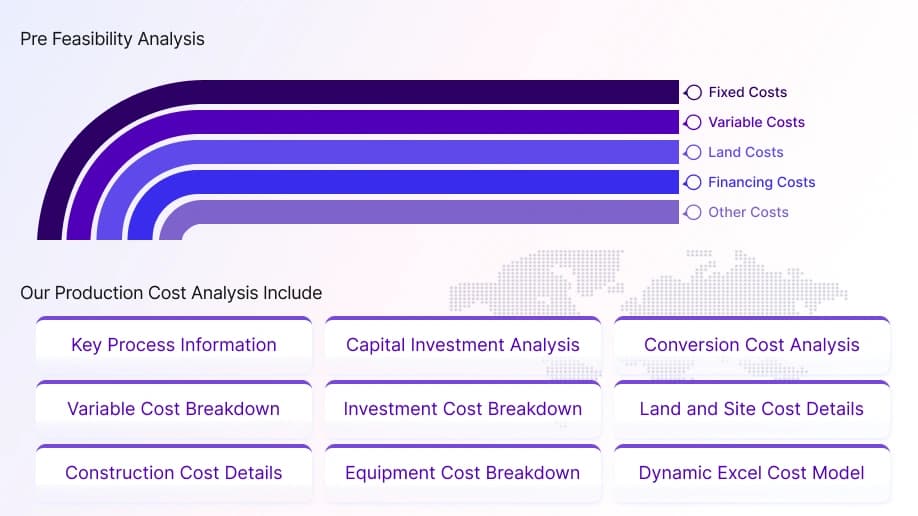
The report provides a detailed analysis essential for establishing a transferrin production plant. It encompasses all critical aspects necessary for transferrin production, including the cost of transferrin production, transferrin plant cost, transferrin production costs, and the overall transferrin production plant cost. Additionally, the study covers specific expenditures associated with setting up and operating a transferrin production plant. These encompass production processes, raw material requirements, utility requirements, infrastructure needs, machinery and technology requirements, manpower requirements, packaging requirements, transportation requirements, and more.
Transferrin is a glycoprotein that is responsible for moving nonheme iron between tissues. It plays an essential role in the metabolism of iron in the body. It is utilized as a component in nutritional food supplements and infant formulas to ensure sufficient intake of iron. Moreover, it is also used as an additive in animal feed to enhance nutritional value and promote their health. Additionally, it also finds applications in tissue engineering.
The market for transferrin is majorly driven by its applications as a nutritional supplement to promote sufficient iron intake and reduce the risk of iron deficiency, which propels its demand in the food and nutraceutical industries. Moreover, its employment as an animal feed supplement to promote overall health further accelerates its demand in the animal feed industry. Additionally, its employment in tissue engineering and bioproduction remarkably amplifies its market growth.
Furthermore, several factors influence industrial transferrin procurement, such as the availability and cost of production of its raw materials, cost, and pricing, compliance with medical regulations, quality standards, technological advancements, environmental considerations, sustainability practices, distribution (including trading and shipping), logistics, safety standards, etc.
Raw Material for Transferrin Production
According to the Transferrin production plant project report, the major raw material for Transferrin production includes Saccharomyces cerevisiae Strains.
Production Process of Transferrin
The extensive Transferrin production cost report consists of the following industrial production process:
- Production from Saccharomyces cerevisiae: This production process involves using a special strain of Saccharomyces cerevisiae with a modified gene to produce large quantities of recombinant Transferrin (rTf). This method of production eliminates the risk of prion and viral contamination and serves as a high-quality platform for the development of transferrin-based medicines.
Transferrin is a serum protein with a molecular weight of 80 kDa. It is soluble in water. The boiling point of the compound is around 100°C. It is acidic with a pH of about 5. Its density is approximately 1.35 g/ml. It is a single-chain glycoprotein with N-linked glycan chains that consists of about 679 amino acids. Its main function is to transport iron throughout the body. It is stable under normal physiological conditions but gets denatured at high pH and temperatures. It is composed of glycan moieties, amino acids, and particular binding sites for iron ions.