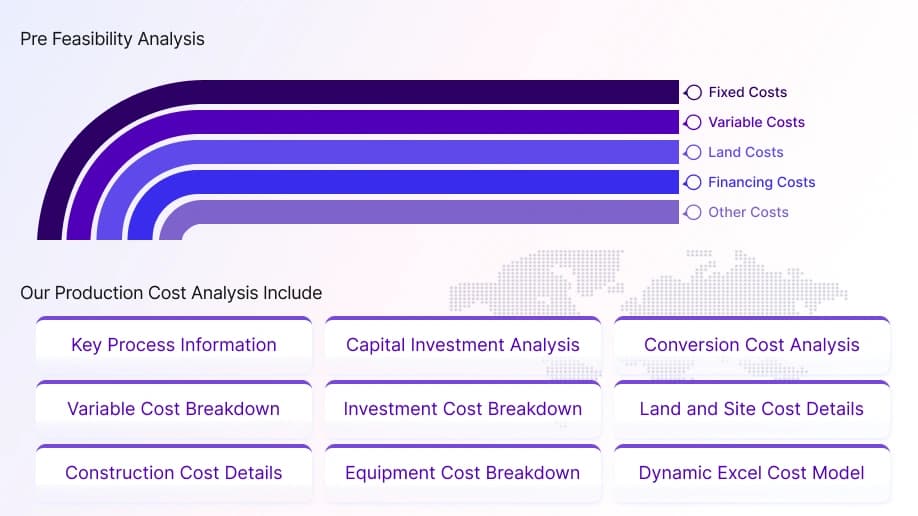
The report provides detailed analysis essential for establishing a trichlorfon production plant. It encompasses all critical aspects necessary for trichlorfon production, including the cost of trichlorfon production, trichlorfon plant cost, trichlorfon production costs, and the overall trichlorfon production plant cost. Additionally, the study covers specific expenditures associated with setting up and operating a trichlorfon production plant. These encompass production processes, raw material requirements, utility requirements, infrastructure needs, machinery and technology requirements, manpower requirements, packaging requirements, transportation requirements, and more.
Trichlorfon Market Analysis: Demand and Supply Analysis, and Sourcing
Trichlorfon is an organophosphate compound used as an insecticide and as a veterinary antiparasitic. Chemically it is dimethyl (2,2,2-trichloro-1-hydroxyethyl)phosphonate, a phosphonate ester built from dimethyl phosphite and chloral. It works by blocking the enzyme acetylcholinesterase, which overloads the nervous system of the target pest. Bayer introduced it in the 1950s under names such as Dipterex, Neguvon, and Masoten. The same molecule is known in medicine as metrifonate, an older treatment for schistosomiasis. Its action actually runs through dichlorvos, since the body converts trichlorfon into that stronger inhibitor. These days the molecule is old, cheap, and simple to make.
Buyers are agrochemical formulators, veterinary drug makers, and aquaculture suppliers. Demand is regional, since the compound is banned in the European Union and cancelled for most US uses. Production and use have shifted to China and a few other countries, where it still serves crop, turf & animal-health markets. A trichlorfon demand and supply analysis has to weigh tightening pesticide rules, chloral and phosphite cost, competition from newer insecticides & steady aquaculture demand. On receipt, buyers check assay by HPLC, dichlorvos content, related impurities, water content & appearance.
Summary of the Product, Grades, and Uses
Trichlorfon carries the molecular formula C4H8Cl3O4P and a molar mass of 257.44 g/mol under CAS 52-68-6. Pure trichlorfon is a white crystalline solid with a sand-like texture. It dissolves readily in water and in many organic solvents. The compound is stable at room temperature, but it breaks down to dichlorvos at higher temperature or pH. That breakdown is a real quality point, since dichlorvos is a separate, more volatile organophosphate.
Trichlorfon reaches the market in a few grades. Technical grade runs at about 97% for formulation into insecticides. Formulated grades include soluble powder and wettable powder at 80%, plus granular products. Veterinary and pharmacopoeia-adjacent grades cover animal-health and historical metrifonate use. Buyers check assay by HPLC, dichlorvos level, related phosphonate impurities, water content & residual solvents against the specification.
The uses split across three areas. As an insecticide, it controls grubs, flies, ticks, and other pests on turf, ornamentals & some crops. In veterinary use, it treats cattle grubs, lice & parasites in fish farming. As metrifonate, it was used against schistosomiasis and was later studied as a cholinesterase inhibitor in Alzheimer research. Those medical uses have faded, mostly on safety grounds. Today the demand is agricultural and veterinary. Across all uses, the buyer priorities are assay, dichlorvos level, moisture & consistent supply. Reference and research use is small, mostly analytical and toxicology work in labs.
Main End-Uses of Trichlorfon
The main use of trichlorfon is as an insecticidal and antiparasitic active ingredient, and this covers most demand. It goes into soluble powders, wettable powders, and granular products. Across formats, the common grades are technical active, soluble powder, wettable powder, and granules. Buyers are agrochemical and veterinary formulators who run organophosphate lines. Because it is a bulk active, one batch serves a large volume of formulated product. On the buyer side, checks cover assay, dichlorvos content, moisture & appearance. For a bulk organophosphate active, the sensitive attributes are assay, dichlorvos level, moisture, and impurities.
Crop and turf protection is the first setting, where it remains registered. Here it controls chewing and sucking pests on turf, ornamentals, and certain field crops in markets that still allow it. Application is by spray or granule, timed to the pest cycle. On the crop side, the target pests include grubs, flies, leafminers, and leafhoppers. Newer, safer insecticides have taken share in many regions, which keeps this outlet under pressure.
Veterinary and aquaculture use is the second setting and is now a major outlet. Fish farms use it against external parasites such as anchor worm and fish lice. Treatment is by bath or pond dosing. Cattle operations use it against grubs and lice, under brands like Neguvon and Masoten. In these markets, the value comes from low cost, wide activity, fast action & easy dosing. Reference and comparator use accounts for the small remainder of demand, covering pesticide-residue methods, toxicology & analytical standards in labs.
Trichlorfon Market Risks
Trichlorfon sits under heavy regulatory pressure, so its main risk is shrinking approved use. The European Union has banned it, and the United States has cancelled most of its registrations. It is listed under the Rotterdam Convention, so cross-border trade needs prior informed consent. That regulatory picture caps the addressable market and steers demand to a few countries. Competition from newer, lower-toxicity insecticides adds further pressure on price and volume. On balance, the main risks are the bans, tighter residue rules, safer rivals & feedstock cost. Direction of travel is clear. Approved uses keep narrowing.
Trichlorfon manufacturing carries its own risks because organophosphate chemistry is hazardous and the product is unstable. Both feedstocks are reactive, and the reaction has to be controlled to avoid runaway. Left unchecked, the finished compound decomposes to dichlorvos if temperature or pH drifts, so drying and storage have to stay mild. Worker exposure is a serious concern, since organophosphates inhibit cholinesterase at low levels. Effluent carries toxic organophosphate residues that need full treatment. Most rejected batches trace back to high dichlorvos content, low assay, and moisture failures.
Trichlorfon Production Process and Main Cost Drivers
The trichlorfon production process runs the full value chain, from chloral and dimethyl phosphite receipt through the addition reaction, washing, crystallization, centrifugation & drying.
- By Addition of Dimethyl Phosphite to Chloral: The main inputs are chloral, dimethyl hydrogen phosphite, a base catalyst, wash water, crystallization solvent & purified water.
Trichlorfon production opens with receipt and QC of chloral and dimethyl hydrogen phosphite. Dimethyl phosphite is added dropwise to chloral under a base catalyst and controlled temperature. The phosphite adds across the aldehyde of chloral, which forms the phosphonate and builds the trichlorfon structure. This step gives a crude product at about 93% content.
Next, the crude is washed to remove acid and side products. From solution, it is crystallized by cooling, which drops the pure solid out. The crystals are separated by centrifugation and dried under mild heat to protect the molecule. Where formulated products are made, the dried active is blended into powders, granules & baits. Across the process, the critical controls are reaction temperature, dichlorvos level, crystallization yield, and moisture. QC covers assay, dichlorvos content, related impurities, water content & residual solvent. The main levers on cost are chloral and phosphite price, reaction control, crystallization yield & drying control.
Main Factors Affecting Trichlorfon Production Cost
Trichlorfon production cost is shaped mainly by the two feedstocks and the simple two-step route. Chloral and dimethyl hydrogen phosphite are the core raw materials, and together they set most of the variable cost. The base catalyst and the wash and crystallization solvents are smaller costs. Because the route is short, feedstock price dominates the cost per kilogram more than processing does. Energy for cooling crystallization and mild drying is a steady utility item. On the testing side, HPLC assay, dichlorvos analysis & moisture testing make up most of the QC spend.
Unit cost also moves with crystallization and drying yield. A batch with high dichlorvos or moisture is downgraded, which raises the effective cost per saleable kilogram. Effluent treatment is a real and growing cost, since organophosphate waste needs full breakdown before discharge. Safety and containment add cost, since worker protection is essential with a cholinesterase inhibitor. Regulatory upkeep, registration, and compliance are carried as fixed overhead. On the fixed side, overhead covers safety systems, effluent treatment, quality staff, and registration upkeep. The reactor, crystallizer, and effluent plant all carry that overhead too, so a plant running below capacity spreads it over fewer kilograms and lands at a higher unit cost.
Raw Materials for Trichlorfon Production Plant and its Procurement
Raw material sourcing for trichlorfon centers on two organophosphate feedstocks. Chloral, or trichloroacetaldehyde, is the primary feedstock, drawn from chlorination chemistry and chloral makers. Dimethyl hydrogen phosphite is the second key input, made from methanol and phosphorus trichloride. Both ship from chemical suppliers, mostly in China where the supply chain is concentrated. Alongside the two feedstocks, the plant buys a base catalyst, wash water, crystallization solvent & purified water. Feedstock quality drives the whole result, since impure inputs raise dichlorvos and cut yield.
The cheapest chloral is not always the cheapest route to finished trichlorfon. A chloral lot with water or acid impurity lowers yield and raises dichlorvos formation. Phosphite quality matters too, since off-spec phosphite carries impurities into the product. Taken together, chloral purity, phosphite quality, reaction control, crystallization yield & moisture drive most of the variable cost per kilogram.
These sensitivities shape how a trichlorfon plant buys and qualifies its inputs. Contracts specify chloral and phosphite purity, water content, acid limits, and consistent supply & every incoming lot is checked before use. Vendor qualification runs through supplier audits, review of feedstock consistency, and lot-to-lot monitoring. On the incoming side, checks cover chloral purity, phosphite quality, water content, and acidity. Long-term agreements with two feedstock suppliers help steady both cost and timing. Siting the plant inside a Chinese organophosphate cluster adds real freight, feedstock & compliance advantages, since chloral and phosphite are made nearby.
Sustainability and Regulatory Requirements
Trichlorfon manufacture raises serious environmental and occupational concerns that center on organophosphate toxicity, effluent, and worker exposure. Standard controls rely on closed handling, exposure monitoring, scrubbed vents & full biological and chemical treatment of effluent. Wastewater carries toxic organophosphate residues, so it must be broken down before discharge. Cholinesterase-inhibiting compounds need strict occupational controls, since exposure is dangerous at low levels. On the occupational side, the controls cover protective equipment, exposure monitoring, ventilation, and cholinesterase testing of staff. Antidotes such as atropine and pralidoxime are kept on site. Air and dust control matter during drying and packing. The compound is also toxic to bees, birds, and aquatic life, so drift and runoff controls apply in the field. Green-chemistry pressure and tighter rules keep pushing the industry toward safer alternatives.
Regulatory obligations for trichlorfon are heavy and shape where it can be made and sold. In the European Union, it is banned as a plant-protection active. In the United States, most registrations have been cancelled by the EPA. It is listed under the Rotterdam Convention, so exports need prior informed consent from the importing country. Where use is allowed, sites work to local pesticide-registration and GMP-equivalent standards, plus veterinary drug rules for animal-health grades. On the compliance side, the duties span registration, residue limits, worker safety, and effluent standards. Batch release rests on assay, dichlorvos content, impurities & moisture.
CAPEX and OPEX for a Trichlorfon Production Plant
A trichlorfon plant is a fairly simple two-step chemical facility with heavy safety and effluent needs. Plant investment starts with chloral and phosphite storage, a jacketed reactor for the addition step, and a wash and neutralization section. From there come a cooling crystallizer, a centrifuge & a mild dryer, followed by milling and packaging. Utilities cover chilled brine, steam, purified water, scrubbed vent handling, nitrogen & a full effluent treatment plant. On the QC side, a laboratory block houses HPLC, dichlorvos analysis, moisture testing & residual-solvent testing. Civil works provide contained reactor bays, a solvent store, a drying and packing area & a controlled-access warehouse. On the capital side, the big blocks are the reactor, the crystallizer, the dryer, and the effluent plant. Formulation adds mixing, granulation, and packing lines for powders and granules.
Trichlorfon operating cost comes from the same inputs and control points that shape the process. The variable side is led by chloral and dimethyl phosphite, alongside the catalyst, solvents, labor, testing, effluent treatment, packaging & freight. Cost per kilogram then comes down to reaction control, crystallization yield, and drying control. The trichlorfon plant setup cost depends on capacity, safety and containment level, effluent scope & formulation range. Taken together, feedstock price, yield, energy use, effluent cost, and compliance determine the running cost.
Plant Location and Investment Factors
A workable trichlorfon site sits inside an organophosphate and agrochemical cluster with strong feedstock supply and effluent infrastructure. Access to trained organophosphate-handling staff is essential. China's agrochemical hubs in Shandong, Jiangsu, and Hubei pair chloral and phosphite supply with formulation capacity. These clusters offer a low cost base, deep supplier networks, and established pesticide supply chains. On the utility side, the site needs heavy safety systems, containment, scrubbers, and a full effluent treatment plant. Location is really a regulatory choice. The plant has to sit where the product is still legal. Because the product is banned in major western markets, the site has to be located where use and export are still allowed.
For a trichlorfon plant, the main investment decision is whether to sell technical-grade active or integrate forward into formulated and veterinary products. Selling the active keeps capital lower but leaves margin downstream. Forward integration into powders, granules, and veterinary forms captures more value. Whether to make chloral and phosphite in-house or buy them is the other cost decision, since backward integration secures feedstock. Plant scale has to match a shrinking, regulated market, so the project rests on cost leadership and on serving the countries where use is legal. For a new entrant, low-cost feedstock and strong effluent compliance matter most.
Major Trichlorfon Producing Regions
China is the dominant production region for trichlorfon today. Its agrochemical clusters in Shandong, Jiangsu, and Hubei run most of the world's organophosphate capacity, backed by local chloral and phosphite supply. In practice, their edge rests on cheap feedstock, scale, integration, and existing effluent capacity. India and a few other countries hold smaller capacity for regional and export markets. Europe and the United States no longer produce it for domestic use, since it is banned or cancelled there, though some historical output came from Bayer. Where production continues, it feeds crop, turf, veterinary, and aquaculture markets in permitting countries. Those outlets cover field pests, turf care, livestock parasites, and fish-farm treatments. A new plant would most likely start in a Chinese organophosphate cluster with existing feedstock and effluent capacity.
Key Trichlorfon Producers
Bayer AG
- Introduced trichlorfon in the 1950s and sold it as Dipterex, Neguvon, and Masoten.
- Ran organophosphate and veterinary production from its German and international base.
- Competes on brand history, veterinary experience, and long agrochemical know-how, though its focus has moved away from older organophosphates.
- Regulatory record covers historical pesticide and veterinary approvals across many markets.
Shandong Dacheng Pesticide
- Ranks among the historic organophosphate makers in China, with deep expertise in the chemistry.
- Produces trichlorfon and related organophosphate actives from an integrated feedstock base.
- Competes on a low Chinese cost base, organophosphate scale, and local chloral and phosphite supply.
- Quality systems cover Chinese pesticide standards and export documentation.
Nantong Jiangshan Agrochemical and Chemical
- Manufactures a broad organophosphate and agrochemical range, including trichlorfon, in China.
- Runs integrated feedstock and formulation capacity for domestic and export markets.
- Competes on scale, integration, and a wide agrochemical portfolio.
- Regulatory work covers Chinese registration and multi-country export approvals.
Hubei Sanonda
- Operates as a major Chinese agrochemical producer with organophosphate capacity.
- Supplies technical active and formulated products across crop and animal-health markets.
- Competes on production scale, integration, and a diverse product range.
- Quality systems cover Chinese pesticide standards and export requirements.
Jiangsu Anpon Electrochemical
- Produces organophosphate insecticides, including trichlorfon, from its China base.
- Runs chlorination and phosphite chemistry that feeds the trichlorfon route.
- Competes on backward integration into feedstocks and a low cost base.
- Regulatory record covers Chinese registration and export documentation.
Rainbow Agrosciences
- Manufactures a broad generic agrochemical portfolio, including organophosphate actives, from China.
- Supplies technical and formulated products to global generic pesticide markets.
- Competes on generic scale, cost efficiency, and multi-market registration reach.
- Regulatory work covers Chinese and multi-country pesticide registrations.