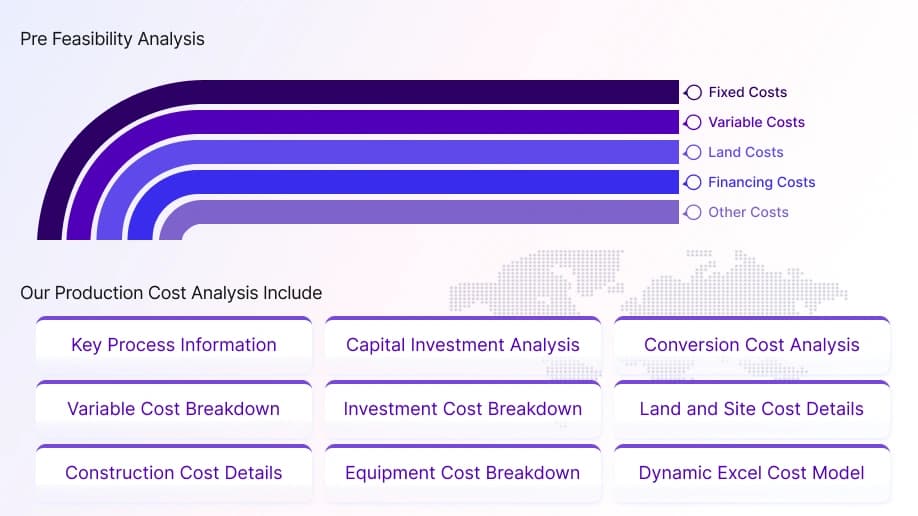
The report provides a detailed analysis essential for establishing a Tylosin production plant. It encompasses all critical aspects necessary for Tylosin production, including the cost of Tylosin production, Tylosin plant cost, Tylosin production costs, and the overall Tylosin production plant cost. Additionally, the study covers specific expenditures associated with setting up and operating a Tylosin production plant. These encompass production processes, raw material requirements, utility requirements, infrastructure needs, machinery and technology requirements, manpower requirements, packaging requirements, transportation requirements, and more.
Tylosin is an antibiotic widely used for treating bacterial infections in several animal species. It works by binding a ribosomal subunit of bacteria and blocking them from making proteins necessary for bacterial growth. It makes it effective in a range of bacterial pathogens like Clostridium and Campylobacter but it is mostly ineffective against Escherichia coli and Salmonella. It is used to treat respiratory infections in cattle and pneumonia, arthritis, etc., in pigs. It is used in managing soft tissue infections like antibiotic-responsive diarrhea in dogs. Tylosin is utilised for promoting growth in food-producing animals by enhancing feed efficiency and weight gain. It is prescribed for treating chronic colitis in dogs under a veterinary’s supervision. It is employed for treating streptococcal diseases in fish.
The market for Tylosin is driven by its increasing use in veterinary applications. The growing demand for animal protein requires an effective antibiotic to preserve livestock health, which contributes to its demand. Its use in treating bacterial infections in animals against a wide range of pathogenic bacteria makes it a sought-after product.
Its utilization in animal feed of food-producing animals improves feed efficiency and promotes weight gain, making it popular among farmers. Its usage, apart from livestock, includes treating chronic colitis in dogs and streptococcal diseases in fish, further contributing to its demand. Overall, industrial tylosin procurement is influenced by its use in veterinary applications, like the need for effective antibiotics to promote growth in livestock and expanding veterinary applications, along with regulatory scrutiny and antibiotic resistance.
Raw Material for Tylosin Production
According to the Tylosin production plant project report, the key raw materials used in the production of Tylosin include Genetically Modified Yeast-Nutrients.
Production Process of Tylosin
The extensive Tylosin production cost report consists of the following major industrial production process:
- From Genetically Modified Yeast and Nutrients: The industrial production of Tylosin is a multi-step process. First, a genetically modified microbial strain is subjected to form an initial seed culture. After that this see culture is applied in the main fermentation process. The nutrient-rich media is optimized by controlling pH, temperature, etc., forming Tylosin with high yield. Finally, Tylosin is separated and purified using chromatography and test to meet industrial standards.
Tylosin is a white to slightly yellow crystalline powder. Its molecular formula is C46H77NO17, and it has a molecular weight of 916.1 g/mol. Its melting point is in the range of 135-137°C, and it has a boiling point of around 796.05°C. It is soluble in water and shows good solubility in organic. It is stable in a pH range of 4-9, with ideal stability at pH 7. It has a pKa value of 7.73 making it a weak organic base. It shows UV absorbance at 282 nm. It degrades in acidic conditions and light exposure. It is not fully metabolized by livestock and has a half-life of about 62 days. All these physical and chemical properties contribute to its effectiveness as an antibiotic in veterinary medicine.