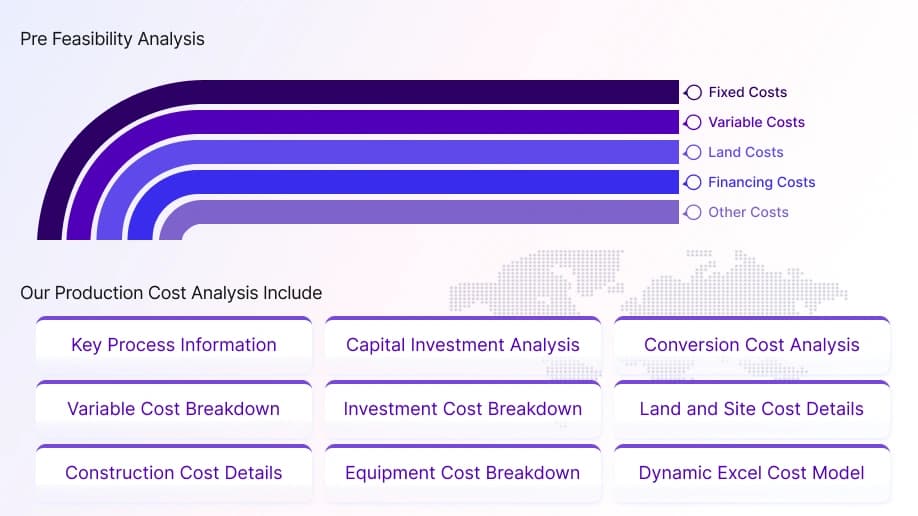
The report provides a detailed analysis essential for establishing a Voglibose production plant. It encompasses all critical aspects necessary for Voglibose production, including the cost of Voglibose production, Voglibose plant cost, Voglibose production costs, and the overall Voglibose production plant cost. Additionally, the study covers specific expenditures associated with setting up and operating a Voglibose production plant. These encompass production processes, raw material requirements, utility requirements, infrastructure needs, machinery and technology requirements, manpower requirements, packaging requirements, transportation requirements, and more.
Voglibose is an alpha-glucosidase inhibitor used to treat patients with type 2 diabetes mellitus. It delays glucose absorption by blocking the enzymes responsible for breaking down complex carbohydrates in the intestines, thereby preventing rises in blood glucose levels after meals. It is useful for controlling glycemic levels in those who have no effect from diet and exercise or other oral hypoglycemic medicines. Voglibose is also used for its ability to prevent the progression of type 2 diabetes in individuals at high risk of disease. Its side effects are gastrointestinal discomfort with flatulence and diarrhea. It is used by patients with mild to moderate renal function impairment.
The Voglibose market is driven by several key factors. Its increasing usage in managing type 2 diabetes contributes to its growing demand. Its utilization in controlling glycemic levels in people who are unresponsive to other medications makes it a popular drug. Its ability to stop the progression of type 2 diabetes further contributes to its demand. Also, advancements in drug delivery systems improve the efficiency and availability of drugs, which leads to better outcomes. The focus on diabetes management through pharmacology has created a high demand for Voglibose across hospitals, clinics, and pharmacies. Overall, industrial Voglibose procurement is influenced by its usage in managing type 2 diabetes, along with advancements in drug delivery and demand in healthcare settings.
Raw Material for Voglibose Production
According to the Voglibose production plant project report, the key raw materials used in the production of Voglibose include Streptomyces Hygroscopicus-Carbohydrates, Nitrogen Sources-Minerals.
Production Process of Voglibose
The extensive Voglibose production cost report consists of the following major industrial production process:
- From Streptomyces Hygroscopicus, Carbohydrates, Nitrogen Sources, and Minerals: The production of Voglibose consists of several steps. First, Streptomyces hygroscopicus is subjected to fermentation in a controlled environment, forming Voglibose. After that, the fermentation broth goes through extraction and purification by filtration, solvent extraction, and chromatography to obtain pure Voglibose.
Voglibose has a molecular formula of C10H21NO7 and a molecular mass of 267.28 g/mol. It is very hydrophilic, with an XLogP3 value of -4.1. It has eight hydrogen bond donors, eight acceptor atoms, and five rotatable bonds. It acts by inhibiting carbohydrate absorption in the intestines to ensure that blood sugar does not rise too fast after eating. Its Cmax value is about 1.38 mcg/ml and reaches this value at 2–3 hours after oral dosing under fasting conditions. All these ideal physical and chemical properties are favorable for diabetes management.