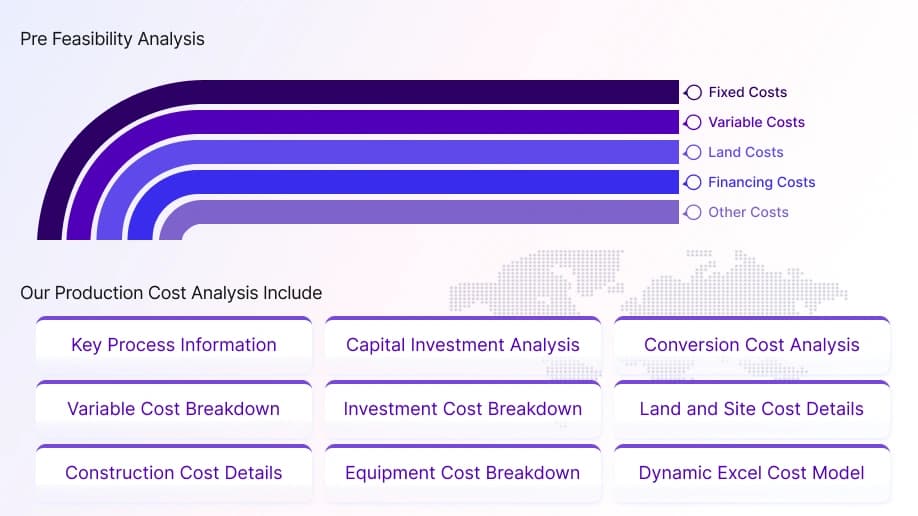
The report provides a detailed production cost analysis for Whey Powder. It encompasses all critical aspects necessary for Whey Powder production, including the cost of Whey Powder production, Whey Powder production cost model, and other extensive details. These encompass production processes, raw material requirements, utility requirements, infrastructure needs, machinery and technology requirements, manpower requirements, packaging requirements, transportation requirements, and more.
Whey Powder is a common protein source that is utilized in sports supplements for athletes, bodybuilders, and fitness enthusiasts. It is a versatile component that can be utilized to improve food items' nutritional content, texture, and flavor. Because of its high protein content and nutritional value, it is often utilized as a feed supplement for animals and pets. It is also used in pharmaceuticals and meal-replacement drinks.
The market for Whey Powder is driven by its various health benefits, such as muscle growth, weight management, and overall wellness, which elevates its demand in the healthcare industry. Its utilization in various food applications, such as baked goods, dairy products, energy drinks, and infant formulas, amplifies its market in the food and beverage industries. Its usage for high-quality animal feed to enhance animal health and productivity boosts its demand in the animal feed industry.
As consumers become more health-conscious and want to live an active lifestyle, the demand for protein supplements such as Whey Powder is likely to rise. Overall, industrial Whey Powder procurement is influenced by its application in various industries such as healthcare, food, beverage, and animal feed industries, the availability of its raw material (whey), the cost of its raw material, and the rising awareness of health consciousness among consumers.
Raw Material for Whey Powder Production
According to the Whey Powder production cost report, the various raw material for Whey Powder production includes whey.
Production Process of Whey Powder
The extensive Whey Powder production cost report consists of the major industrial production process:
- Production via reverse osmosis and drying: The production process of Whey Powder occurs via the reverse osmosis and drying process. The dry content of the whey is increased by using reverse osmosis. The dry whey content is processed for evaporation to remove moisture. Finally, the processed whey is fed into spray or drum dryers to eliminate any moisture content and to produce Whey Powder.
Whey powder is a powdered derivative of whey protein that is created as a byproduct of cheese production. It is a high-quality protein that is easily digestible and has all the essential amino acids, which makes it a popular dietary supplement for athletes, bodybuilders, and fitness fanatics. It can range in color from white to cream-colored. Because of its high protein concentration, it is easily soluble in water and other aqueous solutions. It is hygroscopic, which means it absorbs moisture from its surroundings. Whey protein has ß-lactoglobulin with a typical spherical structure. Its structure is highly stabilized by disulfide bonds and has a hydrophobic core pocket region to bind small molecule substances.