Amylase Price Trend Analysis 2026: Market Insights, Latest News, Supply Demand Analysis, Historical Prices & Price Drivers

Pragati Agarwal profile photo
Written ByPragati Agarwal

Procurement Resource Database

Laptop screen

Turn price intelligence into action with the Procurement Resource Database. Log in or subscribe to unlock live price trends, historical charts, supplier databases, cost curves, and analyst-backed insights across chemicals, agriculture, energy, packaging, and more. Use these tools to benchmark your contracts, plan budgets with confidence, and stay ahead of market moves on every product you buy.

0

+

Products

0

+

Regions

0

+

Subscriptions

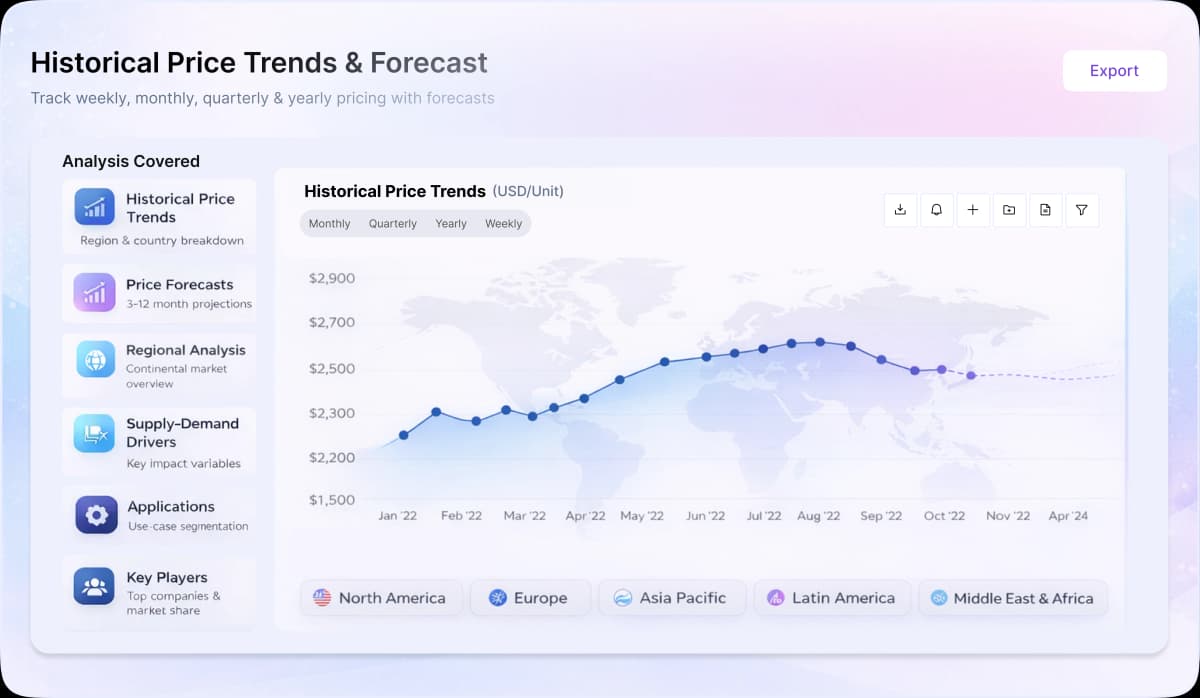
In 2025, the amylase prices in the Chinese region exhibited a mixed prices trend. The prices were mainly affected by the upstream market and demand trends for various end-use industries. In the first half of 2025, prices generally rose due to increases in feedstock costs. The prices of corn, a key feedstock for amylase production, rose during this period due to sustained buying interest from feed and food processing industries. This increase in input costs transmitted progressively through the production chain, supporting amylase prices across food processing, brewing, textile, and pharmaceutical applications. The sustained demand for amylase from starch processing and bioethanol production industries also contributed to the upward trend.

In the second half of 2025, amylase prices exhibited a more complex trend. The prices of feedstock declined slightly following a seasonal correction. Consequently, prices for amylase eased due to reduced pressure on feedstock prices. However, prices for amylase did not decline further due to sustained demand for amylase from food and beverage industries, including bakery, confectionery, and brewing industries. Toward the end of 2025, prices for amylase rose slightly following improved procurement activity and a rise in supply availability.

Analyst Insight

According to Procurement Resource, amylase prices are expected to remain sensitive to feedstock market conditions and downstream demand trends from food processing and industrial fermentation sectors in the near term.

Related Report

About Amylase

Amylase is a well-known enzyme which catalyses the hydrolysis of starch or amylum into sugars. Amylase can easily be found in the saliva of humans as well as some other mammals and it is the very place where Amylase begins the chemical process of digestion.

Amylase Product Detail

Industrial Uses

Agricultural, Cosmetic, Pharmaceutical industries, Molecular biology, Fermentation, Cheese, Brewing beer, Baking bread, Flour additive, Tanning leather

Supplier Database

Novozymes A/S, Koninklijke DSM N.V, BASF SA, Chr. Hansen Holding A/S, AB Enzymes

Regional Coverage

Asia Pacific

China, India, Indonesia, Pakistan, Bangladesh, Japan, Philippines, Vietnam, Iran, Thailand, South Korea, Iraq, Saudi Arabia, Malaysia, Nepal, Taiwan, Sri Lanka, UAE, Israel, Hongkong, Singapore, Oman, Kuwait, Qatar, Australia, and New Zealand

Europe

Germany, France, United Kingdom, Italy,Spain, Russia, Turkey, Netherlands, Poland, Sweden, Belgium, Austria, Ireland Switzerland, Norway, Denmark, Romania, Finland, Czech Republic, Portugal and Greece

North America

United States and Canada

Latin America

Brazil, Mexico, Argentina, Columbia, Chile, Ecuador, and Peru

Africa

South Africa, Nigeria, Egypt, Algeria, Morocco

CurrencyUS$ (Data can also be provided in local currency)

Supplier Database AvailabilityYes

Customization ScopeThe report can be customized as per the requirements of the customer

Post-Sale Analyst Support360-degree analyst support after report delivery


Note: Our supplier search experts can assist your procurement teams in compiling and validating a list of suppliers indicating they have products, services, and capabilities that meet your company's needs.

Amylase Production Processes

  • Production of Amylase via Microorganisms

In industrial sectors and scientific research, microorganisms like bacteria, fungi, and yeast are widely used for the production of Amylase. The level of amylase production varies from one microbe to other and it differs depending on the microbe’s origin. Factors like pH, carbon and nitrogen sources and temperature, are crucial in determining the rate of amylase production, especially in fermentation processes.

Frequently Asked Questions

The amylase outlook for 2026 points to a range-bound to firm market, contingent on steady corn feedstock costs and balanced end-use consumption. Sustained demand from bakery, confectionery, brewing, and starch saccharification provides a resilient floor, while managed operating rates and adequate supply prevent oversupply from eroding prices. European prices are likely to hold a modest premium over Asian material due to higher conversion costs and tighter food-grade enzyme oversight.
Corn feedstock costs are the primary price driver, since microbial fermentation of amylase relies heavily on corn and other starch-rich feedstocks; firmer corn values from feed and food processing demand raise enzyme production economics and limit price softening. Producers manage operating rates in line with offtake, which keeps supply adequate without oversupply. Downstream demand from bakery, confectionery, brewing, and starch saccharification provides a resilient consumption base. European prices typically carry a premium over Asian material due to higher conversion costs and tighter food-grade enzyme oversight.
Major amylase suppliers include Novozymes, Koninklijke DSM, BASF, Chr. Hansen Holding, and AB Enzymes. Chinese producers anchor Asian material and set the regional price tone, while European manufacturers command a modest premium on tighter food-grade enzyme standards. North American demand moves in sympathy with feedstock and import dynamics. Supply is concentrated among a small group of established enzyme specialists, making the market relatively tight on the producer side and dependent on a limited number of sources for food-grade supply.


Through H1 2026, Chinese producers anchored Asian amylase trade in a range-bound pattern, while European prices held a modest premium driven by higher conversion costs and tighter food-grade enzyme oversight. Novozymes reinforced its market position entering 2026 through disciplined procurement and a regionally diversified supply base. High-purity and specialty-grade formulations continued to command a premium over standard grades, reflecting stricter food-safety and clean-label requirements from bakery and industrial customers. Sustained consumption from bakery, confectionery, brewing, and starch saccharification kept the market firm, with supply managed at operating rates aligned to offtake.
Amylase is produced via microbial fermentation using Bacillus species as the primary feedstock, cultured on nutritional agar slants. The process proceeds by adding sterile distilled water to form an inoculum, followed by incubation and centrifugation of the fermented medium to isolate the enzyme. The finished product then enters downstream value chains spanning food and beverage (baking, brewing, starch liquefaction for glucose and fructose syrups), biofuel ethanol fermentation, textile desizing, detergent formulations, pharmaceuticals, animal feed, and paper processing.
Bakery, brewing, and starch conversion are the primary demand drivers for amylase. In baking, it acts as an antistaling agent and accelerates yeast fermentation. Brewers use it to produce fermentable wort, while the starch conversion industry manufactures glucose, fructose syrups, and maltodextrin. Pharmaceutical and detergent applications add further support. Because amylase is produced via microbial fermentation on corn and other starch-rich feedstocks, its price stays tethered to grain costs, so firmer corn values alongside steady food and beverage consumption tend to keep pricing range-bound to firm.
Procurement Resource assesses amylase price trends through a structured, data-driven methodology. The team engages directly with producers, suppliers and traders to capture real-time market intelligence, supplemented by secondary market data and continuous monitoring of feedstock and input costs. Trade-flow and inventory tracking, alongside exchange and spot benchmarks, are validated and translated into a transparent price assessment and outlook. The detailed methodology is available on the Procurement Resource website.

Our Price Analysis Methodology

About the Author

Pragati Agarwal profile photo

Pragati Agarwal

Senior Business Insights Analyst

Delivering price trend analysis and procurement market insights at Procurement Resource, with expertise in identifying commodity patterns, supporting purchasing strategies, and improving cost efficiency through actionable market intelligence.

Schedule Demo

Schedule A Demo

Experience how Procurement Resource transforms raw material price data into clear, decision ready intelligence. Optimise your performance with reliable, expert market data and analysis. Schedule your demo today to experience a live walk-through where our experts will showcase interactive price charts, forecasted prices, and insights driving the prices for your key commodities, tailored to your workflows. Contact us now!

Our Team will be happy to assist you

We are just a text away

+1

Still Need Help?

Europe & Africa

+44 7573 171117

Sales@procurementresource.com

USA & Canada

+1 307 363 1045

Sales@procurementresource.com

APAC

+91 8850629517

Sales@procurementresource.com

Other Related Reports

Alpha-Cyclodextrin Production Cost Via Enzymatic Degradation

This report presents a detailed cost analysis of alpha-cyclodextrin production from vegetable raw materials via enzymatic degradation process.

Modified Starch Production from Enzymatic Modification

This report shows the cost structure for modified starch production from enzymes modification. Native enzymes are modified using enzymes like maltogenic amylase.

Unlock full access to Procurement Resource's price databases, interactive charts, and short-term forecasts for thousands of commodities. Elevate your sourcing decisions by comparing prices across regions, downloading historical data, and layering in analyst-backed insights, all with our flexible plans that scale as your portfolio grows.

Still have any Questions

Contact Us
Mastercard
Wire
VISA
Stripe

Related News

View All

Why Procurement Database

Commodity Market Intelligence

Commodity Market Intelligence

Track prices, market movements, supply-demand dynamics, and industry developments across hundreds of commodities through a centralized intelligence platform built for informed procurement decisions.

Price Forecasts & Market Outlooks

Price Forecasts & Market Outlooks

Understand market fluctuations using analyst-backed forecasts, historical pricing patterns, and evolving industry trends to strengthen sourcing strategies and budget planning.

Cost & Procurement Optimization

Cost & Procurement Optimization

Leverage cost models, pricing benchmarks, and procurement insights to evaluate purchasing opportunities, improve negotiations, and enhance operational efficiency.

Global & Regional Market Insights

Global & Regional Market Insights

Access region-specific price trends, trade activities, capacity changes, and supply chain developments influencing commodity markets worldwide.

1/4