

Udeesha Tomar
AVP - Strategy and Solutions
Leading procurement research solutions across chemicals, materials, and food & beverages, with expertise in price forecasting and market analytics.

Bio-Butanediol market trends were observed to be in close alliance with its feedstock glucose and raw sugar prices during the latter half of the year 2023. The price curve was largely plateaued for the third quarter with positive market inclinations. The gap between the supply and demand dynamics didn’t vary much, and a lukewarm performance was registered throughout the third quarter. However, things turned slightly southwards in the following quarter.
The Asian markets, particularly the Indian and the Chinese markets, experienced a swift depreciation in overseas orders, especially in the latter part of the quarter. This dip in export demands was primarily attributed to the freight disturbances global supply chains were experiencing at the time. This rippled into a supply excess at the source Asian markets and thus led to a downward pivoting of the bio-butanediol price curve in the said markets. Overall, mixed market sentiments were experienced.
Analyst Insight
According to Procurement Resource, the Bio-Butanediol price trends are likely to waver along similar lines in the coming months since the market drivers do not project much change given the current economic scenarios.
Related Report
Need Latest Bio-Butanediol Prices?
Get real-time price assessments, periodic trends, forecasts and price driver insights across key global markets.
Our Clients


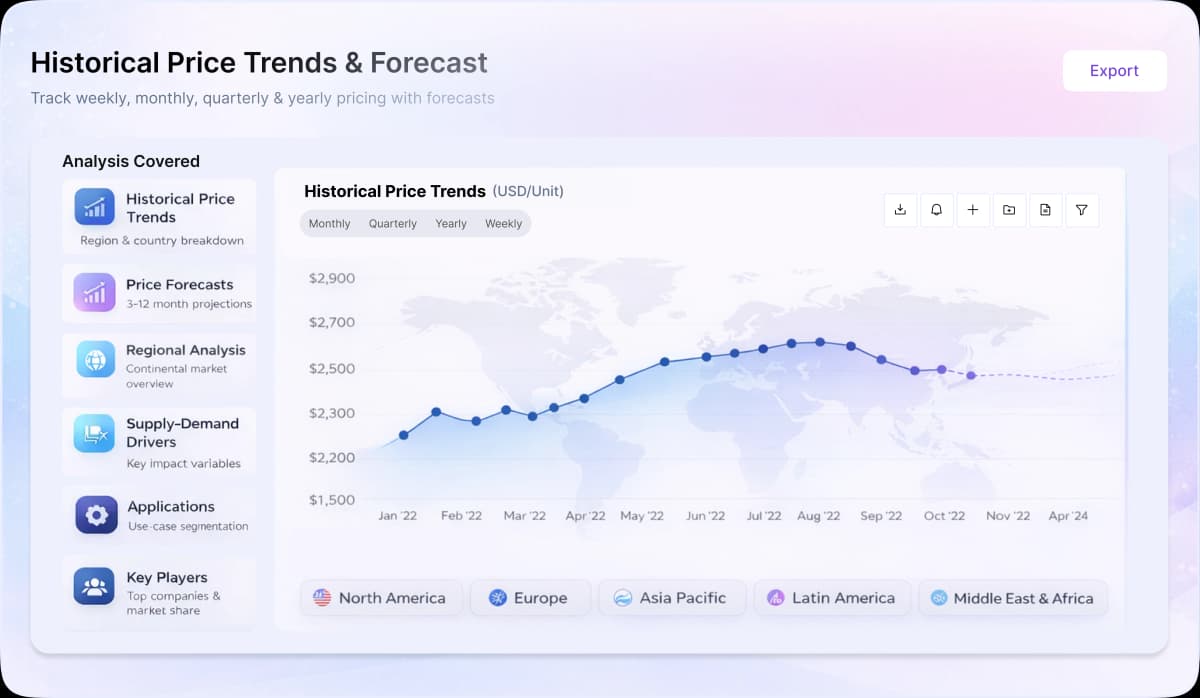
Turn price intelligence into action with the Procurement Resource Database. Log in or subscribe to unlock live price trends, historical charts, supplier databases, cost curves, and analyst-backed insights across chemicals, agriculture, energy, packaging, and more. Use these tools to benchmark your contracts, plan budgets with confidence, and stay ahead of market moves on every product you buy.
0
+Products
0
+Regions
0
+Subscriptions
Bio-Butanediol is produced from organic sources like raw sugars. The need to go green is rising, and the importance of bioplastics and other biobased chemicals is increasing rapidly. Bio-Butanediol prices remained inclined throughout the said period as the sugar prices surged in India because of unpredictable and uncertain rainfall situations and reduced inventory stocks.
The consistently high demand from the downstream sectors amid high prices of raw materials raised the upstream cost pressure for Bio-Butanediol, thereby exerting pressure on the overall market fundamentals. Hence, the price trend for Bio-butanediol kept on an inclined curve, given the uncertainties in the production and supply of its feedstock materials.
BDO is an important raw material for basic organic chemicals and fine chemicals. One of the major factors for showing interest in bio-BDO by companies is to reduce the use of petroleum-based feedstocks in light of global oil prices. BDO is used as a cross-linking agent for thermoplastic urethanes, polyester plasticizers, paints and coatings, copolyester hot melt and solvent-borne adhesives. It is a versatile chemical intermediate because of its terminal, primary hydroxyl groups and its hydrophobic and chemical resistant nature.
C4H10O2
Production of bioplastics, Production of polyurethane, Production of adhesives
Bio-1.4-butanediol, Bio-BDO
Ashland Inc, Dairen Chemical Corporation, Mitsubishi Chemical Corporation, Nan Ya Plastics Corporation
CurrencyUS$ (Data can also be provided in local currency)
Supplier Database AvailabilityYes
Customization ScopeThe report can be customized as per the requirements of the customer
Post-Sale Analyst Support360-degree analyst support after report delivery
Note: Our supplier search experts can assist your procurement teams in compiling and validating a list of suppliers indicating they have products, services, and capabilities that meet your company's needs.
In this process, fermentation of glucose syrup take place to produce succinic acid, followed by its hydrogenation to produce bio-butanediol.
Our Price Analysis Methodology
AVP - Strategy and Solutions
Leading procurement research solutions across chemicals, materials, and food & beverages, with expertise in price forecasting and market analytics.

Experience how Procurement Resource transforms raw material price data into clear, decision ready intelligence. Optimise your performance with reliable, expert market data and analysis. Schedule your demo today to experience a live walk-through where our experts will showcase interactive price charts, forecasted prices, and insights driving the prices for your key commodities, tailored to your workflows. Contact us now!
Our Team will be happy to assist you
We are just a text away
Still Need Help?
Europe & Africa
+44 7573 171117
Sales@procurementresource.com
USA & Canada
+1 307 363 1045
Sales@procurementresource.com
APAC
+91 8850629517
Sales@procurementresource.com
Unlock full access to Procurement Resource's price databases, interactive charts, and short-term forecasts for thousands of commodities. Elevate your sourcing decisions by comparing prices across regions, downloading historical data, and layering in analyst-backed insights, all with our flexible plans that scale as your portfolio grows.
Still have any Questions
Contact Us



Price Trend Dashboard - What's Included
Price trends across a diverse portfolio of categories and products, spanning board to niche chemicals
Coverage extendable to grade-specific chemicals based on procurement requirements
Regular price tracking supported by robust historical datasets
News, policy updates, and key market drivers impacting price movements
Short-term and long-term price outlooks and forecasts
Supply–demand dynamics and capacity-driven market analysis

Track prices, market movements, supply-demand dynamics, and industry developments across hundreds of commodities through a centralized intelligence platform built for informed procurement decisions.

Understand market fluctuations using analyst-backed forecasts, historical pricing patterns, and evolving industry trends to strengthen sourcing strategies and budget planning.

Leverage cost models, pricing benchmarks, and procurement insights to evaluate purchasing opportunities, improve negotiations, and enhance operational efficiency.
Access region-specific price trends, trade activities, capacity changes, and supply chain developments influencing commodity markets worldwide.