Need latest Black Pepper Oleoresin prices?
Get real-time price assessments, periodic trends, forecasts and price driver insights across key global markets.
Unlock Price Insights NowOur Clients
In 2025, black pepper oleoresin prices showed a strong upward trend due to tight supply and steady global demand for black pepper. The market was mainly influenced by rising pepper prices in major producing countries such as Vietnam, where production declined because of smaller cultivation areas and unfavourable weather conditions. Strong demand from global buyers and lower export volumes pushed pepper prices to high levels, which directly increased the cost of raw materials used in oleoresin production. Since black pepper oleoresin depends on processed pepper, higher input costs led to firm pricing in the extraction and flavouring industry.
Global pepper production also declined due to climate change, rising farming costs, and farmers shifting to more profitable crops. Limited inventory and supply concerns created pressure across the supply chain, while steady demand from the food processing, seasoning, and pharmaceutical industries supported market growth. Some buyers remained cautious due to high prices, but overall demand stayed stable, keeping the market firm. As a result, black pepper oleoresin prices in 2025 remained high and slightly volatile due to supply shortages, rising production costs, and strong international demand.
Get real-time price assessments, periodic trends, forecasts and price driver insights across key global markets.
Unlock Price Insights NowOur Clients

Turn price intelligence into action with the Procurement Resource Database. Log in or subscribe to unlock live price trends, historical charts, supplier databases, cost curves, and analyst-backed insights across chemicals, agriculture, energy, packaging, and more. Use these tools to benchmark your contracts, plan budgets with confidence, and stay ahead of market moves on every product you buy.

0
+Products
0
+Regions
0
+Subscriptions
In the second half of 2024, black pepper oleoresin prices showed a mixed but mostly firm trend due to changing conditions in the global pepper market. The market was influenced by strong demand and limited supply of black pepper, especially from major exporting countries like Vietnam, where lower production and weather-related challenges pushed pepper prices to multi-year highs. This increase in raw pepper costs raised the production cost of black pepper oleoresin, as manufacturers depended heavily on steady pepper supply for extraction and processing. Strong export demand and concerns about future supply shortages also supported the firm pricing trend in the oleoresin market.
At the same time, the Indian pepper market faced downward pressure because of increased imports of low-quality pepper, which created temporary price declines in the domestic market. However, traders expected demand from global buyers to remain steady, which helped stabilize the overall market. Limited production, changing trade flows, and steady demand from the food processing and flavor industry kept black pepper oleoresin prices relatively stable with slight upward pressure during the second half of the year. Overall, the market reflected a balance between supply shortages in some regions and import-driven price adjustments in others.
Black Pepper Oleoresin is basically a natural food additive that is derived by solvent extraction of the berries of black pepper or Piper nigrum L. It is a free-flowing, olive-green liquid at ambient temperatures, and has a characteristic aroma of black pepper with a pungent taste.
Spices, Traditional Medicines, Colouring and Flavouring Agent, Food Preservative
8002-56-0
Synthite Industries Ltd, Akay Group Ltd, Plant Lipids, Universal Oleoresins, BOS Natural Flavours (P) Limited
CurrencyUS$ (Data can also be provided in local currency)
Supplier Database AvailabilityYes
Customization ScopeThe report can be customized as per the requirements of the customer
Post-Sale Analyst Support360-degree analyst support after report delivery
Note: Our supplier search experts can assist your procurement teams in compiling and validating a list of suppliers indicating they have products, services, and capabilities that meet your company's needs.
The oleoresins are produced by what is known as solvent extraction process. It undergoes the industrial process before its commercial use.
Our Price Analysis Methodology

Experience how Procurement Resource transforms raw material price data into clear, decision ready intelligence. Optimise your performance with reliable, expert market data and analysis. Schedule your demo today to experience a live walk-through where our experts will showcase interactive price charts, forecasted prices, and insights driving the prices for your key commodities, tailored to your workflows. Contact us now!
Our Team will be happy to assist you
We are just a text away
Still Need Help ?
This report provides the cost structure of red pepper oleoresin production by the solvent extraction method. This process involves the solvent extraction from dried red pepper with organic solvent such as acetone and ethanol.


In this process, the oleoresin is obtained by the solvent extraction of dried berries of Piper nigrum linn with a volatile solvent such as acetone and ethanol.
Unlock full access to Procurement Resource's price databases, interactive charts, and short-term forecasts for thousands of commodities. Elevate your sourcing decisions by comparing prices across regions, downloading historical data, and layering in analyst-backed insights, all with our flexible plans that scale as your portfolio grows.
Still have any Questions
Contact Us


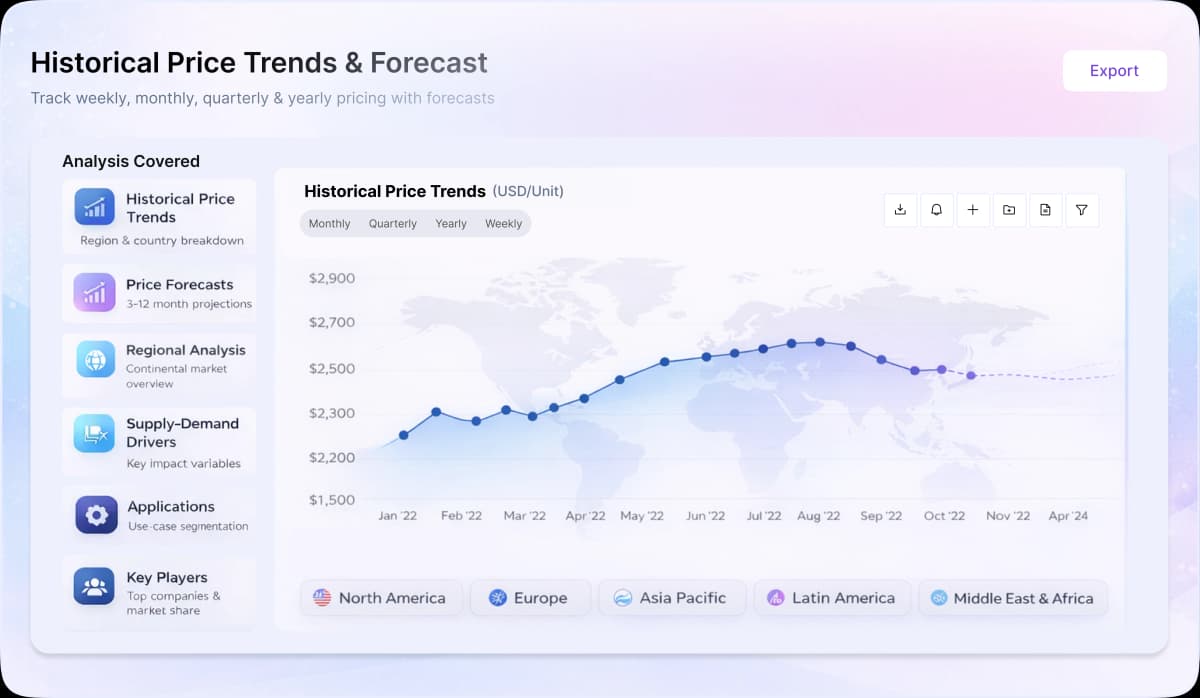
Price Trend Dashboard - What's Included
Price trends across a diverse portfolio of categories and products, spanning board to niche chemicals
Coverage extendable to grade-specific chemicals based on procurement requirements
Regular price tracking supported by robust historical datasets
News, policy updates, and key market drivers impacting price movements
Short-term and long-term price outlooks and forecasts
Supply–demand dynamics and capacity-driven market analysis