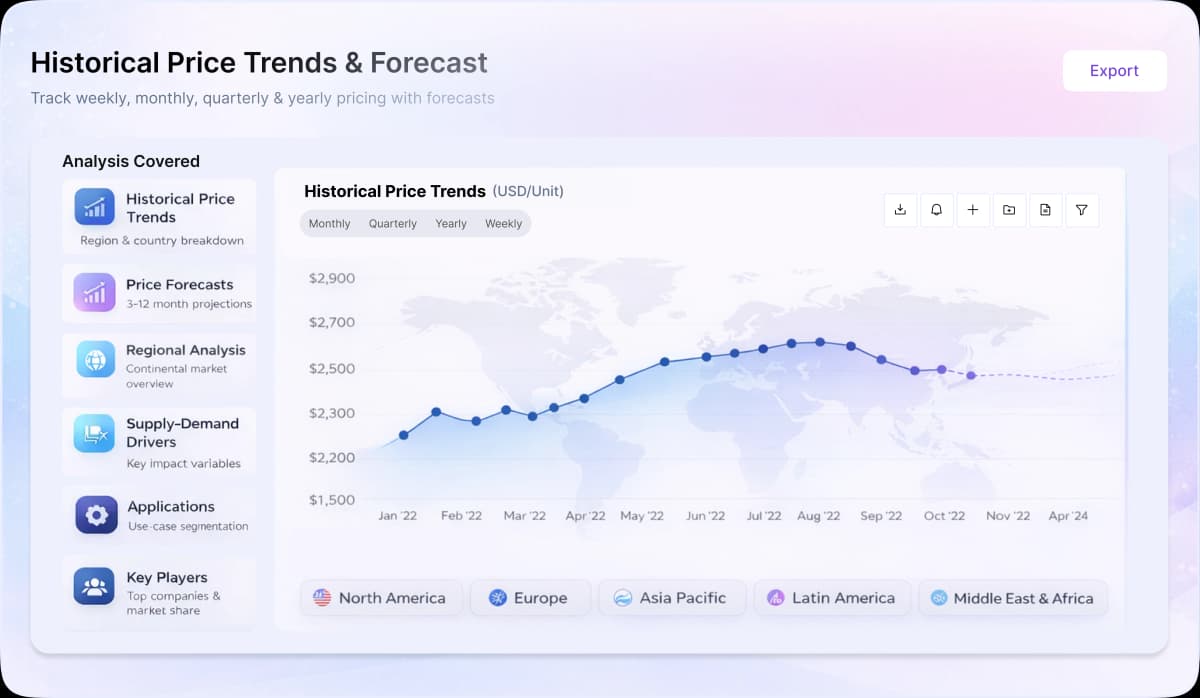
Activated Bleaching Earth Price Trend 2024
The activated bleaching earth market experienced significant price fluctuations throughout 2024, primarily driven by the expanding edible oil industry in Asia Pacific regions. During the first quarter, prices maintained relative stability due to balanced supply and demand dynamics, with major manufacturers operating at standard production capacities.
As the second quarter progressed, prices saw a moderate increase, influenced by growing demand from emerging economies like Malaysia, Indonesia, China, and India. This upward trend was further amplified by rising production costs of bentonite, attapulgite, and sepiolite—the primary clay minerals used in bleaching earth production. The increased adoption of activated over natural bleaching earth, particularly for oils with high chlorophyll content, also contributed to price escalation.
By mid-year, the market witnessed temporary price stabilization as suppliers expanded production to meet growing demand. However, the third quarter brought renewed price pressure as energy costs for processing—particularly for activated variants requiring chemical treatment—increased significantly. The wet bleaching process gained popularity despite its higher initial investment, as it reduced overall bleaching earth requirements and minimized oil losses.
The fourth quarter showed marginal price correction as manufacturers implemented more efficient production technologies, partially offsetting rising raw material costs. The market remained segmented between premium specialty products for high-value oils and standard grades for conventional refining applications.
Future Outlook
According to Procurement Resource, the Bleaching Earth market is projected to maintain steady growth through 2035, with increasing emphasis on sustainable manufacturing processes and customized solutions tailored to specific refining needs across various industries.
Related Report