Blondie Brownie Price Trend Analysis 2026: Price Drivers, Latest News, Historical Prices, Market Insights & Supply Demand Analysis

Pragati Agarwal profile photo
Written ByPragati Agarwal

Procurement Resource Database

Laptop screen

Turn price intelligence into action with the Procurement Resource Database. Log in or subscribe to unlock live price trends, historical charts, supplier databases, cost curves, and analyst-backed insights across chemicals, agriculture, energy, packaging, and more. Use these tools to benchmark your contracts, plan budgets with confidence, and stay ahead of market moves on every product you buy.

0

+

Products

0

+

Regions

0

+

Subscriptions

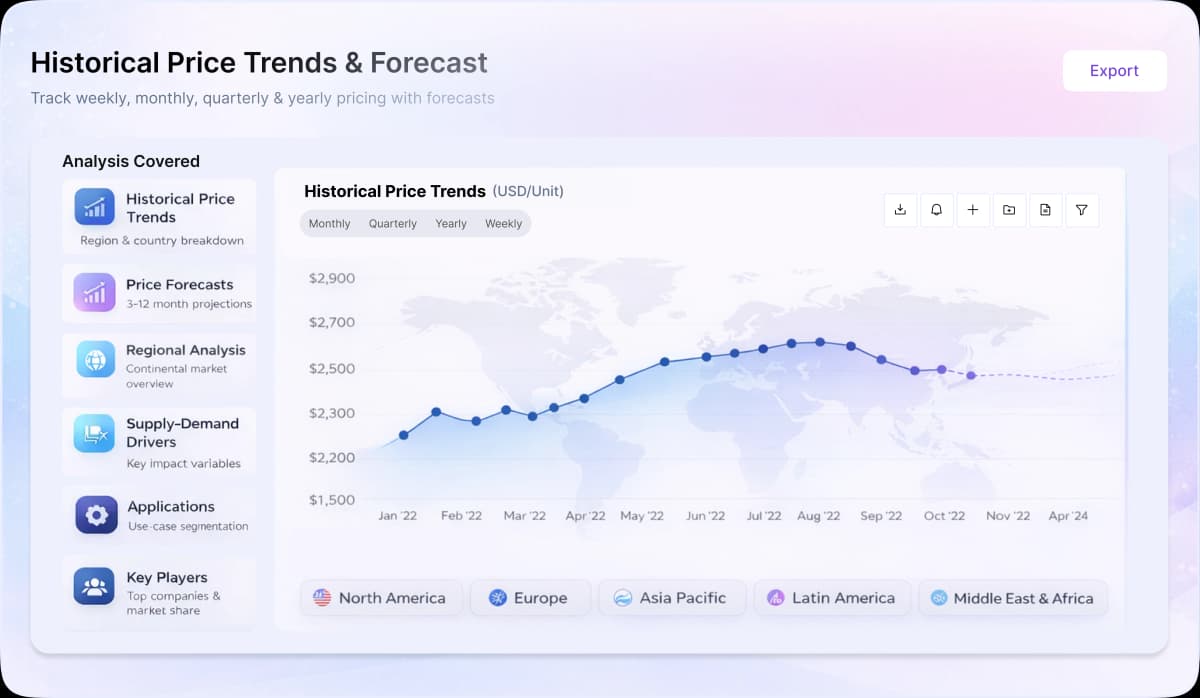
The Blondie Brownie industry was subjected to changes throughout 2025, with the prices being influenced by the contrasting trends in the prices of the two raw materials, sugar and vanilla extract. The prices of sugar have continued to fluctuate in an irregular manner, which caused constant uncertainty for producers handling the purchase and cost management. Sugar prices, one of the primary ingredients, also witnessed a volatile trend, which made it difficult to formulate a constant pricing strategy, especially for large-scale producers.

Contrary to this, the prices of vanilla extract have shown a contrasting trend. A major policy change in Madagascar, which is the world's largest producer of vanilla, has led to the government's decision to liberalize prices in the wake of a buildup in surplus stocks in the country and internationally. This has caused the prices to fall, and they have been relatively low throughout the year. For the producers of Blondie Brownie, which uses vanilla extract as an important ingredient, this provided some relief with respect to the prices. Seasonal uptrends in the prices have provided support to the prices of Blondie Brownie, particularly during the Christmas and New Year celebrations by the end of the year.

About Blondie Brownie

A Blondie Brownie is basically a rich, sweet dessert bar. It is similar to the conventional chocolate brownies, but substitutes vanilla for the cocoa utilised in brownies and is made of brown sugar. It contains no chocolate or chocolate flavouring, while chocolate chips may or may not be included. The ingredients from which Blondie Brownie is generally prepared include flour, butter, eggs, brown sugar, baking powder and vanilla.



It may also contain walnuts or pecans along with flavoured chips like white or dark chocolate chips, butterscotch chips, etc. Now-a-days manufacturers are launching Blondie Mixes, and that too organic, sugar free and Non-GMO variants, to meet its rising demand.

Blondie Brownie Product Detail

Synonyms

Blond Brownie, Blondie Bar

Industrial Uses

Dessert, Confectionery, Baked Goods

Supplier Database

CarbRite Diet, Namaste Foods, Foodstirs, Inc.Good Dee’s

Regional Coverage

Asia Pacific

China, India, Indonesia, Pakistan, Bangladesh, Japan, Philippines, Vietnam, Iran, Thailand, South Korea, Iraq, Saudi Arabia, Malaysia, Nepal, Taiwan, Sri Lanka, UAE, Israel, Hongkong, Singapore, Oman, Kuwait, Qatar, Australia, and New Zealand

Europe

Germany, France, United Kingdom, Italy,Spain, Russia, Turkey, Netherlands, Poland, Sweden, Belgium, Austria, Ireland Switzerland, Norway, Denmark, Romania, Finland, Czech Republic, Portugal and Greece

North America

United States and Canada

Latin America

Brazil, Mexico, Argentina, Columbia, Chile, Ecuador, and Peru

Africa

South Africa, Nigeria, Egypt, Algeria, Morocco

CurrencyUS$ (Data can also be provided in local currency)

Supplier Database AvailabilityYes

Customization ScopeThe report can be customized as per the requirements of the customer

Post-Sale Analyst Support360-degree analyst support after report delivery

Note: Our supplier search experts can assist your procurement teams in compiling and validating a list of suppliers indicating they have products, services, and capabilities that meet your company's needs.

Blondie Brownie Production Processes

  • Production of Blondie Brownie via Baking

Blondie Brownie are basically baked in a pan in an oven, just like the way traditional brownies are prepared. After baking, they are cut and separated into rectangular shapes for serving.

Frequently Asked Questions

The blondie brownie outlook for 2026 points to a range-bound cost basket, with firm sugar and soft vanilla continuing to offset each other. Sugar remains the dominant cost driver, unsettled by shifting cane and beet availability, while ample Madagascar vanilla stocks and a liberalised export stance keep the flavour segment subdued. Steady premium dessert demand across the baked-goods channel provides a floor, but any sustained move in either direction would require a meaningful shift in sweetener supply, vanilla availability, or downstream bakery offtake.
Blondie brownie production costs are shaped primarily by opposing movements in its two core feedstocks, sugar and vanilla extract. Sugar is typically the principal source of volatility, moving with shifting cane and beet availability and keeping producers cautious on bulk purchasing. Vanilla extract tends to trade more predictably, with Madagascar's export policy stance and carryover stock levels determining whether it runs soft or tight. Regionally, clean-label sourcing requirements can support a modest European premium, while elevated domestic sugar costs and steady bakery offtake tend to firm North American pricing.
The major manufacturers are Mondelez International, Nestlé S.A., Kellogg Company, Grupo Bimbo S.A.B. de C.V., and General Mills, Inc., alongside four specialist producers: CarbRite Diet, Namaste Foods, Foodstirs, Inc., and Good Dee's. Production concentrates in North America and Europe, with Asia Pacific, led by China, India, Japan, and Southeast Asia, as a growing base, alongside Latin America (Brazil, Mexico) and key African markets (South Africa, Nigeria, Egypt). Manufacturing concentration among five large corporations creates supply-chain concentration risk. Though commodity inputs, wheat, sugarcane or beet, dairy, and eggs, keep raw-material sourcing broadly diversified.
Blondie brownie is produced from seven key raw materials: butter, brown sugar, granulated sugar, vanilla extract, eggs, flour, salt, and baking powder. Ingredients are mixed, spread into a parchment-lined 9x13-inch pan, and baked at around 350°F until light brown. After cooling, bars are cut into portions. Finished blondies reach retail via supermarkets and convenience stores, food service as warm dessert bases paired with ice cream or caramel sauce, and institutional supply for ice cream products and dessert parfaits.
Blondie Brownie demand is driven by three downstream channels: desserts, confectionery, and baked goods. Within desserts, it serves as a premium bar format and sundae topping, capitalizing on consumer appetite for indulgent, ready-to-serve formats. In confectionery, its vanilla-forward profile offers a non-chocolate alternative that broadens product line variety. The baked-goods channel remains the strongest driver, with sustained demand for premium dessert formats supporting steady procurement activity across industrial bakeries and food service operators.
Blondie brownie production costs respond to two core feedstocks moving in different directions. Sugar tends to be the principal source of volatility, moving with shifting cane and beet availability and keeping producers cautious on bulk purchasing, particularly during periods of seasonal harvest uncertainty. Vanilla extract typically trades more steadily, with Madagascar's export policy stance and carryover stock levels cushioning manufacturers against sweetener-driven cost swings when supply runs ample.
Procurement Resource assesses blondie brownie price trends through a structured, data-driven methodology combining primary engagement with producers, suppliers and traders, secondary market data, monitoring of feedstock and input costs, trade-flow and inventory tracking, and exchange or spot benchmarks. All assessments are validated and translated into a transparent price outlook. Detailed methodology is available on the Procurement Resource website.

Our Price Analysis Methodology

About the Author

Pragati Agarwal profile photo

Pragati Agarwal

Senior Business Insights Analyst

Delivering price trend analysis and procurement market insights at Procurement Resource, with expertise in identifying commodity patterns, supporting purchasing strategies, and improving cost efficiency through actionable market intelligence.

Schedule Demo

Schedule A Demo

Experience how Procurement Resource transforms raw material price data into clear, decision ready intelligence. Optimise your performance with reliable, expert market data and analysis. Schedule your demo today to experience a live walk-through where our experts will showcase interactive price charts, forecasted prices, and insights driving the prices for your key commodities, tailored to your workflows. Contact us now!

Our Team will be happy to assist you

We are just a text away

+1

Still Need Help?

Europe & Africa

+44 7573 171117

Sales@procurementresource.com

USA & Canada

+1 307 363 1045

Sales@procurementresource.com

APAC

+91 8850629517

Sales@procurementresource.com

Unlock full access to Procurement Resource's price databases, interactive charts, and short-term forecasts for thousands of commodities. Elevate your sourcing decisions by comparing prices across regions, downloading historical data, and layering in analyst-backed insights, all with our flexible plans that scale as your portfolio grows.

Still have any Questions

Contact Us
Mastercard
Wire
VISA
Stripe

Why Procurement Database

Commodity Market Intelligence

Commodity Market Intelligence

Track prices, market movements, supply-demand dynamics, and industry developments across hundreds of commodities through a centralized intelligence platform built for informed procurement decisions.

Price Forecasts & Market Outlooks

Price Forecasts & Market Outlooks

Understand market fluctuations using analyst-backed forecasts, historical pricing patterns, and evolving industry trends to strengthen sourcing strategies and budget planning.

Cost & Procurement Optimization

Cost & Procurement Optimization

Leverage cost models, pricing benchmarks, and procurement insights to evaluate purchasing opportunities, improve negotiations, and enhance operational efficiency.

Global & Regional Market Insights

Global & Regional Market Insights

Access region-specific price trends, trade activities, capacity changes, and supply chain developments influencing commodity markets worldwide.

1/4