Caffeine Price Trend Analysis 2026: Price Drivers, Market Insights, Latest News, Supply Demand Analysis & Historical Prices

Siddharth David profile photo
Written BySiddharth David

Procurement Resource Database

Laptop screen

Turn price intelligence into action with the Procurement Resource Database. Log in or subscribe to unlock live price trends, historical charts, supplier databases, cost curves, and analyst-backed insights across chemicals, agriculture, energy, packaging, and more. Use these tools to benchmark your contracts, plan budgets with confidence, and stay ahead of market moves on every product you buy.

0

+

Products

0

+

Regions

0

+

Subscriptions

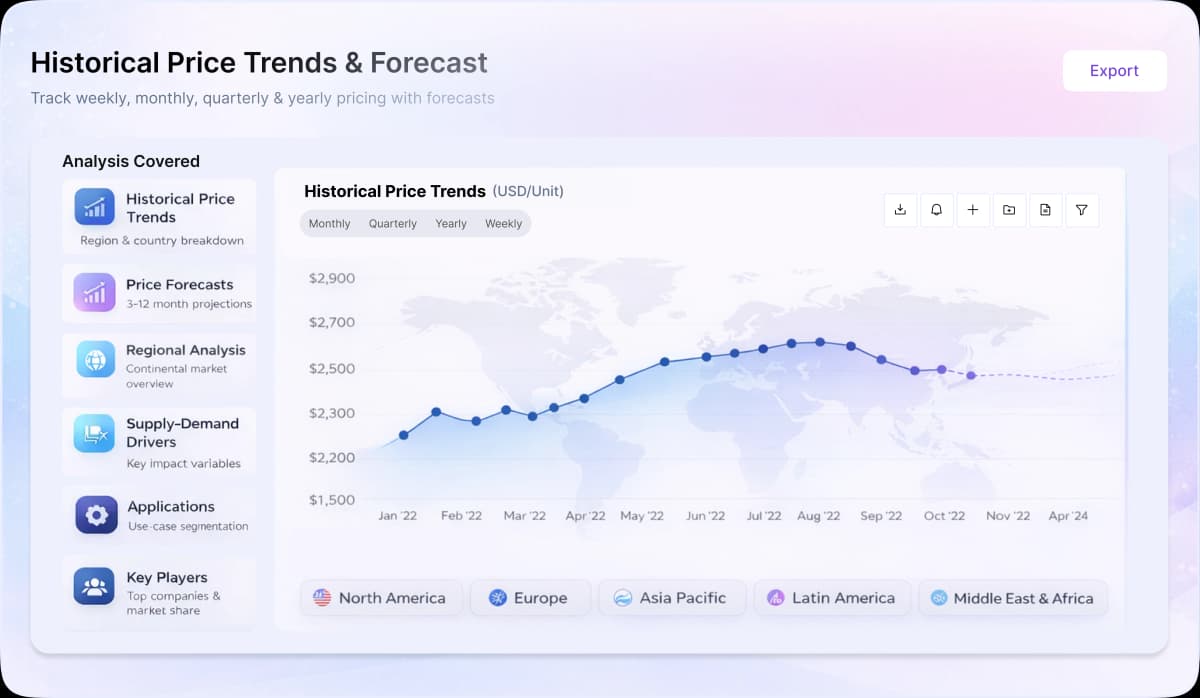
The price trend for Caffeine predominantly followed that of its feedstock coffee beans. The prices mostly rode high during the said period. Production yields were lower than expectations for the third year in a row. Higher yields were expected in this year’s crop cycle, but yields decreased, and the rise in other additional costs and procurement elevated the overall price trend.

Shortage of labor and rise in labor prices and shipment costs because of unseasonal weather difficulties, added with increased packaging and energy expenditures, contributed to the rise in upstream costs. Market demands remained stable and consistent in the face of difficult supplies. Overall positive market sentiments were observed for Caffeine prices in the said period.

About Caffeine

Caffeine, a central nervous system stimulant, belongs to the class of methylxanthine. It has several known modes of action that could be utilised to explain its effects. The most noticeable benefit is that it suppresses adenosine's activity on receptors in a reversible manner, avoiding adenosine-induced sleepiness. Caffeine also has a number of effects on the autonomic nervous system. It's also used as a cognitive enhancer, increasing alertness and focus.

Caffeine Product Detail

Chemical Formula

C8H10N4O2

Molecular Weight
194.19 g/mol
Industrial Uses

Food, Beverage, Pharmaceuticals, Personal Care

Synonyms

1,3,7-Trimethylxanthine, Guaranine, Thein

Supplier Database

BASF SE, Spectrum Chemical Manufacturing Corp., Kudos Chemie Limited, AVT Natural Products, Tianjin Zhong’an, Pharmaceutical Company Ltd., Shandong Xinhua Pharma

Regional Coverage

Asia Pacific

China, India, Indonesia, Pakistan, Bangladesh, Japan, Philippines, Vietnam, Iran, Thailand, South Korea, Iraq, Saudi Arabia, Malaysia, Nepal, Taiwan, Sri Lanka, UAE, Israel, Hongkong, Singapore, Oman, Kuwait, Qatar, Australia, and New Zealand

Europe

Germany, France, United Kingdom, Italy,Spain, Russia, Turkey, Netherlands, Poland, Sweden, Belgium, Austria, Ireland Switzerland, Norway, Denmark, Romania, Finland, Czech Republic, Portugal and Greece

North America

United States and Canada

Latin America

Brazil, Mexico, Argentina, Columbia, Chile, Ecuador, and Peru

Africa

South Africa, Nigeria, Egypt, Algeria, Morocco

CurrencyUS$ (Data can also be provided in local currency)

Supplier Database AvailabilityYes

Customization ScopeThe report can be customized as per the requirements of the customer

Post-Sale Analyst Support360-degree analyst support after report delivery

Note: Our supplier search experts can assist your procurement teams in compiling and validating a list of suppliers indicating they have products, services, and capabilities that meet your company's needs.

Caffeine Production Processes

  • Caffeine production from Coffee Waste

Dichloromethane is used for the extraction of the caffeine in strippers where caffeine is extracted by dissolution and refinement.

Frequently Asked Questions

The caffeine outlook remains tied primarily to coffee bean feedstock costs, since caffeine is extracted from coffee grounds and its price closely tracks coffee bean markets. Indian and Chinese production and export conditions are the key supply-side lever: weather disruptions, labour availability, and domestic coffee consumption trends in India can tighten or ease export volumes and raw material supply. Downstream demand from energy drinks, soft drinks, and pharmaceuticals provides a steady demand floor. A sustained supply squeeze from any of these factors would support firmer pricing, while improved harvest conditions or eased domestic consumption would ease it.
Caffeine prices are driven primarily by coffee bean feedstock costs, which closely track caffeine price movements since caffeine is extracted from coffee grounds. Weather disruptions in India, a major coffee-growing origin, can reduce production yields and tighten raw material supply, pushing prices higher. Labour availability at harvest time adds a further layer of supply risk. Rising domestic coffee consumption in producing countries can also reduce export volumes available to global buyers, tightening supply further and sustaining upward price pressure when it coincides with weak harvests.
India and China dominate caffeine production and exports. Weather disruptions, labour shortages, and production yield swings in India can tighten global supply, while China's presence is reinforced by manufacturers Tianjin Zhong'an and Shandong Xinhua Pharma. Additional key companies include BASF SE, Kudos Chemie Limited, and AVT Natural Products. The United States and European markets are primary consuming and importing regions, relying on these concentrated supply sources. This production concentration creates meaningful supply security exposure for downstream buyers.
Caffeine is produced from spent coffee grounds, the primary raw material. The process begins by drying the coffee waste, then mixing it with a solvent such as water or an ethanol-water blend to dissolve the caffeine. The solution is filtered to remove solid residues, and the caffeine is purified through liquid-liquid extraction or recrystallization. The finished product serves energy drinks, soft drinks, pharmaceuticals, dietary supplements, cosmetics, and chocolate.
Energy drinks, soft drinks, coffee, and chocolate are the primary downstream applications driving caffeine demand. Rising consumption in emerging economies, fueled by busy lifestyles and longer working hours, has steadily elevated demand over time. Because caffeine is extracted entirely from coffee feedstock, demand growth in these downstream categories interacts directly with coffee-market supply conditions: when strong consumer demand coincides with tight coffee harvests or reduced export availability, that combination tends to produce the sharpest price moves.


Caffeine prices closely track coffee bean prices, as caffeine is extracted from coffee feedstock. Unseasonal rainfall in key growing regions such as India can reduce coffee yields, tightening the raw-material supply available for extraction and pushing prices higher. Labour shortages at harvest time can further constrain production capacity, compounding any supply squeeze. Rising domestic coffee consumption in producing countries can also divert volumes away from export markets, reducing global availability. Together, these supply-side pressures are what typically drive the sharpest seasonal price swings.
Caffeine is produced and sold in grades aligned to pharmacopoeia and food-safety frameworks. Pharmaceutical-grade caffeine meets USP, EP, and BP standards for active pharmaceutical ingredient quality, serving headache, migraine, and pain relief formulations. Food and beverage applications fall under FDA and EU regulatory compliance, covering energy drinks, soft drinks, and functional beverages. Cosmetic-grade caffeine is formulated for skincare and personal care products. These grade distinctions matter commercially because they determine regulatory documentation requirements, pricing tiers, and which end-use markets a supplier can serve.
Procurement Resource assesses caffeine prices through a structured, data-driven methodology combining primary engagement with producers, suppliers and traders, secondary market data, monitoring of feedstock and input costs, trade-flow and inventory tracking, and exchange or spot benchmarks. These inputs are validated and translated into a transparent price assessment and outlook. The detailed methodology is available on the Procurement Resource website.

Our Price Analysis Methodology

About the Author

Siddharth David profile photo

Siddharth David

Manager - Market Research

Delivering market research and procurement intelligence at Procurement Resource with a focus on economic forecasting, commodity analysis, and client advisory to help sourcing teams make data-backed purchasing decisions.

Schedule Demo

Schedule A Demo

Experience how Procurement Resource transforms raw material price data into clear, decision ready intelligence. Optimise your performance with reliable, expert market data and analysis. Schedule your demo today to experience a live walk-through where our experts will showcase interactive price charts, forecasted prices, and insights driving the prices for your key commodities, tailored to your workflows. Contact us now!

Our Team will be happy to assist you

We are just a text away

+1

Still Need Help?

Europe & Africa

+44 7573 171117

Sales@procurementresource.com

USA & Canada

+1 307 363 1045

Sales@procurementresource.com

APAC

+91 8850629517

Sales@procurementresource.com

Unlock full access to Procurement Resource's price databases, interactive charts, and short-term forecasts for thousands of commodities. Elevate your sourcing decisions by comparing prices across regions, downloading historical data, and layering in analyst-backed insights, all with our flexible plans that scale as your portfolio grows.

Still have any Questions

Contact Us
Mastercard
Wire
VISA
Stripe

Why Procurement Database

Commodity Market Intelligence

Commodity Market Intelligence

Track prices, market movements, supply-demand dynamics, and industry developments across hundreds of commodities through a centralized intelligence platform built for informed procurement decisions.

Price Forecasts & Market Outlooks

Price Forecasts & Market Outlooks

Understand market fluctuations using analyst-backed forecasts, historical pricing patterns, and evolving industry trends to strengthen sourcing strategies and budget planning.

Cost & Procurement Optimization

Cost & Procurement Optimization

Leverage cost models, pricing benchmarks, and procurement insights to evaluate purchasing opportunities, improve negotiations, and enhance operational efficiency.

Global & Regional Market Insights

Global & Regional Market Insights

Access region-specific price trends, trade activities, capacity changes, and supply chain developments influencing commodity markets worldwide.

1/4