Skimmed Milk Powder Prices Rise
Global skimmed milk powder prices climbed to their highest level since 2022, driven by strong demand from Asian buyers. The rise is expected to continue into early 2027, supporting higher SMP prices.

Global skimmed milk powder prices climbed to their highest level since 2022, driven by strong demand from Asian buyers. The rise is expected to continue into early 2027, supporting higher SMP prices.
US dairy producers saw butter inventories rise, pushing wholesale butter prices down. Cheese prices also fell, while protein‑rich dry milk products gained. The surplus is likely to keep butter and cheese prices subdued.
Asia
Cheese market movement in Asia stayed uneven during H1’26. In Oceania, Australia’s cheese production rose 12% in March 2026 and increased 1.8% during July 2025 to March 2026, improving regional supply. However, cheddar cheese exports from Australia fell 17.8% during July 2025 to April 2026, limiting export availability for Asian buyers. Other cheese exports rose 1.9%, keeping supply somewhat balanced. China’s demand remained tied to foodservice, where around 70% of cheese consumption came from hotels, restaurants and institutional channels. Pizza chains, Western-style restaurants and bakery use supported demand, but abundant local milk supply and cautious retail consumption restricted sharper gains.
Europe
European cheese values improved mildly toward the end of H1’26. The main pressure came from higher upstream supply, as raw milk collection increased 4.0% during January to April 2026. Cheese production rose 3.8% during January to March 2026, adding volume into the market. Export demand helped offset this pressure, with cheese exports rising 3% in January to February 2026. Shipments to Japan increased 22%, Saudi Arabia rose 13%, and Australia moved up 4%, while exports to the U.S. fell 3%. This kept the market supported, but heavy milk availability limited stronger upward movement.
North America
North America showed a softer tone in H1’26 as supply expanded. U.S. total cheese output reached 1.27 billion pounds in April 2026, up 1.7% year on year. Italian-type cheese production rose 4.2%, while American-type cheese production declined 1.2%. Milk production also increased, supported by a larger herd and higher output per cow. Export demand offered support, with milk-equivalent fat-basis exports rising 35.8% in April, driven by higher cheese and butter exports. Still, stronger milk and cheese production kept the market from gaining sharply.
Analyst Insight
According to Procurement Resource, cheese prices are likely to remain rangebound. Strong foodservice and export demand may support the market, but higher milk supply and cautious retail demand can limit major upward movement.
Related Report
Need Latest Cheese Prices?
Get real-time price assessments, periodic trends, forecasts and price driver insights across key global markets.
Our Clients


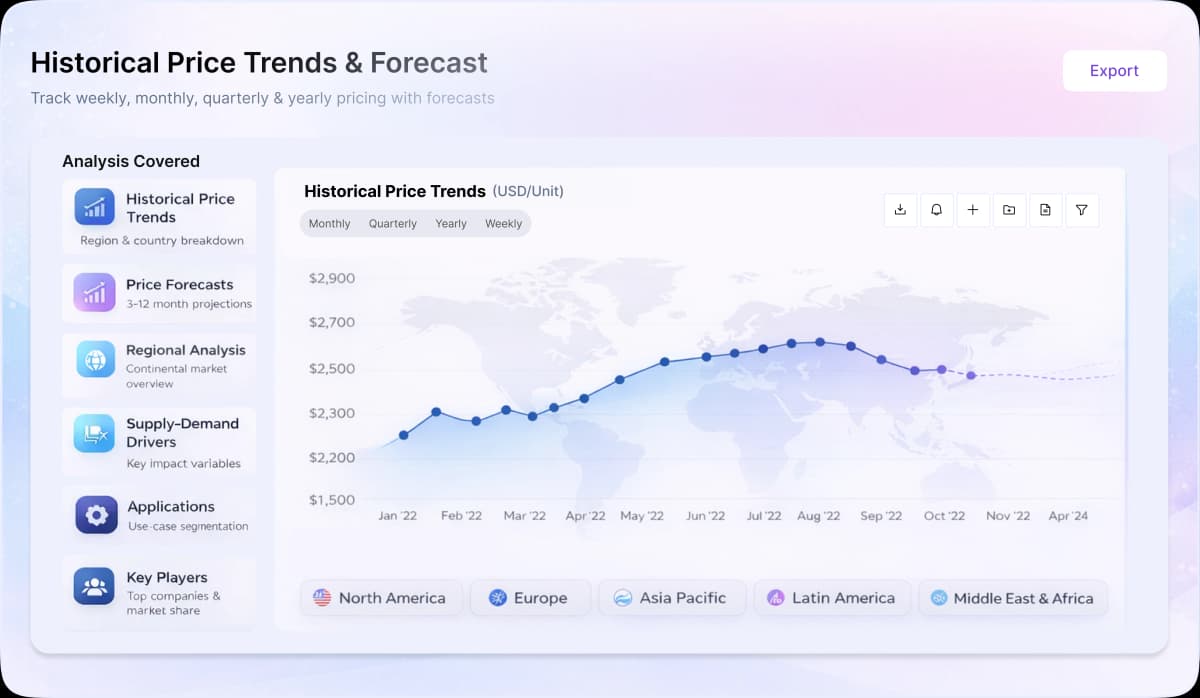
Turn price intelligence into action with the Procurement Resource Database. Log in or subscribe to unlock live price trends, historical charts, supplier databases, cost curves, and analyst-backed insights across chemicals, agriculture, energy, packaging, and more. Use these tools to benchmark your contracts, plan budgets with confidence, and stay ahead of market moves on every product you buy.
0
+Products
0
+Regions
0
+Subscriptions
Asia
The major factor influencing the price of cheese in Asia during 2025 was the changes in supply from the global market and the buying habits of the importers. There was a significant increase in milk production from the global market. Due to this increase in supply from the global market, the prices of butter, milk, and cheese decreased. Since supply was higher than demand, many countries in Asia decreased their large-scale purchasing of cheese and started relying on local production and previous stocks. Therefore, the prices of cheese in Asia decreased slightly.
Europe
In Europe, the prices of cheese were quite mixed in the year 2025. The global production of milk was quite high, which led to the fall of prices of dairy commodities, especially cheese, especially during the latter part of the year. The producers in Europe were faced with increased competition, especially in the export market, which included the United States. The EU-based exporters were in a slightly stronger position compared to the UK-based exporters, especially in terms of tariff rates. At the same time, the high production of dairy commodities in the EU and the surrounding countries contributed to the prices. Therefore, there was a gradual fall in the prices of cheese in Europe.
North America
In North America, cheese prices were affected by both trade policies and global supply growth. The uncertainty of trade policies for cheese exporters and retailers resulted in businesses trying to absorb the costs of higher prices for consumers. Nevertheless, businesses were anticipating that they could pass on these costs to consumers in the future, which could have a potential impact on food inflation. On the other hand, strong milk production in key exporting countries resulted in a strong global cheese supply, causing cheese prices to fall. The United States was a strong cheese producer and competitor, especially with the rise of domestic cheese production. Thus, cheese prices in North America were affected by both higher supply and trade policy uncertainty.
Cheese is a well-known dairy product that is extracted from milk and is prepared in a wide range of flavours, textures, as well as forms by coagulation of the milk protein casein. Generally, it is made up of or composed of proteins and fats.
Processed food and fast food, Spread, Grilling and baking, Confectionery
Fonterra Co-operative Group, Arla Foods Amba, Danone S.A, Kerrygold USA, Yorkshire Cheese, Unilever PLC, Nestle SA
CurrencyUS$ (Data can also be provided in local currency)
Supplier Database AvailabilityYes
Customization ScopeThe report can be customized as per the requirements of the customer
Post-Sale Analyst Support360-degree analyst support after report delivery
Note: Our supplier search experts can assist your procurement teams in compiling and validating a list of suppliers indicating they have products, services, and capabilities that meet your company's needs.
There are six essential steps in cheesemaking that are widely utilised. The production of cheese starts with milk, and these steps are milk acidification, coagulation, separation of curd along with whey, salting, shaping, and ripening the same to finally produce cheese.
Our Price Analysis Methodology

Business Insights Analyst
Helping procurement and sourcing teams navigate complex markets through data-driven research, category intelligence, and actionable insights - with a focus on identifying market trends, analyzing supply-side developments, and delivering clear intelligence that supports informed business decisions.

Experience how Procurement Resource transforms raw material price data into clear, decision ready intelligence. Optimise your performance with reliable, expert market data and analysis. Schedule your demo today to experience a live walk-through where our experts will showcase interactive price charts, forecasted prices, and insights driving the prices for your key commodities, tailored to your workflows. Contact us now!
Our Team will be happy to assist you
We are just a text away
Still Need Help?
This report provides the cost structure of dextrose from the hydrolysis of starch.
This study presents the production of vitamin B2 from glucose using the process of fermentation.
This report provides the cost structure of Greek yoghurt from the fermentation process. Milk is first heated and then cooled to make suitable conditions for fermentation before bacteria cultures are added.
This report provides an extensive cost evaluation of Milk Chocolate production via conching and tempering processes.
Unlock full access to Procurement Resource's price databases, interactive charts, and short-term forecasts for thousands of commodities. Elevate your sourcing decisions by comparing prices across regions, downloading historical data, and layering in analyst-backed insights, all with our flexible plans that scale as your portfolio grows.
Still have any Questions
Contact Us



Price Trend Dashboard - What's Included
Price trends across a diverse portfolio of categories and products, spanning board to niche chemicals
Coverage extendable to grade-specific chemicals based on procurement requirements
Regular price tracking supported by robust historical datasets
News, policy updates, and key market drivers impacting price movements
Short-term and long-term price outlooks and forecasts
Supply–demand dynamics and capacity-driven market analysis

Track prices, market movements, supply-demand dynamics, and industry developments across hundreds of commodities through a centralized intelligence platform built for informed procurement decisions.

Understand market fluctuations using analyst-backed forecasts, historical pricing patterns, and evolving industry trends to strengthen sourcing strategies and budget planning.

Leverage cost models, pricing benchmarks, and procurement insights to evaluate purchasing opportunities, improve negotiations, and enhance operational efficiency.
Access region-specific price trends, trade activities, capacity changes, and supply chain developments influencing commodity markets worldwide.