Choline Chloride Price Trend Analysis 2026: Historical Prices, Supply Demand Analysis, Price Drivers, Market Insights & Latest News

Udeesha Tomar profile photo
Written ByUdeesha Tomar

Procurement Resource Database

Laptop screen

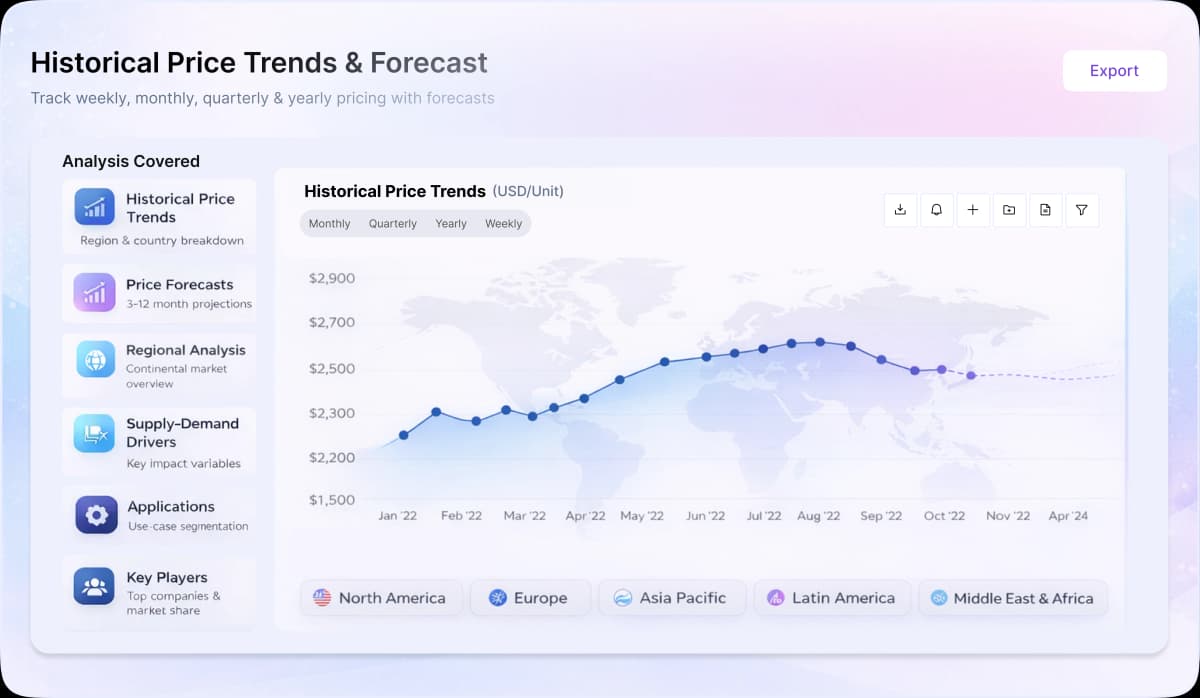
Turn price intelligence into action with the Procurement Resource Database. Log in or subscribe to unlock live price trends, historical charts, supplier databases, cost curves, and analyst-backed insights across chemicals, agriculture, energy, packaging, and more. Use these tools to benchmark your contracts, plan budgets with confidence, and stay ahead of market moves on every product you buy.

Choline Chloride Dashboard Inclusions

Choline Chloride Price Dasboard

0

+

Products

0

+

Regions

0

+

Subscriptions

Asia

Choline Chloride prices in Asia followed a fluctuating path with a downward bias throughout the year, influenced primarily by weakness in upstream feedstock markets, particularly ethylene. The downward movement in ethylene values, driven by soft demand from downstream sectors like PET and textiles, created a cascading effect on derivative products including Choline Chloride. High inventory levels across the region persisted as buyers remained cautious with their procurement strategies, limiting spot activity and keeping market sentiment bearish. In the latter part of the year, the trend continued with steady supply conditions meeting tepid demand from end-use industries, particularly animal feed and nutritional supplements. Rising inventories at key ports added pressure as import arrivals outpaced actual consumption rates. Despite occasional optimism linked to feedstock adjustments, the overall market trajectory remained weak, with prices reflecting the broader malaise in petrochemical markets.

Europe

European Choline Chloride markets experienced an oscillating trajectory throughout the year, mirroring trends observed in upstream feedstock markets. The significant overcapacity in ethylene production created a persistent supply glut that translated into weaker pricing across derivative chemical chains. Demand remained subdued as key consuming industries, particularly animal nutrition and pharmaceutical applications, showed limited growth momentum. Structural imbalances in the regional petrochemical sector, highlighted by capacity rationalization announcements, further weakened market fundamentals. During the last months, ample regional supply and moderate operating rates kept product availability sufficient, even as demand from industrial consumers remained tepid. Elevated inventory positions prevented any meaningful price recovery despite some stabilization in input costs toward year-end.

North America

In North America, Choline Chloride price curve witnessed wavering movements influenced by weaker ethylene fundamentals and growing global supply. Brief operational disruptions from weather events in early months had only temporary effects, with production resuming quickly and adding to existing inventory levels. Domestic demand remained soft, particularly from derivative markets like animal feed additives and industrial applications. High inventory levels, coupled with muted export activity, limited upward price movements. The market ultimately corrected to reflect balanced-to-soft fundamentals, with pricing remaining range-bound and influenced by fluctuating crude oil values and inconsistent demand from end-use segments.

About Choline Chloride

Choline chloride is a vital organic compound with the chemical formula (CH3)3NCH2CH2OH⋅HCl. It is a water-soluble, quaternary ammonium salt that serves as a crucial nutrient and precursor to the neurotransmitter acetylcholine. Choline chloride is essential for various biological processes, including brain development, nerve function, and fat metabolism. It is commonly used as a feed additive in the animal husbandry industry to promote growth and improve overall health in animals, particularly in poultry, swine, and aquaculture.

Choline Chloride Product Detail

Hs Code
23099010
Chemical Formula

C5H14NO.Cl

Cas Number
67-48-1
Molecular Weight
139.62 g/mol
Industrial Uses

Animal feed additive, Water treatment, Pharmaceutical industry, Horticulture, Textile industry

Synonyms

2-Hydroxy-N,N,N-trimethylethan-1-aminium chloride

Supplier Database

Eastman chemical company, BASF SE, Imperial Group Limited, GHW International, Balchem Inc

Regional Coverage

Asia Pacific

China, India, Indonesia, Pakistan, Bangladesh, Japan, Philippines, Vietnam, Iran, Thailand, South Korea, Iraq, Saudi Arabia, Malaysia, Nepal, Taiwan, Sri Lanka, UAE, Israel, Hongkong, Singapore, Oman, Kuwait, Qatar, Australia, and New Zealand

Europe

Germany, France, United Kingdom, Italy,Spain, Russia, Turkey, Netherlands, Poland, Sweden, Belgium, Austria, Ireland Switzerland, Norway, Denmark, Romania, Finland, Czech Republic, Portugal and Greece

North America

United States and Canada

Latin America

Brazil, Mexico, Argentina, Columbia, Chile, Ecuador, and Peru

Africa

South Africa, Nigeria, Egypt, Algeria, Morocco

CurrencyUS$ (Data can also be provided in local currency)

Supplier Database AvailabilityYes

Customization ScopeThe report can be customized as per the requirements of the customer

Post-Sale Analyst Support360-degree analyst support after report delivery

Note: Our supplier search experts can assist your procurement teams in compiling and validating a list of suppliers indicating they have products, services, and capabilities that meet your company's needs.

Choline Chloride Production Processes

Trimethylamine, ethylene oxide, and hydrochloric acid are used in a chemical reaction to produce choline chloride. Ethylene oxide, trimethylamine, and hydrochloric acid are combined in a single streaming process that is carried out under strict supervision while keeping a moderate temperature and pressure in order to produce the desired product, choline chloride.

About the Author

Udeesha Tomar profile photo

Udeesha Tomar

AVP - Strategy and Solutions

Leading procurement research solutions across chemicals, materials, and food & beverages, with expertise in price forecasting and market analytics.

Our Price Analysis Methodology

Schedule Demo

Schedule a demo

Experience how Procurement Resource transforms raw material price data into clear, decision ready intelligence. Optimise your performance with reliable, expert market data and analysis. Schedule your demo today to experience a live walk-through where our experts will showcase interactive price charts, forecasted prices, and insights driving the prices for your key commodities, tailored to your workflows. Contact us now!

Our Team will be happy to assist you

We are just a text away

+1

Still Need Help?

Europe & Africa

+44 7573 171117

[email protected]

USA & Canada

+1 307 363 1045

[email protected]

APAC

+91 8850629517

[email protected]

Unlock full access to Procurement Resource's price databases, interactive charts, and short-term forecasts for thousands of commodities. Elevate your sourcing decisions by comparing prices across regions, downloading historical data, and layering in analyst-backed insights, all with our flexible plans that scale as your portfolio grows.

Still have any Questions

Contact Us
Mastercard
Wire
VISA
Stripe

Why Procurement Database

Commodity Market Intelligence

Commodity Market Intelligence

Track prices, market movements, supply-demand dynamics, and industry developments across hundreds of commodities through a centralized intelligence platform built for informed procurement decisions.

Price Forecasts & Market Outlooks

Price Forecasts & Market Outlooks

Understand market fluctuations using analyst-backed forecasts, historical pricing patterns, and evolving industry trends to strengthen sourcing strategies and budget planning.

Cost & Procurement Optimization

Cost & Procurement Optimization

Leverage cost models, pricing benchmarks, and procurement insights to evaluate purchasing opportunities, improve negotiations, and enhance operational efficiency.

Global & Regional Market Insights

Global & Regional Market Insights

Access region-specific price trends, trade activities, capacity changes, and supply chain developments influencing commodity markets worldwide.

1/4