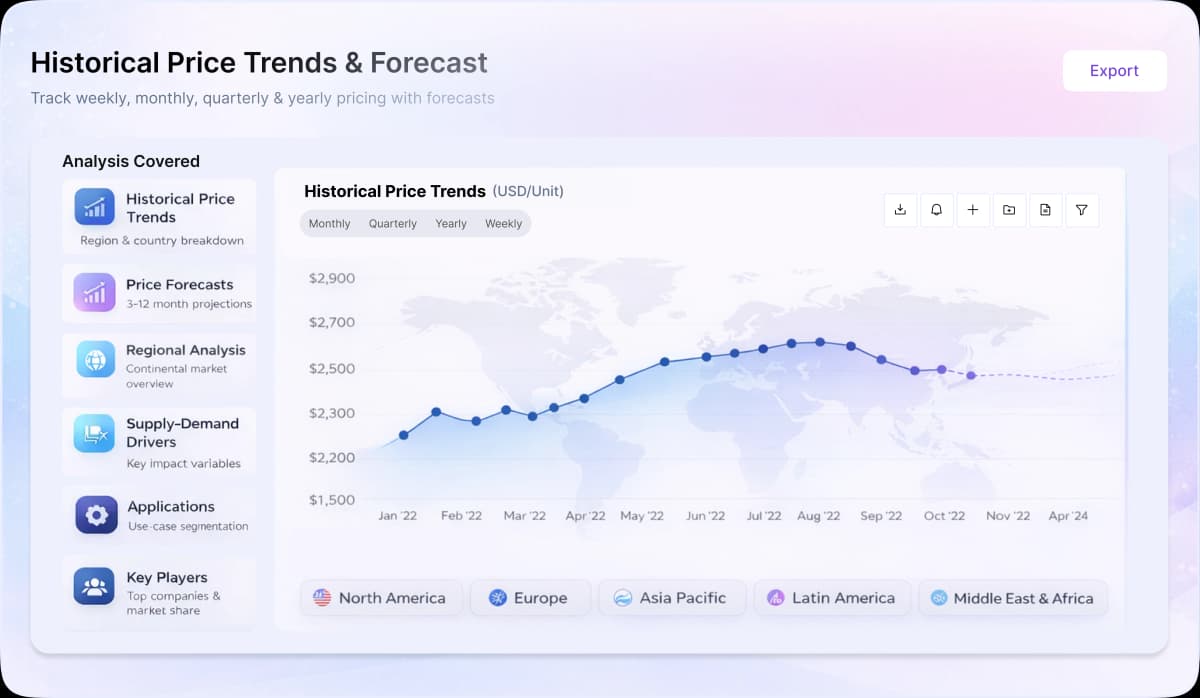
- Dichloromethane prices showed a firm-to-volatile trend in Q1 2026, with Asia seeing the sharpest movement due to feedstock pressure, holiday-related inventory changes, and export support.
- Feedstock pressure came mainly from methanol and liquid chlorine. Methanol availability tightened after Middle East disruptions affected 18% of global methanol capacity.
- Downstream demand was uneven. Pharma, adhesives, coatings, and solvent users purchased on need, but sharp cost pressure kept buyers cautious and limited sustained gains.
Asia
In Asia, China drove the Q1’26 dichloromethane trend. The market rose in January as producer availability tightened, then weakened in February due to holiday inventory buildup, slower logistics, and softer new orders. March brought renewed firmness as methanol and liquid chlorine costs increased, while export orders helped absorb part of the surplus after domestic factories resumed operations. The Iran conflict added pressure through methanol supply concerns, as Middle East disruption affected 18% of global methanol capacity and tightened sentiment across Asian chemical markets.
Europe
European dichloromethane sentiment stayed firm due to higher methanol costs and replacement supply concerns. Buyers became more active after the Middle East disruption, with European methanol spot activity reaching at least 41,000 MT during March 2-18, compared with 16,000 MT in all of February. This pointed to restocking and short-covering across the feedstock chain. However, weak demand from coatings, industrial solvents, and related manufacturing applications limited aggressive purchasing in dichloromethane.
North America
North America faced milder pressure than Asia and Europe, but feedstock procurement still strengthened. At least 32,792 MT of spot methanol traded during March 10-19, with at least 90% purchased by producers, indicating stronger chemical-sector buying. Dichloromethane demand remained steady from pharmaceuticals, adhesives, cleaning solvents, and coating applications, but buyers avoided heavy restocking because freight and feedstock conditions remained uncertain.