Procurement Resource Logo
    • Complexity Reduction Tool
    • Digital Should Cost Model
    • Procure 360
    • Sourcing Compass
    • Spend Analytics
    • Sustainability Tracker
    • Pricing Dashboard
  • Industries
    • Agriculture & Farming Commodities
    • Chemicals
    • Energy, Metals and Minerals
    • Flavours and Fragrances
    • Food and Beverages
    • Healthcare
    • Machinery, Electronics and Durables
    • Operating Costs, Logistics and Utilities
    • Packaging
  • Services
    • Category Compass
    • Commodity Compass
    • Supplier Compass
    • Data Analytics & Automation
    • Digital Solutions
    • Blogs
    • News & Articles
    • Newsletter
    • Manufacturing Plant Project Report3000+
    • Production Cost Report2000+
    • Price Trends1000+
Social Media Icon of linkedinCall Support IconSearch Icon
Login

Newsletter

Get Latest News About Procurement Resource Subscribe for News

Procurement

Industries

  • Agriculture & Farming Commodities
  • Chemicals
  • Energy, Metals and Minerals
  • Flavours and Fragrances
  • View All

Services

  • Category Compass
  • Commodity Compass
  • Supplier Compass
  • Data Analytics & Automation
  • Digital Solutions
  • View All

Useful Links

  • Testimonial
  • Press Releases
  • About Us
  • Careers
  • Who We Are
  • Term Of Use
  • Contact Us

Solutions

  • How We Work
  • Tail Spend Management
  • Full Time Engagement
  • Custom Research
  • Subscriptions
  • Resource Center
  • Return/Refund Policy
Copyright © 2026 Procurement Resource. All rights reserved.
  • Social Media icon Twitter i.e X
  • Social Media icon instagram i.e insta
  • Social Media icon linkedin i.e in
  • Social Media icon facebook i.e fb

EPDM Rubber Price Trend Analysis 2026: Supply Demand Analysis, Price Drivers, Historical Prices, Latest News & Market Insights

  1. Home/
  2. Resource Center/
  3. EPDM Rubber
Udeesha Tomar profile photo
Written ByUdeesha Tomar

Enquire for the latest EPDM Rubber price

Enquire

EPDM Rubber Price Trend Q1 2026

Product Region Incoterm Basis Price Last Updated Month
EPDM Rubber China FOB USD 4,955.56/MT April 2026
EPDM Rubber USA CIF USD 5,042.56/MT April 2026
EPDM Rubber Germany CIF USD 5,081.56/MT April 2026
EPDM Rubber India CIF USD 5,005.56/MT April 2026
EPDM Rubber Japan CIF USD 4,997.56/MT April 2026
EPDM Rubber China FOB USD 4,034.00/MT March 2026
EPDM Rubber USA CIF USD 4,121.00/MT March 2026
EPDM Rubber Germany CIF USD 4,116.00/MT March 2026
EPDM Rubber India CIF USD 4,089.00/MT March 2026
EPDM Rubber Japan CIF USD 4,070.00/MT March 2026

Stay updated with the latest EPDM Rubber prices, historical data, and tailored regional analysis
 

  • EPDM rubber prices showed a mixed global trend in early 2026, with gains in Asia supported by tighter supply, while Western markets remained under pressure from oversupply.
  • Feedstock cost support remained uneven as supply disruptions linked to the Iran war and Strait of Hormuz tightened production economics globally.
  • Downstream demand from automotive seals, roofing membranes, and construction applications remained stable in Asia but weak across Europe and North America.

Asia

EPDM rubber prices showed an increase on the Asian market, backed up by strong ethylene prices, combined with a shortage of supply in the region. Limited supply due to lower utilization rates at steam crackers and a decrease in capacities by 20-28% in Japan and South Korea created additional pressure on buyers, who switched to imports, pushing buyers toward imports and increasing competition for cargoes. For India, increased reliance on shipments and a shortage in supply continued to push prices higher due to energy flow problems worldwide.

Europe

EPDM rubber pricing in Europe stayed low owing to excess supply and poor demand. The poor performance of ethylene and its low cracking margin of about 75% limited cost support for the commodity. Additionally, the continued availability of imports for olefins and derivatives weighed down the local producers, and demand from the automotive and building industries was weak due to inflation and sluggish economic growth.

North America

In North America, EPDM rubber prices remained largely stable with slight pressure, as oversupply and weak downstream demand persisted. Ethylene-linked cost support from higher natural gas and ethane prices prevented sharp declines, but compressed margins limited upward movement. Demand from automotive components and industrial applications remained cautious, keeping market activity restrained despite elevated production costs.

Analyst Insight

According to Procurement Resource, in the near term, EPDM rubber prices are expected to remain range-bound, with cost support from supply disruptions balanced by weak demand in Western markets.

Related Report

  • EPDM Rubber Manufacturing Plant Project Report

Need latest EPDM Rubber price?

Get real-time price assessments, periodic trends, forecasts and price driver insights across key global markets.

Unlock Price Insights Now

Our Clients

ITC
Nestlé
GMR
Shell New
Veolia
UPM-Kymmene-Oyj-Technology
Syngenta
Sulzer
SPIC
SK-ENMOVE
SES-Water
Roche-Products-Limited
RioTinto
Perfetti-Van
Marinochem
Mada-Gypsum
Kingfisher
Kennametal
Johns-Hopkins
Honda
Hitachi-Energy
Hindustan-Unilever
ANSA-MCAL
ASHIRVAD PIPES
Bannerman-Energy
BASF-SE
Dhunseri-Ventures
DUKSAN
Glenmark
Groupe-Atlantic
Hanil-Industrial-Chemical

We have been working with Procurement Resource for over two years now. These guys can provide data for any market in any country. I have given them numerous challenging assignments to work upon and have been quite impressed with their approach and results.

Large Indian Conglomerate and a known FMCG Brand Procurement Manager

When we started our Betaine manufacturing operations in Brazil, we were struggling to identify suppliers and benchmark our procurement costs vs other players already in the market. Procurement Resource helped us understand the market in Latin America, the key suppliers, how others were getting products, and even helped us in negotiating prices.

Global FMCG GiantDirector (Manufacturing)

I would like to recognize quality of work done by your team on VIP (Value Improvement Program) for Purplle Private brand Packaging portfolio. Your team helped us in identifying right suppliers, collected Vendor related data, floating inquiry, price comparison+benchmarking. This has helped us achieve a significant cost saving.

Co-Founder & CEORupesh Aggarwal

Procurement Resource Database

Laptop screen

Turn price intelligence into action with the Procurement Resource Database. Log in or subscribe to unlock live price trends, historical charts, supplier databases, cost curves, and analyst-backed insights across chemicals, agriculture, energy, packaging, and more. Use these tools to benchmark your contracts, plan budgets with confidence, and stay ahead of market moves on every product you buy.

LoginSubscribe

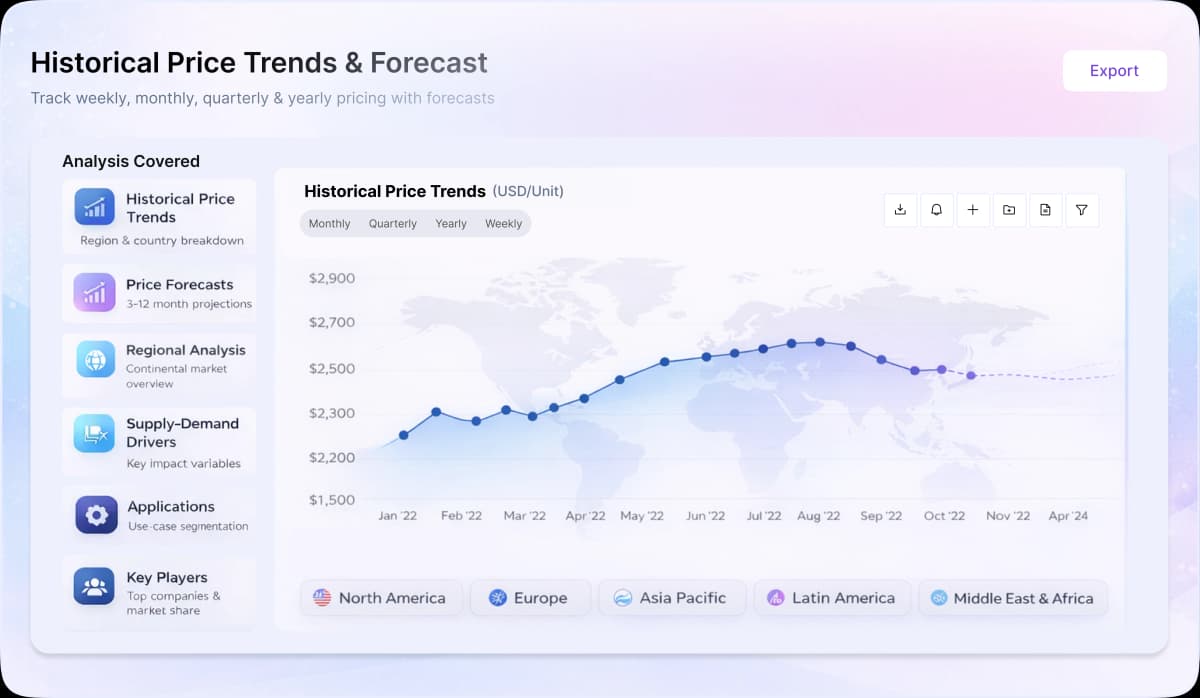
EPDM Rubber Dashboard Inclusions

EPDM Rubber Price Dasboard

0

+

Products

0

+

Regions

0

+

Subscriptions

Asia

In the second half of 2025, EPDM rubber prices in Asia showed mixed trends. In mid-August, prices edged higher due to strong construction activity and steady export demand, especially from India’s infrastructure projects. Japan’s market saw a modest rise supported by stable supply, well-managed inventories, and smooth port operations, even though automotive demand was weak. In South Korea, export demand from China’s recovering auto sector and India helped maintain firm pricing, while local construction activity remained moderate. Later on, the prices stabilized as feedstock costs for ethylene and propylene dropped, reducing production expenses for manufacturers. However, slower construction activity in South Korea and supply chain limitations led to a more balanced market.

Europe

The European region generally experienced steady EPDM rubber prices in H2’25. European suppliers managed production efficiently, and inventories remained adequate. Demand was supported by ongoing automotive and construction projects, although growth was moderate. The market did not face major disruptions in logistics or feedstock availability, keeping prices relatively stable.

North America

In the U.S., EPDM rubber prices remained largely steady through H2’25. Producers maintained consistent output, while ethylene and propylene costs stayed low, helping control production expenses. Automotive demand remained strong, particularly for weather seals and gaskets used in both conventional and electric vehicles. Construction demand contributed to overall consumption but was secondary, supported by federal infrastructure projects like roofing and bridges. Inventory levels were good, and logistics were smooth, keeping the supply-demand balance stable and preventing any major price changes.

Analyst Insight

According to Procurement Resource, EPDM rubber prices are expected to stay stable or slightly firm, supported by steady automotive demand and gradual recovery in construction projects across key regions.

About EPDM Rubber

EPDM rubber is a type of synthetic rubber that is a copolymer of ethylene, propylene, and non-conjugated diene monomers. These dienes are usually vinyl norbornene, dicyclopentadiene, etc. It is an example of M-class synthetic rubber, meaning that it is an elastomer comprising a saturated chain of polymethylene type. Usually, the ethylene content is between 45-75%, whereas dienes are around 3-9%. The cross-linkages are vulcanized via Sulphur. EPDM rubber owing to its excellent properties like resistance to heat, light, ozone, and polar liquids, are widely prevalent among manufacturers.

EPDM Rubber Product Detail

Hs Code
400270
Cas Number
25034-71-3
Industrial Uses

Plasticizers, Electrical Insulators, Sealant and gasketing, Waterproof Seals, Construction, Automotives

Synonyms

EPDM synthetic rubber, Ethylene Propylene Diene Monomer Rubber

Supplier Database

DOW Inc, JSR Corporation (Kumho Polychem Co. Ltd.), ARLANXEO, Exxon Mobil Corporation

Regional Coverage

Asia Pacific

China, India, Indonesia, Pakistan, Bangladesh, Japan, Philippines, Vietnam, Iran, Thailand, South Korea, Iraq, Saudi Arabia, Malaysia, Nepal, Taiwan, Sri Lanka, UAE, Israel, Hongkong, Singapore, Oman, Kuwait, Qatar, Australia, and New Zealand

Europe

Germany, France, United Kingdom, Italy,Spain, Russia, Turkey, Netherlands, Poland, Sweden, Belgium, Austria, Ireland Switzerland, Norway, Denmark, Romania, Finland, Czech Republic, Portugal and Greece

North America

United States and Canada

Latin America

Brazil, Mexico, Argentina, Columbia, Chile, Ecuador, and Peru

Africa

South Africa, Nigeria, Egypt, Algeria, Morocco

CurrencyUS$ (Data can also be provided in local currency)

Supplier Database AvailabilityYes

Customization ScopeThe report can be customized as per the requirements of the customer

Post-Sale Analyst Support360-degree analyst support after report delivery

Note: Our supplier search experts can assist your procurement teams in compiling and validating a list of suppliers indicating they have products, services, and capabilities that meet your company's needs.

EPDM Rubber Production Processes

  • Production of EPDM Rubber from Suspension Polymerization

The polymerization reaction of the feedstock ethylene, propylene, and the catalyst take place in the presence of an excess hydrocarbon solvent. Stabilizers are required as and when needed. Then steam and hot water remove the excess solvent and monomers, leaving only the EPDM rubber. This product is then dried through a mechanical press or in ovens.

Frequently Asked Questions

During Q1 2026, EPDM rubber prices showed a mixed global trend. Asia saw some support from tighter supply and selective restocking, while Western markets stayed under pressure from oversupply and muted demand. Feedstock cost support was uneven, with ethylene and propylene availability shaping production economics. Automotive and construction demand provided some base support but did not create a broad price surge.
The EPDM rubber outlook for 2026 remains stable to positive, supported by automotive seals, weatherstrips, roofing membranes, wire and cable insulation, and construction applications. Demand is expected to benefit from vehicle production recovery, infrastructure work, and wider use of durable elastomers. Asia-Pacific remains the strongest demand region, while North America and Europe are expected to recover more gradually.
EPDM rubber prices in Q1 2026 were influenced by feedstock costs, inventory levels, and regional supply-demand balances. Ethylene and propylene availability remained generally adequate, limiting major cost shocks, while recent capacity expansions in Asia increased supply availability in some markets. Demand from automotive, construction, roofing, and wire-and-cable applications provided support, but cautious purchasing and sufficient inventories prevented stronger price increases in many regions.
Major EPDM rubber companies include Dow, ARLANXEO, Exxon Mobil Corporation, Kumho P&B Chemicals through Kumho Polychem, and SK geocentric. These companies supply EPDM grades for automotive, construction, wire and cable, industrial parts, and weather-resistant rubber products. Their positions are supported by integrated petrochemical feedstocks, established production assets, and broad customer networks across Asia-Pacific, Europe, and North America.
In 2026, Kumho Petrochemical highlighted that Kumho Polychem had completed a 70,000-ton EPDM expansion, lifting annual EPDM capacity to 310,000 tons. The expansion strengthened Kumho’s high-value synthetic rubber business and supported demand from automotive, shipbuilding, and industrial applications requiring heat, weather, and chemical resistance.
EPDM rubber is produced from ethylene, propylene, and a diene monomer, commonly ethylidene norbornene. The value chain starts with petrochemical feedstock production, followed by polymerization, finishing, compounding, molding or extrusion, and conversion into finished goods. Downstream products include automotive seals, hoses, roofing membranes, cable insulation, gaskets, O-rings, weatherstrips, and industrial rubber parts.
Environmental regulations governing chemical manufacturing, emissions control, and workplace safety continued to influence the EPDM rubber industry in 2026. In the United States, compliance requirements under the Clean Air Act and EPA air-emission standards remained important for synthetic rubber producers, affecting operating practices, monitoring, and reporting obligations. In addition, sustainability initiatives in the automotive and construction sectors encouraged the use of durable, long-life materials, indirectly supporting demand for EPDM in weather-resistant sealing, roofing, and insulation applications.
EPDM rubber demand is mainly driven by automotive, building and construction, electrical and electronics, manufacturing, and industrial applications. Automotive users rely on EPDM for seals, weatherstrips, hoses, belts, and vibration-control parts. Construction demand comes from roofing membranes, window seals, and waterproofing products. Its resistance to heat, ozone, weathering, and chemicals keeps it useful in harsh outdoor and mechanical environments.
EPDM rubber performs better than many general-purpose rubbers in outdoor exposure because it resists ozone, UV radiation, weathering, steam, and temperature changes. It is not the best option for oil-heavy environments, where nitrile or chloroprene rubber may perform better. Companies use EPDM where long service life, weather resistance, flexibility, and sealing performance are more important than oil resistance.
Procurement Resource employs a structured methodology combining primary research, secondary market data, analytical models, and validation processes to assess EPDM rubber prices and trends. Price evaluations incorporate supply-demand dynamics, feedstock movements, trade flows, and value chain analysis, supported by continuous market monitoring to ensure accurate and reliable insights.

About the Author

Udeesha Tomar profile photo

Udeesha Tomar

AVP - Strategy and Solutions

Leading procurement research solutions across chemicals, materials, and food & beverages, with expertise in price forecasting and market analytics.

Read Full Bio

Our Price Analysis Methodology

100% Authentic Report Gauge
View Detail Methodology
Schedule Demo

Schedule a demo

Experience how Procurement Resource transforms raw material price data into clear, decision ready intelligence. Optimise your performance with reliable, expert market data and analysis. Schedule your demo today to experience a live walk-through where our experts will showcase interactive price charts, forecasted prices, and insights driving the prices for your key commodities, tailored to your workflows. Contact us now!

Our Team will be happy to assist you

We are just a text away

+1

Still Need Help?

Europe & Africa

+44 7573 171117

[email protected]

USA & Canada

+1 307 363 1045

[email protected]

APAC

+91 8850629517

[email protected]

Other Related Reports

EPDM Rubber Production from Suspension Polymerization

This report provides the cost structure of EPDM rubber production from the suspension polymerization process using polymer grade propylene and ethylene.

Request Free SampleView More

Unlock full access to Procurement Resource's price databases, interactive charts, and short-term forecasts for thousands of commodities. Elevate your sourcing decisions by comparing prices across regions, downloading historical data, and layering in analyst-backed insights, all with our flexible plans that scale as your portfolio grows.

Still have any Questions

Contact Us
Mastercard
Wire
VISA
Stripe

Price Trend Dashboard - What's Included

Price trends across a diverse portfolio of categories and products, spanning board to niche chemicals

Coverage extendable to grade-specific chemicals based on procurement requirements

Regular price tracking supported by robust historical datasets

News, policy updates, and key market drivers impacting price movements

Short-term and long-term price outlooks and forecasts

Supply-demand dynamics and capacity-driven market analysis

Subscribe Now

Related News

View All
News 531

Synthetic Rubber Prices Likely to Remain Volatile in Quarter Four of 2022

Why Procurement Database

Commodity Market Intelligence

Commodity Market Intelligence

Track prices, market movements, supply-demand dynamics, and industry developments across hundreds of commodities through a centralized intelligence platform built for informed procurement decisions.

Price Forecasts & Market Outlooks

Price Forecasts & Market Outlooks

Understand market fluctuations using analyst-backed forecasts, historical pricing patterns, and evolving industry trends to strengthen sourcing strategies and budget planning.

Cost & Procurement Optimization

Cost & Procurement Optimization

Leverage cost models, pricing benchmarks, and procurement insights to evaluate purchasing opportunities, improve negotiations, and enhance operational efficiency.

Global & Regional Market Insights

Global & Regional Market Insights

Access region-specific price trends, trade activities, capacity changes, and supply chain developments influencing commodity markets worldwide.

1/4