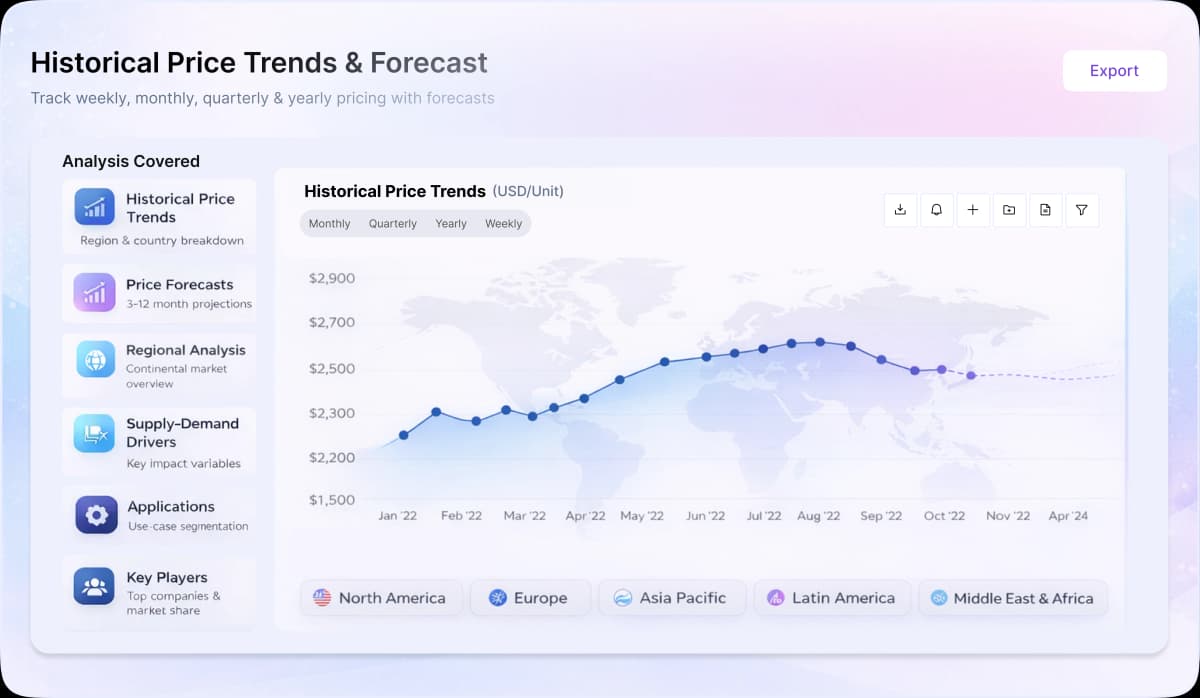
Need latest iodised Salt prices?
Get real-time price assessments, periodic trends, forecasts and price driver insights across key global markets.
Unlock Price Insights NowOur Clients
The fourth quarter of 2025 witnessed mixed movements in the Iodised Salt market, with pricing influenced by both seasonal demand patterns and regulatory interventions. In the Philippines, the government implemented a sixty-day price freeze on basic necessities, including iodised salt, following the declaration of a national state of calamity due to severe typhoon damage in early November. This freeze locked prices at prevailing levels, preventing any upward adjustments despite ongoing supply chain disruptions and increased distribution costs caused by the natural disasters.
The winter season created heightened demand for industrial salt products, particularly road salt, which competed for production capacity at major mining facilities. This seasonal shift redirected some manufacturing resources away from food-grade salt processing toward meeting urgent winter weather demands. However, the regulatory environment in key markets prevented these supply pressures from translating into immediate consumer price increases for iodised table salt.
Supply chain challenges persisted throughout the quarter as typhoon-affected regions struggled with damaged transportation infrastructure and distribution networks. Manufacturers worked closely with retailers to maintain adequate stock levels of basic goods, including iodised salt, though logistical costs climbed substantially. The price freeze mechanism protected consumers from these increased operational expenses, with producers and distributors absorbing the additional costs temporarily.
Analyst Insight
According to Procurement Resource, Iodised salt prices may face upward pressure once price freeze measures expire, as suppliers will seek to recover elevated distribution and operational costs accumulated during the said period.
Get real-time price assessments, periodic trends, forecasts and price driver insights across key global markets.
Unlock Price Insights NowOur Clients

Turn price intelligence into action with the Procurement Resource Database. Log in or subscribe to unlock live price trends, historical charts, supplier databases, cost curves, and analyst-backed insights across chemicals, agriculture, energy, packaging, and more. Use these tools to benchmark your contracts, plan budgets with confidence, and stay ahead of market moves on every product you buy.

0
+Products
0
+Regions
0
+Subscriptions
During the third quarter of 2025, iodised salt prices experienced a moderate upward trend, influenced by a combination of global and local factors. While salt itself is typically a stable commodity due to its abundance and low production costs, broader economic pressures pushed prices slightly higher over this period.

One major driver was the rising cost of food production in general, with inflationary pressures stemming from climate-related disruptions, supply chain challenges, and increased transportation expenses. Drought conditions in key producing regions, such as India and the UK, reduced crop yields and impacted the wider food industry.
Though iodised salt is not directly affected by poor harvests like grains or vegetables, the overall stress on the food supply chain contributed to rising packaging, energy, and labour costs, all of which affected the final retail price.
Additionally, health debates around salt consumption became more prominent in India and other emerging markets. While this didn’t significantly curb demand, it did influence how manufacturers marketed and priced iodised salt, especially lower-sodium variants. Meanwhile, global shipping costs remained volatile, and tariffs on food-related imports in the U.S. and other countries indirectly added to manufacturing expenses, including for basic goods like salt.
Retailers and producers also faced pressure from wage increases and higher employer costs, as seen in the UK and U.S. food sectors. This added to operational expenses, a portion of which was passed on to consumers.
iodised Salt is simply a table salt that has been mixed with a minute amount of iodine. Deficiency of iodine can cause thyroid gland problems, such as goitre and others. In table salt, the ingestion of iodine prevents iodine deficiency, and thus, the consumption of iodised salt proves to be beneficial for humans.
Household consumption, Bakeries, Food and beverage industry, Others
Tata Chemicals Ltd, Kutch Brine Chem Industries, Vibrant Global Salt Pvt Ltd., Indo Brine Industries Ltd, United Salt
CurrencyUS$ (Data can also be provided in local currency)
Supplier Database AvailabilityYes
Customization ScopeThe report can be customized as per the requirements of the customer
Post-Sale Analyst Support360-degree analyst support after report delivery
Note: Our supplier search experts can assist your procurement teams in compiling and validating a list of suppliers indicating they have products, services, and capabilities that meet your company's needs.
Edible salt can be iodised by spraying it with potassium iodate or potassium iodide solution. Thus, this process results in the formation of Iodised Salt.
Our Price Analysis Methodology

Experience how Procurement Resource transforms raw material price data into clear, decision ready intelligence. Optimise your performance with reliable, expert market data and analysis. Schedule your demo today to experience a live walk-through where our experts will showcase interactive price charts, forecasted prices, and insights driving the prices for your key commodities, tailored to your workflows. Contact us now!
Our Team will be happy to assist you
We are just a text away
Still Need Help ?
The Study Offers a Detailed Cost Analysis of Iodised Salt Production from Drip Feed Process. In Addition, the Report Incorporates the Manufacturing Process With Detailed Process and Material Flow, Operating Costs Along With Financial Expenses and Depreciation Charges.
The Study Offers a Detailed Cost Analysis of Iodised Salt Production from the Spray Mixing Process. In Addition, the Report Incorporates the Manufacturing Process With Detailed Process and Material Flow, Operating Costs Along With Financial Expenses and Depreciation Charges.
Unlock full access to Procurement Resource's price databases, interactive charts, and short-term forecasts for thousands of commodities. Elevate your sourcing decisions by comparing prices across regions, downloading historical data, and layering in analyst-backed insights, all with our flexible plans that scale as your portfolio grows.
Still have any Questions
Contact Us


Price Trend Dashboard - What's Included
Price trends across a diverse portfolio of categories and products, spanning board to niche chemicals
Coverage extendable to grade-specific chemicals based on procurement requirements
Regular price tracking supported by robust historical datasets
News, policy updates, and key market drivers impacting price movements
Short-term and long-term price outlooks and forecasts
Supply–demand dynamics and capacity-driven market analysis