EU Corn Production Forecast Cut
European Commission lowered the 2026/27 corn production forecast by 1.3 million tonnes, tightening supply outlook. The reduction may increase demand for imports, potentially lifting corn prices.

European Commission lowered the 2026/27 corn production forecast by 1.3 million tonnes, tightening supply outlook. The reduction may increase demand for imports, potentially lifting corn prices.
Goldman Sachs lifted its December and 2027 oil price forecasts amid heightened supply disruption risk from Russia-Ukraine and Middle East conflicts. The bank now expects higher prices, reflecting a stronger risk premium.
During Q4’25, the Isopentyl Alcohol market showed a mixed but mostly weak price trend. In the early part of the quarter, prices moved downward as supply availability increased and producers faced pressure to move volumes. Market activity slowed around the holiday period, which reduced shipments and weakened overall sentiment. Even after the holidays, demand recovery remained limited, and buyers focused mainly on short-term needs rather than bulk purchases. This cautious buying behaviour restricted any strong upward price movement.
As the quarter progressed, demand stayed uneven. Downstream users relied on existing inventories and showed cautious attitude, which reduced trading activity. On the cost side, feedstock conditions linked to isobutylene remained soft, offering limited cost support to producers. This further added pressure on prices, as manufacturers had little room to push higher offers. Supply levels stayed comfortable for most of the quarter, and excess availability continued to outweigh demand, keeping prices under pressure.
Toward early December, the market briefly stabilized as operating rates declined and inventories eased slightly. However, this support was short-lived, and prices softened again later in the quarter due to weakening downstream interest and slow orders.
Analyst Insight
According to Procurement Resource, Isopentyl Alcohol prices are expected to move in a narrow range, with market direction depending mainly on demand recovery and changes in feedstock supply conditions.
Related Report
Need Latest Isopentyl Alcohol Prices?
Get real-time price assessments, periodic trends, forecasts and price driver insights across key global markets.
Our Clients


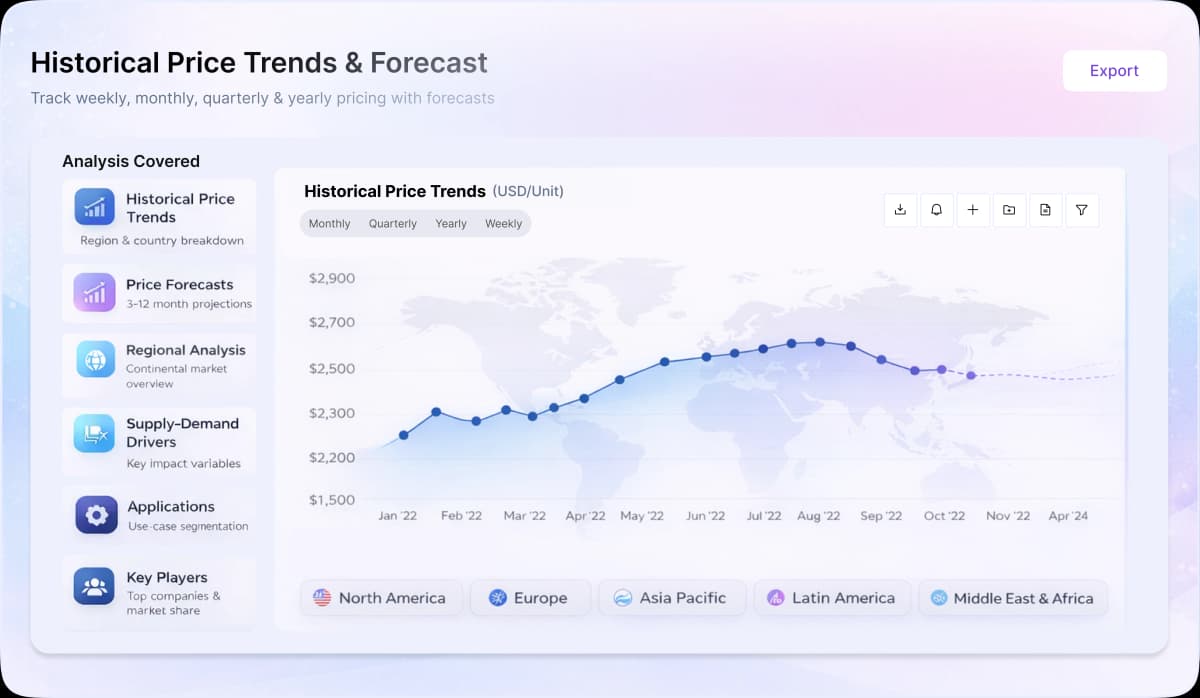
Turn price intelligence into action with the Procurement Resource Database. Log in or subscribe to unlock live price trends, historical charts, supplier databases, cost curves, and analyst-backed insights across chemicals, agriculture, energy, packaging, and more. Use these tools to benchmark your contracts, plan budgets with confidence, and stay ahead of market moves on every product you buy.
0
+Products
0
+Regions
0
+Subscriptions
In the third quarter of 2025, isopentyl alcohol prices moved lower across major regions as market fundamentals remained weak. In Asia, slower industrial activity and reduced consumption from end-user industries kept demand subdued.
The availability of ample raw materials and steady supply from global exporters created an oversupplied situation, putting further pressure on prices. Limited buying interest from downstream sectors, combined with weak petrochemical performance in China, contributed to the soft market sentiment throughout the quarter.
In Europe, market activity stayed sluggish as petrochemical producers operated at reduced rates, leading to lower demand for key intermediates. Weak spot buying and competitive offers from suppliers kept the overall pricing environment bearish. Refiners and chemical producers preferred alternative feedstocks that offered better margins, further limiting consumption.
Similarly, in North America, high domestic production levels and weak export inquiries kept the market well supplied. Demand from fuel blending and industrial applications was not sufficient to absorb the surplus, resulting in stable-to-lower price movements during the period.
Isopentyl Alcohol, a colorless liquid, is one of the many isomers of amyl alcohol. It has a mild, choking alcoholic odour. It is a by-product of gut microbial fermentation. Isopentyl Alcohol is also one of the major higher chain alcohols in alcoholic beverages and can be found in cider, wine, mead, beer, and spirits to varying degrees, being produced by the fermentation of starches.
C3H8O
Food additive, Inexpensive solvent, Alcoholic beverages, Manufacturing metals, Cosmetics and personal care products, Drugs, Paints and lubricants, Solids separation agent, Surface active agent, Denaturing ethanol (ethyl alcohol), Wet gas additive
Isoamyl alcohol, 3-Methyl-1-butanol, Isopentyl alcohol, 3-Methylbutan-1-ol, Isopentanol
BASF SE, SynQuest Laboratories (Central Glass Co., LTD.), Acros Organics, Penta Manufacturing Company
CurrencyUS$ (Data can also be provided in local currency)
Supplier Database AvailabilityYes
Customization ScopeThe report can be customized as per the requirements of the customer
Post-Sale Analyst Support360-degree analyst support after report delivery
Note: Our supplier search experts can assist your procurement teams in compiling and validating a list of suppliers indicating they have products, services, and capabilities that meet your company's needs.
In the production of Isopentyl Alcohol via chlorination, pentane is dried over HCl, vaporised, and then combined with chlorine. The gas produced is further processed to obtain HCl and amyl chloride, which is then hydrolysed to finally produce Isopentyl Alcohol.
Our Price Analysis Methodology

AVP - Strategy and Solutions
Leading procurement research solutions across chemicals, materials, and food & beverages, with expertise in price forecasting and market analytics.

Experience how Procurement Resource transforms raw material price data into clear, decision ready intelligence. Optimise your performance with reliable, expert market data and analysis. Schedule your demo today to experience a live walk-through where our experts will showcase interactive price charts, forecasted prices, and insights driving the prices for your key commodities, tailored to your workflows. Contact us now!
Our Team will be happy to assist you
We are just a text away
Still Need Help?
Furfuryl alcohol is made using hydrogen and furfural through hydrogenation. Furfural and hydrogen are thus transmitted to a hydrogenation reactor, which produces furfuryl alcohol.
Unlock full access to Procurement Resource's price databases, interactive charts, and short-term forecasts for thousands of commodities. Elevate your sourcing decisions by comparing prices across regions, downloading historical data, and layering in analyst-backed insights, all with our flexible plans that scale as your portfolio grows.
Still have any Questions
Contact Us



Price Trend Dashboard - What's Included
Price trends across a diverse portfolio of categories and products, spanning board to niche chemicals
Coverage extendable to grade-specific chemicals based on procurement requirements
Regular price tracking supported by robust historical datasets
News, policy updates, and key market drivers impacting price movements
Short-term and long-term price outlooks and forecasts
Supply–demand dynamics and capacity-driven market analysis

Track prices, market movements, supply-demand dynamics, and industry developments across hundreds of commodities through a centralized intelligence platform built for informed procurement decisions.

Understand market fluctuations using analyst-backed forecasts, historical pricing patterns, and evolving industry trends to strengthen sourcing strategies and budget planning.

Leverage cost models, pricing benchmarks, and procurement insights to evaluate purchasing opportunities, improve negotiations, and enhance operational efficiency.
Access region-specific price trends, trade activities, capacity changes, and supply chain developments influencing commodity markets worldwide.