Need latest Milling Wheat prices?
Get real-time price assessments, periodic trends, forecasts and price driver insights across key global markets.
Unlock Price Insights NowOur Clients
Milling wheat prices in 2025 moved through a year of changing market forces, beginning with firm conditions before easing as global supply confidence improved. At the start, prices were supported by tight availability in several regions. Asia faced strong demand from food manufacturers and limited access for private buyers due to heavy government procurement, which kept the market tense. Europe also began the year with a firm tone, as lower shipments from major suppliers pushed more importers toward European grain. Higher domestic costs and logistical challenges added to the upward pressure, making buyers cautious but still active.
As the year went on, the market gradually shifted. Improved weather in key producing regions supported better yield expectations, and harvesting progressed smoothly across North America and parts of Europe. Global demand, however, remained subdued, and competition from the Black Sea region strengthened, increasing downward pressure on international prices. Futures in major platforms softened as traders reacted to rising supply prospects, shifting currency conditions, and slow import interest. This period marked a noticeable transition away from the tighter environment seen earlier, with more grain becoming available and buyers waiting for clearer signals.
Toward the end of the year, the overall tone turned clearly softer. Ample supply projections, steady harvest progress, and hesitant purchasing kept prices under pressure. Even when short rebounds occurred due to technical trading or brief supply concerns, the momentum did not last. By the close of the year, milling wheat markets in most regions were trading at weaker levels, shaped largely by global abundance and cautious demand.
Related Report
Get real-time price assessments, periodic trends, forecasts and price driver insights across key global markets.
Unlock Price Insights NowOur Clients

Turn price intelligence into action with the Procurement Resource Database. Log in or subscribe to unlock live price trends, historical charts, supplier databases, cost curves, and analyst-backed insights across chemicals, agriculture, energy, packaging, and more. Use these tools to benchmark your contracts, plan budgets with confidence, and stay ahead of market moves on every product you buy.

0
+Products
0
+Regions
0
+Subscriptions
Milling wheat prices in the second half of 2024 moved in a mostly upward direction. In Asia, prices stayed mostly steady through the early part of Q3, helped by balanced supply in major markets like China. China supported stability by managing imports and preparing state purchases to protect farmers if prices weakened. By late Q3, global supply concerns pushed prices slightly higher. India, however, already faced firm prices in Q3, and this pressure grew stronger in Q4 as limited government stocks and delayed releases tightened the market. Weather worries and imports restrictions in nearby Turkey added to the regional strain, while interruptions in Russian exports reduced an important supply channel.
In Europe, Q3 was marked by unstable prices due to reduced yields and falling inventories caused by dry weather and earlier crop damage. These conditions continued into Q4, when drought in Russia opened more export opportunities for European suppliers. Still, trading remained cautious as buyers hesitated at higher costs and farmers held back sales. Western Europe also dealt with lower export availability, which kept the market tight.
North America saw a mixed trend. During Q3, U.S. prices stayed within a narrow range before rising at the end of the quarter as supply from the Black Sea region declined. In Q4, prices initially firmed but later eased when better rainfall improved crop prospects. A strong U.S. dollar also made exports less competitive, limiting further gains.
The milling of wheat basically involves the separation or distribution of bran and germ from the endosperm, followed by the reduction of endosperms to fine flour. Various steps are involved in transforming the wheat into flour via the process of milling. Milling Wheat is widely utilised in the food industry to produce different products and for use in several applications.

Flour, Biscuits, Shortcrust Pastry, Thickening agent
Grain Millers, Inc, Olam International, Bunge Limited, Star of the West Milling Co., Siemer Milling Company
CurrencyUS$ (Data can also be provided in local currency)
Supplier Database AvailabilityYes
Customization ScopeThe report can be customized as per the requirements of the customer
Post-Sale Analyst Support360-degree analyst support after report delivery
Note: Our supplier search experts can assist your procurement teams in compiling and validating a list of suppliers indicating they have products, services, and capabilities that meet your company's needs.

In order to produce Milling Wheat, wheat is first passed through several steps, which include cleaning of wheat, drying it, tempering, etc. Then, it is finally ground and utilised as flour for the commercial purpose.
Our Price Analysis Methodology

Experience how Procurement Resource transforms raw material price data into clear, decision ready intelligence. Optimise your performance with reliable, expert market data and analysis. Schedule your demo today to experience a live walk-through where our experts will showcase interactive price charts, forecasted prices, and insights driving the prices for your key commodities, tailored to your workflows. Contact us now!
Our Team will be happy to assist you
We are just a text away
Still Need Help ?
In this process, wheat flour is fed into a streamlet of water where a slurry mixture of wheat and water is formed.
This report provides the cost structure of wheat starch production from the Martin process. Martin process refers to the wet milling process.
Unlock full access to Procurement Resource's price databases, interactive charts, and short-term forecasts for thousands of commodities. Elevate your sourcing decisions by comparing prices across regions, downloading historical data, and layering in analyst-backed insights, all with our flexible plans that scale as your portfolio grows.
Still have any Questions
Contact Us


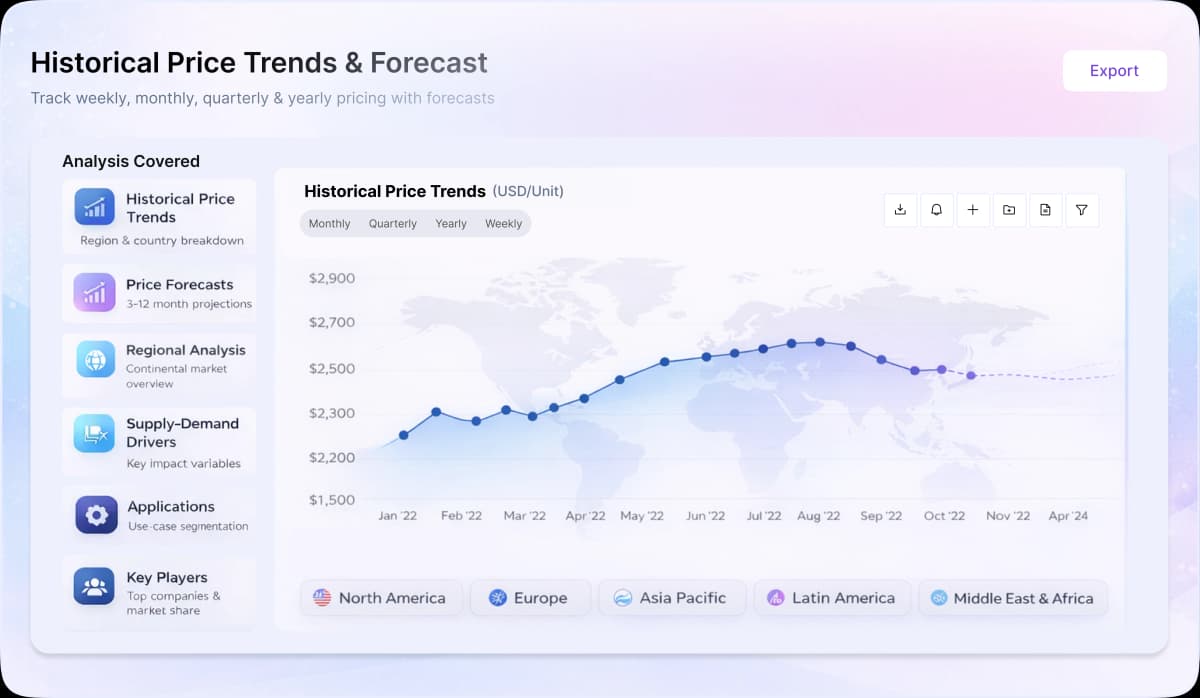
Price Trend Dashboard - What's Included
Price trends across a diverse portfolio of categories and products, spanning board to niche chemicals
Coverage extendable to grade-specific chemicals based on procurement requirements
Regular price tracking supported by robust historical datasets
News, policy updates, and key market drivers impacting price movements
Short-term and long-term price outlooks and forecasts
Supply–demand dynamics and capacity-driven market analysis