Natural Latex Price Trend Analysis 2026: Historical Prices, Latest News, Price Drivers, Supply Demand Analysis & Market Insights

Procurement Resource Database

Laptop screen

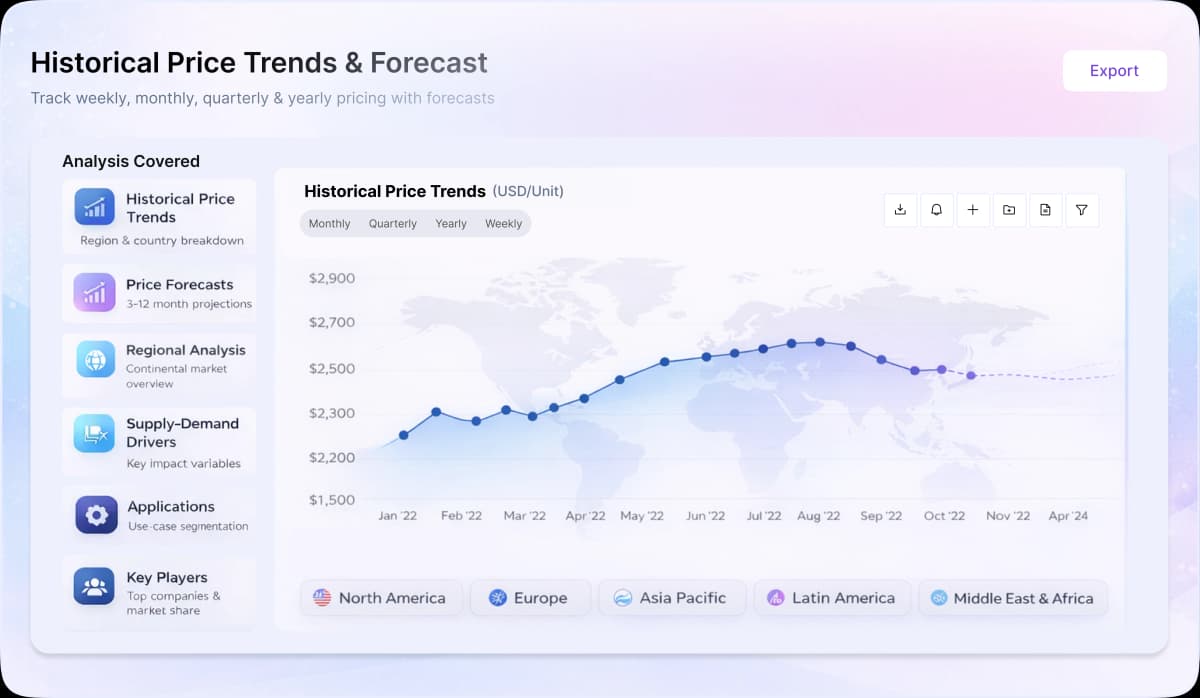
Turn price intelligence into action with the Procurement Resource Database. Log in or subscribe to unlock live price trends, historical charts, supplier databases, cost curves, and analyst-backed insights across chemicals, agriculture, energy, packaging, and more. Use these tools to benchmark your contracts, plan budgets with confidence, and stay ahead of market moves on every product you buy.

Natural Latex Dashboard Inclusions

Natural Latex Price Dasboard

0

+

Products

0

+

Regions

0

+

Subscriptions

In 2025, natural latex prices moved through a year of constant change, shaped mainly by unstable supply and uneven demand across major markets. At the beginning of the year, prices stayed high because the main producing countries in Southeast Asia were still dealing with the effects of extreme weather from the previous season. Floods, heavy rains, and damaged plantations meant that tapping activities were delayed, stock levels were low, and transport from farms to ports was slow. With less latex available, buyers competed for supplies, and prices stayed firm.

As the year went on, production conditions improved. Better weather and the return of regular tapping increased output in Thailand, Indonesia, and Vietnam. At the same time, demand softened in China, where factories held large inventories and operated at slower speeds. This combination calmed the market, and prices moved downward for a period, especially when global industrial activity weakened and many buyers delayed new orders.

However, the easing trend did not last long. By the second half of the year, new waves of weather problems such as heavy rain, plant disease, and blocked transport routes again restricted supply. India’s strong tyre production and China’s renewed stockpiling added extra pressure. Even regions far from production zones, like Europe and North America, felt the impact, since they depended heavily on Asian imports. This pushed prices upward again, creating a year marked by repeated swings rather than a simple rising or falling trend.

Analyst Insight

According to Procurement Resource, Natural Latex prices are expected to stay sensitive to weather and supply risks given the current market fundamentals globally.

About Natural Latex

Natural latex is completely liquid latex that is derived from rubber trees native to tropical regions. It looks like a milky white liquid which is extremely soft and elastic. It is resistant to abrasion, wear and tear as well as fatigue and is mainly used to make rubber.

Natural Latex Product Detail
Hs Code
40011010
Cas Number
9006-04-6
Industrial Uses

Widely used to make rubber and rubber products like gloves, mattresses, swim caps, rubber bands, catheters, balloons, tennis shoes, and even chewing gum

Synonyms

caoutchouc, gum elastic, India rubber, rubber

Supplier Database

Sri Trang Agro-Industry Public Company Ltd, Halcyon Agri, Southland Rubber Co., Ltd, Sinochem Group Co. Ltd., Num Rubber & Latex Co., Ltd, Von Bundit Co., Ltd, Firestone Natural Rubber Company

Regional Coverage

Asia Pacific

China, India, Indonesia, Pakistan, Bangladesh, Japan, Philippines, Vietnam, Iran, Thailand, South Korea, Iraq, Saudi Arabia, Malaysia, Nepal, Taiwan, Sri Lanka, UAE, Israel, Hongkong, Singapore, Oman, Kuwait, Qatar, Australia, and New Zealand

Europe

Germany, France, United Kingdom, Italy,Spain, Russia, Turkey, Netherlands, Poland, Sweden, Belgium, Austria, Ireland Switzerland, Norway, Denmark, Romania, Finland, Czech Republic, Portugal and Greece

North America

United States and Canada

Latin America

Brazil, Mexico, Argentina, Columbia, Chile, Ecuador, and Peru

Africa

South Africa, Nigeria, Egypt, Algeria, Morocco

CurrencyUS$ (Data can also be provided in local currency)

Supplier Database AvailabilityYes

Customization ScopeThe report can be customized as per the requirements of the customer

Post-Sale Analyst Support360-degree analyst support after report delivery

Note: Our supplier search experts can assist your procurement teams in compiling and validating a list of suppliers indicating they have products, services, and capabilities that meet your company's needs.

Natural Latex Production Processes

Natural rubber latex is produced by making incisions on rubber tree bark, allowing the latex to flow out and collecting it in cups. The latex is then coagulated using diluted formic acid to form rubber. After removing excess water, the dried rubber sheet is rolled using a textured roller, resulting in natural latex rubber with a high rubber content of around 90%.

Our Price Analysis Methodology

Schedule Demo

Schedule A Demo

Experience how Procurement Resource transforms raw material price data into clear, decision ready intelligence. Optimise your performance with reliable, expert market data and analysis. Schedule your demo today to experience a live walk-through where our experts will showcase interactive price charts, forecasted prices, and insights driving the prices for your key commodities, tailored to your workflows. Contact us now!

Our Team will be happy to assist you

We are just a text away

Still Need Help ?

Europe & Africa

+44 7573 171117

[email protected]

USA & Canada

+1 307 363 1045

[email protected]

APAC

+91 8850629517

[email protected]

Other Related Reports

Natural Rubber Production From Rubber Tree

The Study Offers a Detailed Cost Analysis of Natural Rubber Production From Rubber Tree. In Addition, the Report Incorporates the Manufacturing Process With Detailed Process and Material Flow, Operating Costs Along With Financial Expenses and Depreciation Charges.

EPDM Rubber Production from Suspension Polymerization

This report provides the cost structure of EPDM rubber production from the suspension polymerization process using polymer grade propylene and ethylene.

Synthetic Rubber Production from Glucose

This report presents the economics of Polyisoprene production starting from glucose. The process comprehends the fermentation of 70 wt % glucose-water syrup into isoprene, followed by solution polymerization step for converting isoprene to Polyisoprene.

Unlock full access to Procurement Resource's price databases, interactive charts, and short-term forecasts for thousands of commodities. Elevate your sourcing decisions by comparing prices across regions, downloading historical data, and layering in analyst-backed insights, all with our flexible plans that scale as your portfolio grows.

Still have any Questions

Contact Us
Mastercard
Wire
VISA
Stripe

Related News

View All

Why Procurement Database

Extensive Commodity Price Database

Extensive Commodity Price Database

Track prices, market movements, supply-demand dynamics, and industry developments across hundreds of commodities through a centralized intelligence platform built for informed procurement decisions.

Reliable Price Forecasting & Market Outlooks

Reliable Price Forecasting & Market Outlooks

Understand market fluctuations using analyst-backed forecasts, historical pricing patterns, and evolving industry trends to strengthen sourcing strategies and budget planning.

Data Driven Cost & Procurement Optimization

Data Driven Cost & Procurement Optimization

Leverage cost models, pricing benchmarks, and procurement insights to evaluate purchasing opportunities, improve negotiations, and enhance operational efficiency.

Global Coverage with region-specific Market Insights

Global Coverage with region-specific Market Insights

Access region-specific price trends, trade activities, capacity changes, and supply chain developments influencing commodity markets worldwide.

1/4