

Udeesha Tomar
AVP - Strategy and Solutions
Leading procurement research solutions across chemicals, materials, and food & beverages, with expertise in price forecasting and market analytics.

During Q2 2026, oxygen prices strengthened notably in China before easing toward the end of the quarter. Improved steel and chemical operating activity supported merchant liquid oxygen demand during April and May, while maintenance at several air-separation units temporarily tightened available supply. The market firmed further in early June as industrial users increased purchases, but momentum weakened later when steel-sector procurement slowed, particularly in major northern consuming areas. Rising air-separation plant operating rates and new capacity also improved supply availability, preventing the earlier rally from continuing. In North America, oxygen pricing followed a softer pattern, with an early-quarter correction followed by greater stability as adequate supply offset improving steel production. Industrial gas suppliers continued attempting to recover higher distribution, maintenance and operating expenses, which limited deeper reductions. European conditions remained comparatively steady, supported by industrial and medical demand but restrained by weak steel and manufacturing activity.
Analyst Insight
According to Procurement Resource, oxygen prices are expected to remain mixed, with steel operating rates and plant maintenance influencing short-term movements while improving supply availability limits stronger increases.
Related Report
Need Latest Oxygen Prices?
Get real-time price assessments, periodic trends, forecasts and price driver insights across key global markets.
Our Clients


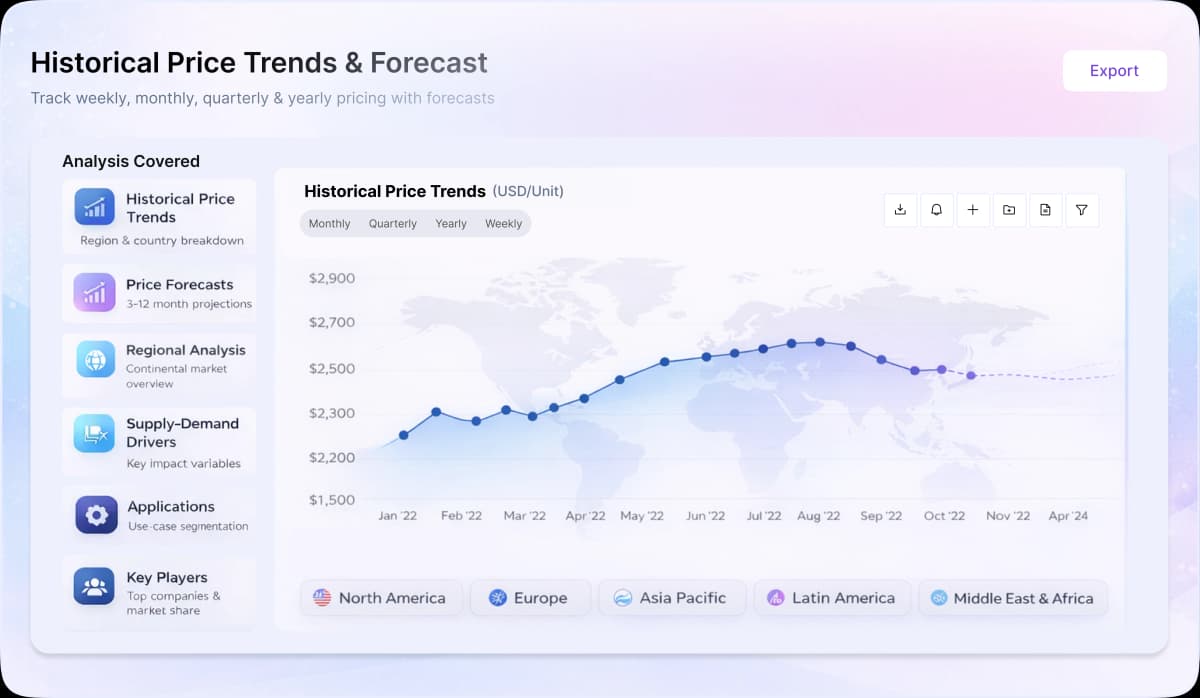
Turn price intelligence into action with the Procurement Resource Database. Log in or subscribe to unlock live price trends, historical charts, supplier databases, cost curves, and analyst-backed insights across chemicals, agriculture, energy, packaging, and more. Use these tools to benchmark your contracts, plan budgets with confidence, and stay ahead of market moves on every product you buy.
0
+Products
0
+Regions
0
+Subscriptions
During Q1’26, the Asian oxygen market followed a stable-to-firm trend supported by higher industrial activity and elevated utility costs. Rising electricity prices significantly impacted production economics, as oxygen manufacturing through air separation units remained highly energy intensive. Demand improved after the Lunar New Year from steel and metal-processing industries, while stronger manufacturing activity supported industrial gas consumption across regional markets. Global crude steel production remained near 166.1 million tonnes from January to March, with China maintaining dominance in global steel output, supporting oxygen demand from blast furnaces and electric arc furnaces. Supply-side costs also increased due to higher freight and insurance expenses linked to disruptions near the Strait of Hormuz, which affected the transportation of cryogenic gases and industrial equipment across Asian trade routes. However, cautious purchasing from downstream industries and moderate construction activity limited sharper price increases during the quarter.
Oxygen is a colorless, odourless and tasteless gas. Life will exist there. Although it is noncombustible, combustible elements will be burned with its active help. Some substances that won't burn in the air will ignite when exposed to oxygen. Materials that burn in air will burn in oxygen more forcefully.
It is transported at pressures of 2000 psig or higher because it is a non-liquid gas. No flame can ignite pure oxygen. The canisters may violently burst and shoot into the air when exposed to fire or extreme heat for an extended period of time. Inhalation, resuscitation, and the creation of synthesis gas from coal all make use of oxygen.
O2
Cutting of metals, Sewage treatment, Oxidising agent in missiles, Production of glass products
Molecular, oxygen
The Linde Group, Air Liquide, Praxair Technology, Inc., TAIYO NIPPON SANSO, Airgas, Inc
CurrencyUS$ (Data can also be provided in local currency)
Supplier Database AvailabilityYes
Customization ScopeThe report can be customized as per the requirements of the customer
Post-Sale Analyst Support360-degree analyst support after report delivery
Note: Our supplier search experts can assist your procurement teams in compiling and validating a list of suppliers indicating they have products, services, and capabilities that meet your company's needs.
In general, this method of producing oxygen involves the cryogenic distillation of air. It uses a distillation column under the right circumstances. As a byproduct, it also creates nitrogen. High pressure causes it to create oxygen.
Our Price Analysis Methodology
AVP - Strategy and Solutions
Leading procurement research solutions across chemicals, materials, and food & beverages, with expertise in price forecasting and market analytics.

Experience how Procurement Resource transforms raw material price data into clear, decision ready intelligence. Optimise your performance with reliable, expert market data and analysis. Schedule your demo today to experience a live walk-through where our experts will showcase interactive price charts, forecasted prices, and insights driving the prices for your key commodities, tailored to your workflows. Contact us now!
Our Team will be happy to assist you
We are just a text away
Still Need Help?
Unlock full access to Procurement Resource's price databases, interactive charts, and short-term forecasts for thousands of commodities. Elevate your sourcing decisions by comparing prices across regions, downloading historical data, and layering in analyst-backed insights, all with our flexible plans that scale as your portfolio grows.
Still have any Questions
Contact Us



Price Trend Dashboard - What's Included
Price trends across a diverse portfolio of categories and products, spanning board to niche chemicals
Coverage extendable to grade-specific chemicals based on procurement requirements
Regular price tracking supported by robust historical datasets
News, policy updates, and key market drivers impacting price movements
Short-term and long-term price outlooks and forecasts
Supply–demand dynamics and capacity-driven market analysis

Track prices, market movements, supply-demand dynamics, and industry developments across hundreds of commodities through a centralized intelligence platform built for informed procurement decisions.

Understand market fluctuations using analyst-backed forecasts, historical pricing patterns, and evolving industry trends to strengthen sourcing strategies and budget planning.

Leverage cost models, pricing benchmarks, and procurement insights to evaluate purchasing opportunities, improve negotiations, and enhance operational efficiency.
Access region-specific price trends, trade activities, capacity changes, and supply chain developments influencing commodity markets worldwide.