Need latest Palm Fatty Acid Distillate (PFAD) prices?
Get real-time price assessments, periodic trends, forecasts and price driver insights across key global markets.
Unlock Price Insights NowOur Clients
| Product | Category | Region | Price | Last Updated Month |
| Palm Fatty Acid Distillate (PFAD) | Agriculture, Farming and Commodity | USA | USD 2191 | September 2025 |
Stay updated with the latest Palm Fatty Acid Distillate (PFAD) prices, historical data, and tailored regional analysis
Throughout 2025, PFAD prices moved within a shifting landscape shaped by changes in supply levels, refined output, and policy decisions in major producing and buying regions. At the beginning of the year, prices stayed fairly steady as producers worked with manageable inventories and buyers maintained routine purchasing. Market activity was calm, and most participants avoided aggressive moves, which helped keep early-year values stable.
As the year progressed, conditions gradually turned softer. Large stockpiles started to build up, especially in key hubs where production increased faster than consumption. This created steady downward pressure on PFAD, as available volumes were more than enough to meet regular demand. Trade sentiment also weakened when buyers adopted a wait-and-see approach, hoping for better opportunities as overall palm-related markets eased.
Mid-year, some temporary support appeared when certain regions saw stronger import interest for palm-based materials, but this did not last long. Buyers often already held comfortable stocks, and downstream sectors were slow to expand their requirements. As a result, PFAD values continued to drift lower. Later in the year, rising inventories and stable but unexciting export activity kept the market subdued. Even though some seasonal restocking took place, it was not strong enough to reverse the overall soft tone. By the end of 2025, PFAD prices reflected a year shaped by plentiful supply, cautious trading behaviour, and muted consumption growth.
Get real-time price assessments, periodic trends, forecasts and price driver insights across key global markets.
Unlock Price Insights NowOur Clients

Turn price intelligence into action with the Procurement Resource Database. Log in or subscribe to unlock live price trends, historical charts, supplier databases, cost curves, and analyst-backed insights across chemicals, agriculture, energy, packaging, and more. Use these tools to benchmark your contracts, plan budgets with confidence, and stay ahead of market moves on every product you buy.

0
+Products
0
+Regions
0
+Subscriptions
In the second half of 2024, PFAD prices moved higher as the overall palm oil market stayed tight and demand remained strong across many regions. Supplies from major producing countries grew slowly, and weather issues and ageing plantations limited output.
At the same time, domestic use in key producing nations increased, especially for fuel blending, which further reduced the amount available for export. These conditions created a firm base for PFAD throughout the period.
In Asia, strong buying interest continued from industries that used palm-based inputs in food, chemicals, and cleaning products. Importers also dealt with lower stock levels and slower shipments, as producers focused more on meeting local needs.
As a result, PFAD followed the upward movement seen in other refined palm-based materials during H2. Many buyers preferred advance bookings to secure supply, fearing further tightening later in the year.
Europe also recorded steady gains. Higher freight costs and strict sourcing requirements added extra pressure, while stable demand from downstream sectors supported values. Traders managed inventories carefully, but the reduced flow from Asia kept prices on the firmer side.
North America experienced similar trends. Importers increased stockpiles as transport expenses climbed and as related edible oils strengthened globally. With end-users showing solid and steady demand, PFAD prices stayed on an upward path through the second half of the year.
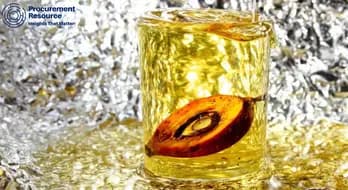
PFAD or better known as palm fatty acid distillate is a by-product formed in the refining of palm oil for the food industry. PFAD appears as a light brown semi-solid substance at room temperature, which further melts into a brown liquid upon heating. PFAD primarily contains free fatty acids (FFA) (>80%) which include oleic, stearic, and palmitic components.
Production of food-grade oil from palm oil utilises distilling of palm oil as it improves the oil's taste, colour, odour, and shelf life. Thus, PFAD consists of degraded fats that are undesired and need to be removed to meet the food industry’s quality standards.
Soaps, Fatty Acids and Fatty Alcohols, Animal Feed, Hardened Oils, Candles, Fragrance Ingredients, Intermediates
Palm Fatty Acid Distillate
Wilmar International, PT TUNAS BARU LAMPUNG Tbk., Sarawak Oil Palms Berhad Group, Nuansa Kimia Sejati, PT, Future Prelude Sdn Bhd
CurrencyUS$ (Data can also be provided in local currency)
Supplier Database AvailabilityYes
Customization ScopeThe report can be customized as per the requirements of the customer
Post-Sale Analyst Support360-degree analyst support after report delivery
Note: Our supplier search experts can assist your procurement teams in compiling and validating a list of suppliers indicating they have products, services, and capabilities that meet your company's needs.
In this process, PFAD is produced as the by-product in the refining of palm oil. Palm oil is refined into food-grade oil by the removal of degraded fats and free fatty acids. The distillation of palm oil to refine the oil and separate these unwanted and degraded fats produces food-grade palm oil, which gives PFAD as the residue.
Our Price Analysis Methodology

Experience how Procurement Resource transforms raw material price data into clear, decision ready intelligence. Optimise your performance with reliable, expert market data and analysis. Schedule your demo today to experience a live walk-through where our experts will showcase interactive price charts, forecasted prices, and insights driving the prices for your key commodities, tailored to your workflows. Contact us now!
Our Team will be happy to assist you
We are just a text away
Still Need Help ?
This report presents a detailed cost analysis of methyl ester sulphonate production from palm oil.
Unlock full access to Procurement Resource's price databases, interactive charts, and short-term forecasts for thousands of commodities. Elevate your sourcing decisions by comparing prices across regions, downloading historical data, and layering in analyst-backed insights, all with our flexible plans that scale as your portfolio grows.
Still have any Questions
Contact Us


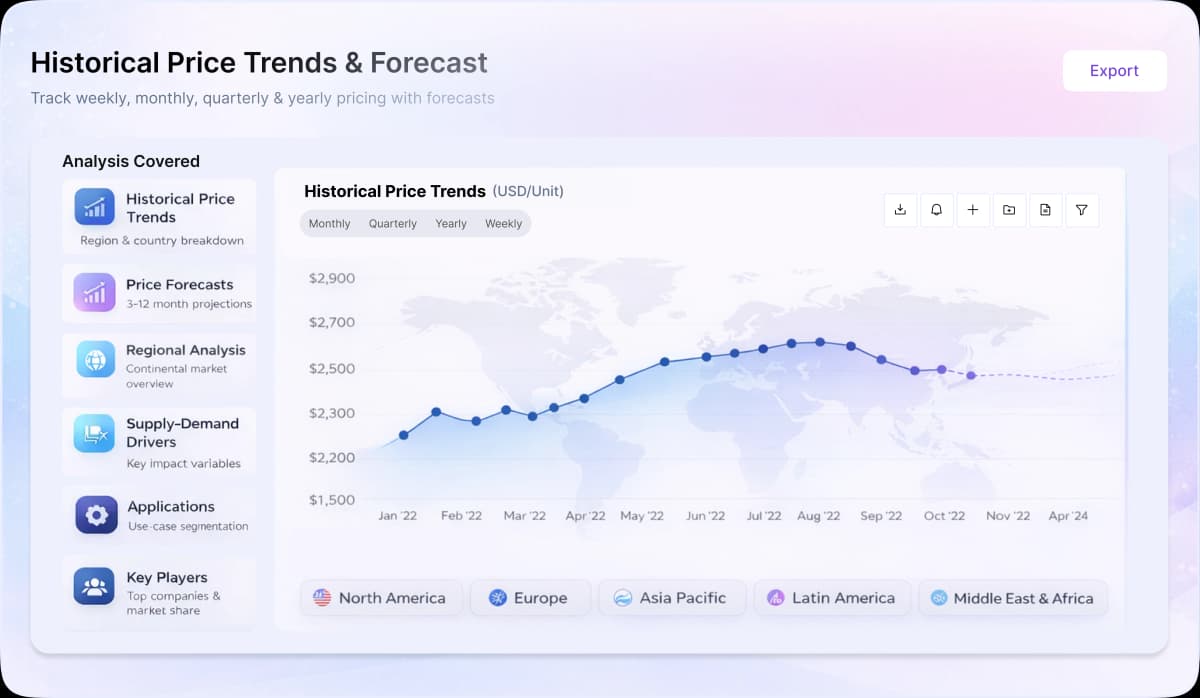
Price Trend Dashboard - What's Included
Price trends across a diverse portfolio of categories and products, spanning board to niche chemicals
Coverage extendable to grade-specific chemicals based on procurement requirements
Regular price tracking supported by robust historical datasets
News, policy updates, and key market drivers impacting price movements
Short-term and long-term price outlooks and forecasts
Supply–demand dynamics and capacity-driven market analysis