

Udeesha Tomar
AVP - Strategy and Solutions
Leading procurement research solutions across chemicals, materials, and food & beverages, with expertise in price forecasting and market analytics.

Asia
Potassium iodide prices in Asia were steady during Q4’25. Pharmaceutical and nutraceutical segment requirements have been steady, particularly for thyroid health and radiation protection products. With increasing iodine feedstock costs, the production cost of potassium iodide also rose, which contributed to the stability of the prices. China and India were steady in terms of production and exports of potassium iodide, keeping the supply chain steady, though occasional restocking from buyers also put some pressure on the supply chain. The logistics improved from earlier months, and Southeast Asian countries such as Indonesia and Malaysia also showing constant interest in the product.
Europe
In Europe, the prices were steady, with a small rise in prices over the quarter. The import demand for Japan and the other iodine producing countries was reflected in the prices, which rose in response to the higher global prices for iodine. The pharmaceutical and health supplement industries maintained their normal demand, and the supply was consistent. However, there were some delays in the supply, causing fluctuations in the prices. The buyers were cautious in their demand, which kept the prices steady.
North America
In North America, the prices of Potassium Iodide were relatively stable during Q4’25. Demand for Potassium Iodide from healthcare and industrial sectors was constant, which in turn was a positive aspect for the market. Imports of Potassium Iodide from Asia, such as China, India, and Japan were smooth; however, fluctuations in raw material prices kept market players alert. Overall, Potassium Iodide prices were relatively stable with fewer fluctuations.
Analyst Insight
According to Procurement Resource, the prices of Potassium Iodide are likely to remain firm in the near term. Demand for Potassium Iodide from the pharmaceuticals and nutraceuticals industry is expected to remain constant; however, raw material prices remain a major concern.
Related Report
Need Latest Potassium Iodide Prices?
Get real-time price assessments, periodic trends, forecasts and price driver insights across key global markets.
Our Clients


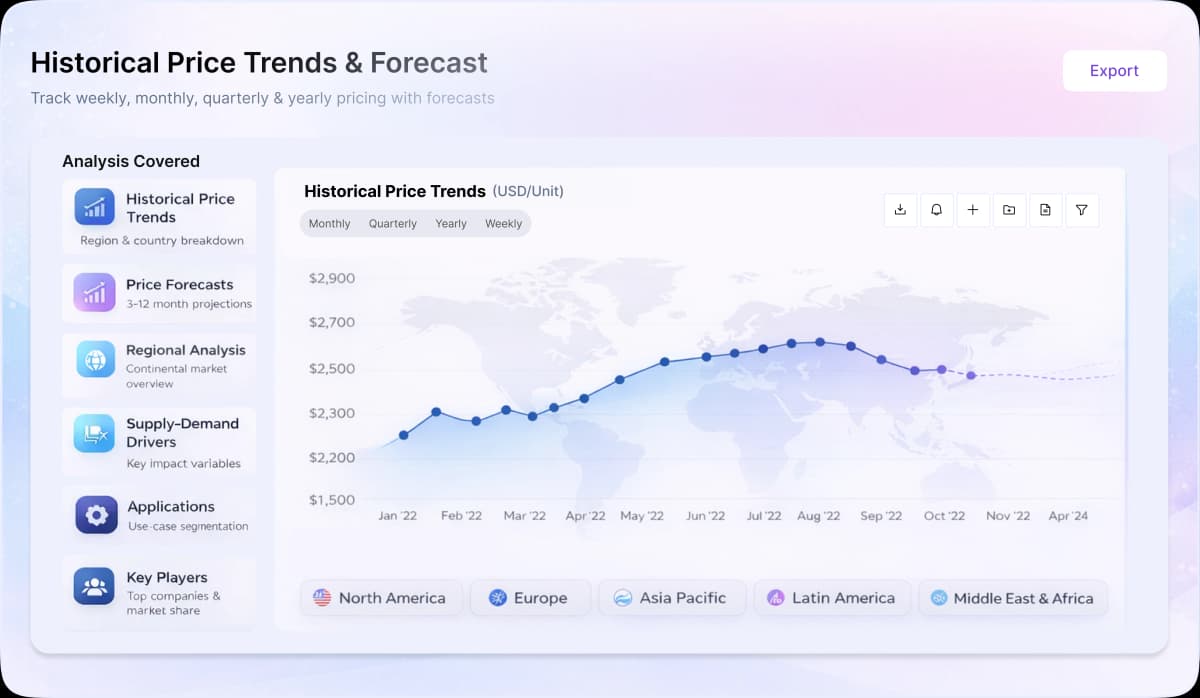
Turn price intelligence into action with the Procurement Resource Database. Log in or subscribe to unlock live price trends, historical charts, supplier databases, cost curves, and analyst-backed insights across chemicals, agriculture, energy, packaging, and more. Use these tools to benchmark your contracts, plan budgets with confidence, and stay ahead of market moves on every product you buy.
0
+Products
0
+Regions
0
+Subscriptions
Asia
The prices of Potassium Iodide in Asia, especially China, remained mostly stable after a noticeable increase in August. Prices had gone up earlier due to rising costs and stronger buying from healthcare and pharmaceutical industries. Through September, prices held firm as supply and demand stayed balanced.
There was steady demand from importing countries, and local producers were able to maintain smooth supply without any disruptions. Good coordination across the supply chain and improved logistics helped support stable market conditions. The slight weakness in the U.S. dollar also supported exports, keeping the market active.
Europe
In Europe, Potassium Iodide prices were generally stable during Q3’25. The market didn’t see major price swings as buyers had stocked earlier in the year and demand from downstream industries remained consistent but not strong. The healthcare and pharma sectors maintained their usual procurement pace, preventing any sharp shifts in pricing.
Since there were no major supply concerns and trade conditions stayed calm, pricing moved within a narrow range. The quiet market mood reflected a balance between steady demand and sufficient supply, leading to minimal price changes across the region.
North America
In North America, Potassium Iodide prices showed steady to slightly firm trends during Q3’25. Import orders remained strong throughout the quarter, especially as demand from pharmaceutical sectors picked up. Buyers were cautious but continued to purchase steadily, encouraged by the temporary tariff truce between the U.S. and China. This helped avoid sudden changes in market behaviour and ensured uninterrupted supply. Even with some economic uncertainty, the market stayed well-supported due to stable demand and ongoing restocking activity by suppliers.
Analyst Insight
According to Procurement Resource, Potassium Iodide prices may rise slightly in early Q4’25 owing to demand from healthcare sector. The market is expected to remain balanced with cautious but steady momentum.
Potassium iodide is a highly versatile metal halide used as a chemical, medication, and dietary supplement. As a medication, it treats hypothyroidism and protects the thyroid gland from radioactive radiation. It is included in the daily diet of patients suffering from iodine deficiency. KI is a white crystalline solid which is acutely toxic to aquatic life while being a common irritant to eyes and skin in humans.
KI
Pharmaceuticals, Chemical Substrates, Solar Cells, Biomedical Research, Additives, Personal and Home Care
Potassium salt of hydriodic acid
Thermo Fisher Scientific Inc., Adani Pharmachem Private Limite, Nippoh Chemicals Co. Ltd, Godo Shigen Co. Ltd, Zibo Wankang Pharmaceutical Chemical Co. Ltd.
CurrencyUS$ (Data can also be provided in local currency)
Supplier Database AvailabilityYes
Customization ScopeThe report can be customized as per the requirements of the customer
Post-Sale Analyst Support360-degree analyst support after report delivery
Note: Our supplier search experts can assist your procurement teams in compiling and validating a list of suppliers indicating they have products, services, and capabilities that meet your company's needs.
Potassium iodide is prepared by reacting iodine with a hot saturated potassium hydroxide solution. In this reaction, a product mixture containing potassium iodide, potassium iodate and water is obtained and is further subjected to varying separation techniques to get the desired potassium iodine.
Our Price Analysis Methodology
AVP - Strategy and Solutions
Leading procurement research solutions across chemicals, materials, and food & beverages, with expertise in price forecasting and market analytics.

Experience how Procurement Resource transforms raw material price data into clear, decision ready intelligence. Optimise your performance with reliable, expert market data and analysis. Schedule your demo today to experience a live walk-through where our experts will showcase interactive price charts, forecasted prices, and insights driving the prices for your key commodities, tailored to your workflows. Contact us now!
Our Team will be happy to assist you
We are just a text away
Still Need Help?
Unlock full access to Procurement Resource's price databases, interactive charts, and short-term forecasts for thousands of commodities. Elevate your sourcing decisions by comparing prices across regions, downloading historical data, and layering in analyst-backed insights, all with our flexible plans that scale as your portfolio grows.
Still have any Questions
Contact Us



Price Trend Dashboard - What's Included
Price trends across a diverse portfolio of categories and products, spanning board to niche chemicals
Coverage extendable to grade-specific chemicals based on procurement requirements
Regular price tracking supported by robust historical datasets
News, policy updates, and key market drivers impacting price movements
Short-term and long-term price outlooks and forecasts
Supply–demand dynamics and capacity-driven market analysis

Track prices, market movements, supply-demand dynamics, and industry developments across hundreds of commodities through a centralized intelligence platform built for informed procurement decisions.

Understand market fluctuations using analyst-backed forecasts, historical pricing patterns, and evolving industry trends to strengthen sourcing strategies and budget planning.

Leverage cost models, pricing benchmarks, and procurement insights to evaluate purchasing opportunities, improve negotiations, and enhance operational efficiency.
Access region-specific price trends, trade activities, capacity changes, and supply chain developments influencing commodity markets worldwide.