

Udeesha Tomar
AVP - Strategy and Solutions
Leading procurement research solutions across chemicals, materials, and food & beverages, with expertise in price forecasting and market analytics.

Asia
In the first half of 2025, the price trend for Propylene (Polymer Grade) in Asia showed a mixed performance. Prices moved upward during early January due to tight supply from South Korea and increased crude oil costs, which raised production costs. However, this upward momentum was short-lived. As the Lunar New Year approached in February, demand from downstream industries like polypropylene and polyester weakened significantly, leading to reduced operating rates.
The market also experienced improved freight conditions and balanced export volumes, further softening prices. In March, sluggish demand and cautious procurement strategies continued to keep the market bearish, despite some supply adjustments. Overall, demand stayed below expectations, and market sentiment remained weak across the region.
Europe
In Europe, Propylene (Polymer Grade) prices saw a steady increase throughout the first half of 2025, driven more by supply constraints than strong demand. Production disruptions, both planned and unplanned, alongside logistical hurdles like port congestion and shipping diversions, tightened availability. These factors supported the upward movement in prices even though downstream sectors such as construction and automotive remained sluggish. Polypropylene demand stayed limited, with only the packaging industry offering stable support. Despite low utilization rates and reduced consumer confidence, the supply-side pressures kept prices on an upward trajectory. Inventory levels were consistently low, and cracker run rates remained suppressed, sustaining the bullish tone of the market.
North America
In North America, the market for Propylene (Polymer Grade) showed a two-phase trend. Prices rose in January as global demand increased before the Lunar New Year, while domestic supply was tight. However, this early strength faded in February as crude oil prices dropped and production costs declined. By March, the market remained under pressure from weak downstream demand and uncertainties around trade policies. Buyers remained cautious, and sectors such as textiles and polyester showed minimal interest in bulk purchases. Despite some temporary support from polypropylene price increases, overall buyer sentiment remained muted.
Related Report
Need Latest Propylene (Polymer Grade) Prices?
Get real-time price assessments, periodic trends, forecasts and price driver insights across key global markets.
Our Clients


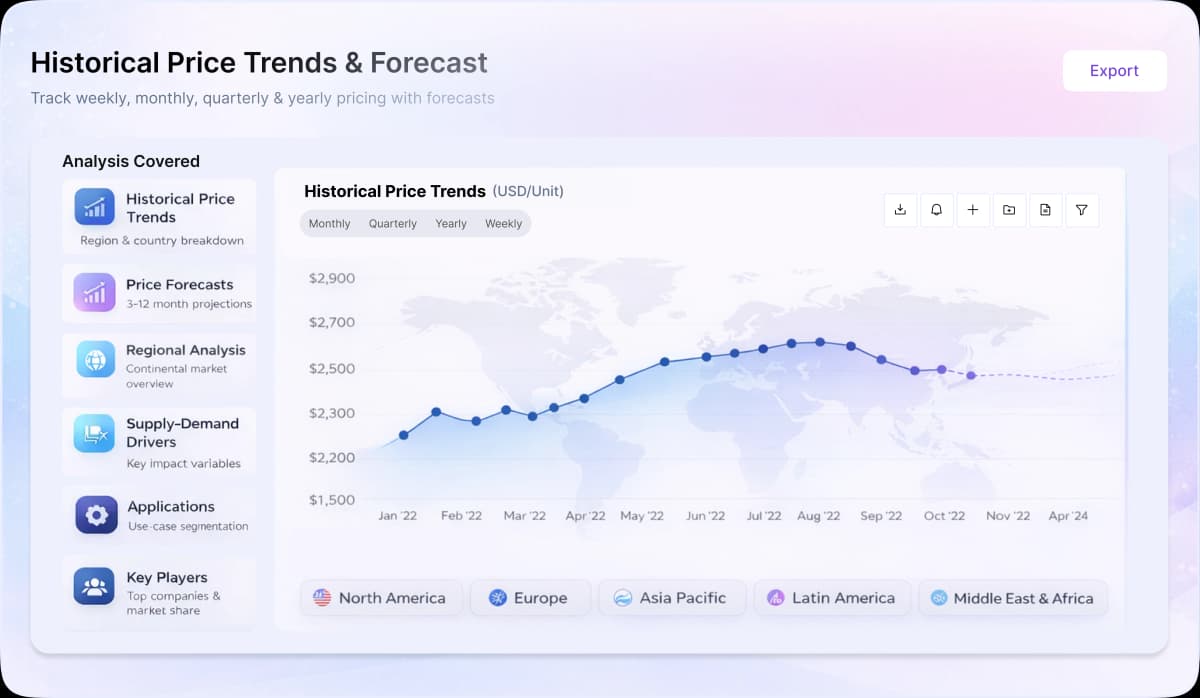
Turn price intelligence into action with the Procurement Resource Database. Log in or subscribe to unlock live price trends, historical charts, supplier databases, cost curves, and analyst-backed insights across chemicals, agriculture, energy, packaging, and more. Use these tools to benchmark your contracts, plan budgets with confidence, and stay ahead of market moves on every product you buy.
0
+Products
0
+Regions
0
+Subscriptions
Asia
In the second half of 2024, the Propylene (Polymer Grade) market in Asia experienced varied trends influenced by regional supply and demand dynamics. During the third quarter, prices remained range-bound as downstream demand, especially from the polypropylene sector, stayed weak. This, combined with cautious buying and stable inventory levels, kept market activity subdued.
However, in the fourth quarter, supply-side factors began to influence the market. Planned maintenance activities at major production units in China and South Korea tightened supply, leading to a slight upward push in prices. In South Korea, increased demand from China supported higher offer prices. Meanwhile, the Indian market saw steady growth, driven by consistent demand from the downstream resin industry and positive momentum from infrastructure developments, which kept Propylene (Polymer Grade) prices on a modest upward path.
Europe
The Propylene (Polymer Grade) market in Europe showed a fluctuating pattern during H2’24. In Q3, prices remained mixed as weak downstream demand persisted, especially in the construction and polymer sectors. Despite this, limited import availability and reduced local output helped prevent significant price drops. Entering Q4, market conditions remained sluggish, although some seasonal inventory accumulation before the holidays provided minor support to prices. Overall, European market sentiment stayed cautious, and the industry operated in a low-demand environment with only slight price improvements in the final months of the year.
North America
In North America, Propylene (Polymer Grade) prices followed an unstable trend through the second half of 2024. During Q3, the market faced some disruptions due to hurricanes, causing temporary shutdowns in production. However, supply levels normalized shortly after. Throughout both quarters, low downstream demand and an oversupplied market kept prices under pressure. Although Q4 brought slight improvement in market confidence partly due to infrastructure investments and post-election optimism trading activity remained limited, and any price increases were marginal and short-lived.
Propylene is one of the oldest petrochemical feedstocks in the gas industry. Propylene (Polymer Grade) is primarily utilised in the production of cumene, propylene oxide and acrylic acid. The three grades of propylene include polymer, refinery and chemical, where polymer grade comes with a minimum purity of 99.5%.
Propylene is also one of the smallest stable unsaturated hydrocarbon molecules utilised in the gas industry. This grade nearly accounts for two-thirds of global propylene consumption and is further used to produce acrylonitrile (ACN).
C3H6
Polypropylene plastics, Injection mouldings and fibres, Manufacturing of cumene, Manufacturing of alcohols, Manufacturing of propylene oxide, Manufacturing of acrylic acid
1-propene, Methylethylene, Methylethene, Propylene, Propene
Chevron Phillips Chemical Company, Mangalore Refinery & Petrochemicals Ltd, Flint Hills Resources, LLC, Petkim Petrokimya Holding A.S, Rompetrol Rafinare SA (Company of The KMG International Group)
CurrencyUS$ (Data can also be provided in local currency)
Supplier Database AvailabilityYes
Customization ScopeThe report can be customized as per the requirements of the customer
Post-Sale Analyst Support360-degree analyst support after report delivery
Note: Our supplier search experts can assist your procurement teams in compiling and validating a list of suppliers indicating they have products, services, and capabilities that meet your company's needs.
During ethylene production, the Propylene (Polymer Grade) molecule is produced as a co-product during the steam cracking (steam pyrolysis) of hydrocarbon feedstocks. These hydrocarbon feedstocks include a wide range of products like ethane, naphtha and gas oils. Moreover, Propylene (Polymer Grade) can also be produced through petroleum refining process as a by-product.
Our Price Analysis Methodology
AVP - Strategy and Solutions
Leading procurement research solutions across chemicals, materials, and food & beverages, with expertise in price forecasting and market analytics.

Experience how Procurement Resource transforms raw material price data into clear, decision ready intelligence. Optimise your performance with reliable, expert market data and analysis. Schedule your demo today to experience a live walk-through where our experts will showcase interactive price charts, forecasted prices, and insights driving the prices for your key commodities, tailored to your workflows. Contact us now!
Our Team will be happy to assist you
We are just a text away
Still Need Help?
Europe & Africa
+44 7573 171117
Sales@procurementresource.com
USA & Canada
+1 307 363 1045
Sales@procurementresource.com
APAC
+91 8850629517
Sales@procurementresource.com
This report presents a detailed cost analysis of allyl PEG production from polyethylene glycol ether and allyl chloride using polymer capping process.
This report provides the cost structure of PAO production by the polymerization process. The process involves the polymerization of alpha olefin to get polyalphaolefin.
This report provides the cost structure of LDPE by the polymerization process. In this process, ethylene is cooled, compressed, and converted into polyethylene in a reaction vessel at 320 degree centigrade.
This report presents a detailed cost analysis of carbon fibre production from a polymer using carbonization. Before carbonization, the long strands of fibre are drawn to form a polymer filament yarn.
Unlock full access to Procurement Resource's price databases, interactive charts, and short-term forecasts for thousands of commodities. Elevate your sourcing decisions by comparing prices across regions, downloading historical data, and layering in analyst-backed insights, all with our flexible plans that scale as your portfolio grows.
Still have any Questions
Contact Us



Price Trend Dashboard - What's Included
Price trends across a diverse portfolio of categories and products, spanning board to niche chemicals
Coverage extendable to grade-specific chemicals based on procurement requirements
Regular price tracking supported by robust historical datasets
News, policy updates, and key market drivers impacting price movements
Short-term and long-term price outlooks and forecasts
Supply–demand dynamics and capacity-driven market analysis

Track prices, market movements, supply-demand dynamics, and industry developments across hundreds of commodities through a centralized intelligence platform built for informed procurement decisions.

Understand market fluctuations using analyst-backed forecasts, historical pricing patterns, and evolving industry trends to strengthen sourcing strategies and budget planning.

Leverage cost models, pricing benchmarks, and procurement insights to evaluate purchasing opportunities, improve negotiations, and enhance operational efficiency.
Access region-specific price trends, trade activities, capacity changes, and supply chain developments influencing commodity markets worldwide.
