Silica Gel Price Trend Analysis 2026: Market Insights, Latest News, Price Drivers, Supply Demand Analysis & Historical Prices

Udeesha Tomar profile photo
Written ByUdeesha Tomar

Procurement Resource Database

Laptop screen

Turn price intelligence into action with the Procurement Resource Database. Log in or subscribe to unlock live price trends, historical charts, supplier databases, cost curves, and analyst-backed insights across chemicals, agriculture, energy, packaging, and more. Use these tools to benchmark your contracts, plan budgets with confidence, and stay ahead of market moves on every product you buy.

0

+

Products

0

+

Regions

0

+

Subscriptions

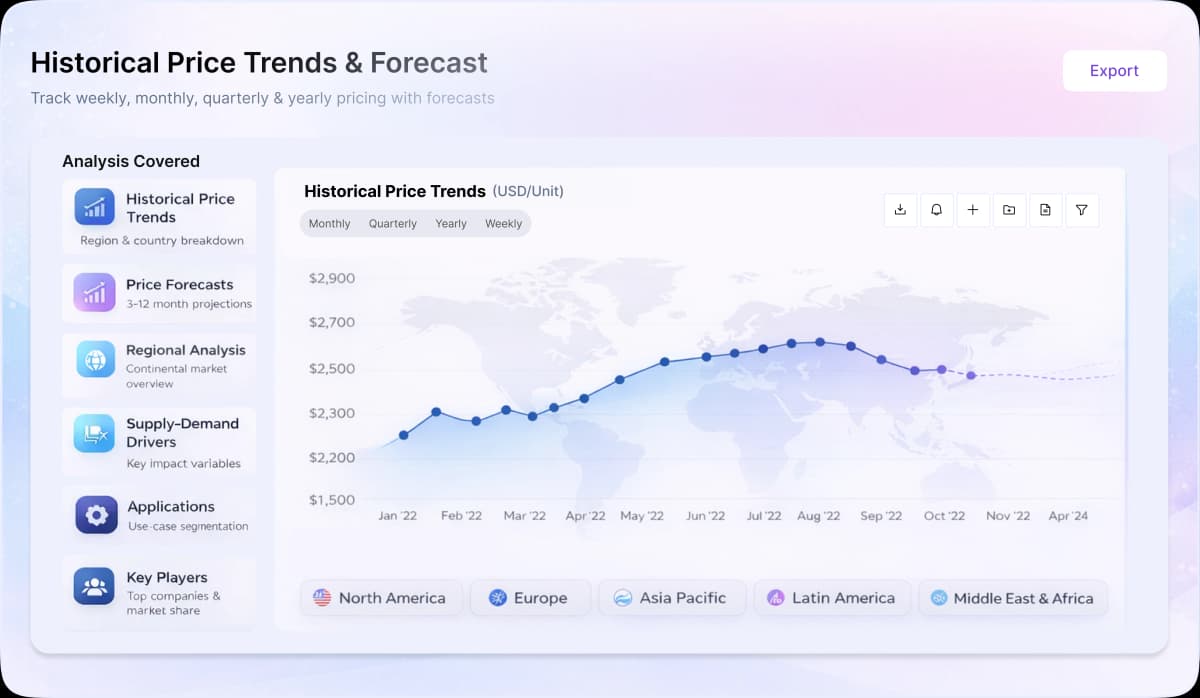
Silica gel prices in global markets experienced a declining trajectory followed by stabilization during the third quarter of 2025, primarily influenced by feedstock cost movements and evolving supply-demand dynamics. The quarter reflected shifting market fundamentals across major producing and consuming regions. In China, the market witnessed a notable downward trend in the early part of the quarter as sodium silicate, a key raw material in silica gel production, experienced price declines. This reduction in feedstock costs translated directly into softer pricing for silica gel manufacturers, who adjusted their offer levels to reflect the improved cost structure. Supply availability remained adequate throughout the period, with production rates maintaining steady levels at major manufacturing facilities. Demand from downstream applications, including desiccants, adsorbents, catalysts, and chromatography, remained consistent but cautious as buyers focused on immediate procurement needs rather than building extended inventories.

Following the initial decline, prices stabilized through the middle and latter portions of the quarter. The feedstock cost environment improved modestly, with raw material prices finding a floor and showing slight recovery. This stabilization provided support to silica gel pricing, preventing further downward movement. Market participants adjusted their trading strategies, balancing inventory positions against steady but moderate consumption patterns from key end-use sectors.

About Silica Gel

The amorphous and porous form of silicon dioxide is known as silica gel or silica. It's made up of an uneven tridimensional structure with nanometer-scale gaps or pores made up of alternating silicon and oxygen atoms. Water or other liquids might fill the spaces, which could also be filled with gas or vacuum. The substance is known as silica xerogel in the latter case.


Silica Gel Product Detail

Chemical Formula

SiO2

Molecular Weight
60.01 g/mol
Industrial Uses

Detergents, Personal care products, Plastics, Paints & Coating

Supplier Database

W.R. Grace & Co., Thermo Fischer Scientific, Merck KGaA, Clariant, BASF SE, AGC Chemicals Americas, Osaka Soda Co., Ltd.

Regional Coverage

Asia Pacific

China, India, Indonesia, Pakistan, Bangladesh, Japan, Philippines, Vietnam, Iran, Thailand, South Korea, Iraq, Saudi Arabia, Malaysia, Nepal, Taiwan, Sri Lanka, UAE, Israel, Hongkong, Singapore, Oman, Kuwait, Qatar, Australia, and New Zealand

Europe

Germany, France, United Kingdom, Italy,Spain, Russia, Turkey, Netherlands, Poland, Sweden, Belgium, Austria, Ireland Switzerland, Norway, Denmark, Romania, Finland, Czech Republic, Portugal and Greece

North America

United States and Canada

Latin America

Brazil, Mexico, Argentina, Columbia, Chile, Ecuador, and Peru

Africa

South Africa, Nigeria, Egypt, Algeria, Morocco

CurrencyUS$ (Data can also be provided in local currency)

Supplier Database AvailabilityYes

Customization ScopeThe report can be customized as per the requirements of the customer

Post-Sale Analyst Support360-degree analyst support after report delivery

Note: Our supplier search experts can assist your procurement teams in compiling and validating a list of suppliers indicating they have products, services, and capabilities that meet your company's needs.

Silica Gel Production Process

  • Production of Silica Gel from Sodium Silicate

Sodium silicate and a mineral acid are used to make silica gel. A wet process is used to create monomeric silicic acid, which is then polymerized to produce silica sol. In a gel state, these particles aggregate and form a three-dimensional structure.

Frequently Asked Questions

The silica gel outlook points toward a stable near-term trajectory, following the sharp feedstock-driven price reversal in the latter part of Q4. Prices will be shaped primarily by sodium silicate supply dynamics and the pace of downstream demand recovery across industrial desiccants, catalyst, and chromatography applications. Any sustained tightening in raw material supply or a pickup in end-user demand could push prices higher, while ample feedstock availability and continued seasonal demand weakness would keep a lid on gains.

Silica gel prices are shaped by sodium silicate movements, seasonal demand and export activity. Declining sodium silicate quotations reduce input costs, pushing silica gel prices lower as producers pass savings through, while tightening sodium silicate supply drives feedstock costs sharply higher and prompts producers to raise selling prices to protect margins. Industrial buyers purchase only for immediate needs when demand is seasonally weak, and subdued export activity as international buyers hold back orders also weighs on the market.

Key silica gel producers include BASF, Clariant, Evonik Industries AG, Solvay S.A., W.R. Grace & Co., and Osaka Soda Co., Ltd. Asia Pacific is a key consumption hub driven by growing manufacturing and packaged goods sectors, while the United States is a large market supported by personal care and electronics industries. Supply security is tied to producers' operating rates and feedstock strategies, with sodium silicate availability shaping production economics across the major producing regions.

Silica gel's value chain begins with silica sand and soda ash, which are processed into sodium silicate. Sodium silicate is then reacted with a mineral acid (sulfuric or hydrochloric acid) in a wet process to form monomeric silicic acid, which polymerizes into silica sol particles. These particles aggregate into a three-dimensional porous structure, yielding silica gel that is then processed and purified. The finished product serves primarily as a desiccant in electronics, pharmaceutical, and food packaging, with additional uses in detergents, personal care, plastics, and paints and coatings.

Silica gel demand is driven by the pharmaceutical, electrical/electronics, and food packaging sectors, where it acts as a desiccant to control moisture and extend shelf life. Electronics is the largest end-user, using it to protect sensitive components from humidity during storage and shipping. Additional demand comes from detergents, personal care, plastics, and paints and coatings. When pharmaceuticals and electronics ramp up production, procurement volumes rise, creating upward price pressure, while seasonal weakness in these sectors leads to cautious buying and softer pricing.

Procurement Resource assesses silica gel prices through a structured, data-driven methodology combining primary engagement with producers, suppliers and traders, secondary market data, monitoring of feedstock and input costs, trade-flow and inventory tracking, and exchange or spot benchmarks. These inputs are validated and translated into a transparent price assessment and outlook. The detailed methodology is available on the Procurement Resource website.

Our Price Analysis Methodology

About the Author

Udeesha Tomar profile photo

Udeesha Tomar

AVP - Strategy and Solutions

Leading procurement research solutions across chemicals, materials, and food & beverages, with expertise in price forecasting and market analytics.

Schedule Demo

Schedule A Demo

Experience how Procurement Resource transforms raw material price data into clear, decision ready intelligence. Optimise your performance with reliable, expert market data and analysis. Schedule your demo today to experience a live walk-through where our experts will showcase interactive price charts, forecasted prices, and insights driving the prices for your key commodities, tailored to your workflows. Contact us now!

Our Team will be happy to assist you

We are just a text away

+1

Still Need Help?

Europe & Africa

+44 7573 171117

[email protected]

USA & Canada

+1 254 254 1750

[email protected]

APAC

+91 8850629517

[email protected]

Other Related Reports

Silica Gel Production from Sodium Silicate

The report is a detailed study of economics of production of silica gel using sodium silicate and a mineral acid.

PA6 (Nylon 6) Manufacturing Plant Project Report 2026: Cost Analysis, ROI, and Feasibility Insights

PA6 (Nylon 6) Manufacturing Plant Project Report thoroughly focuses on every detail that encompasses the cost of manufacturing. Our extensive cost model meticulously covers breaking down expenses around raw materials, labour, technology, and manufacturing expenses. This enables precise cost structure optimization and helps in identifying effective strategies to reduce the overall cash cost of manufacturing.

Unlock full access to Procurement Resource's price databases, interactive charts, and short-term forecasts for thousands of commodities. Elevate your sourcing decisions by comparing prices across regions, downloading historical data, and layering in analyst-backed insights, all with our flexible plans that scale as your portfolio grows.

Still have any Questions

Contact Us
Mastercard
Wire
VISA
Stripe

Related News

View All

Why Procurement Database

Commodity Market Intelligence

Commodity Market Intelligence

Track prices, market movements, supply-demand dynamics, and industry developments across hundreds of commodities through a centralized intelligence platform built for informed procurement decisions.

Price Forecasts & Market Outlooks

Price Forecasts & Market Outlooks

Understand market fluctuations using analyst-backed forecasts, historical pricing patterns, and evolving industry trends to strengthen sourcing strategies and budget planning.

Cost & Procurement Optimization

Cost & Procurement Optimization

Leverage cost models, pricing benchmarks, and procurement insights to evaluate purchasing opportunities, improve negotiations, and enhance operational efficiency.

Global & Regional Market Insights

Global & Regional Market Insights

Access region-specific price trends, trade activities, capacity changes, and supply chain developments influencing commodity markets worldwide.

1/4