

Udeesha Tomar
AVP - Strategy and Solutions
Leading procurement research solutions across chemicals, materials, and food & beverages, with expertise in price forecasting and market analytics.

Asia
In Asia, the TMP market showed a weak performance during Q1’25. The quarter began on a quiet note following the New Year holidays, with demand from key sectors like coatings and resins staying subdued. Suppliers faced challenges from high inventory levels and cautious buying activity, which led to slow and steady price reductions. Although there were brief supply disruptions mid-quarter due to maintenance at some facilities, the overall impact on prices was limited as end-user demand remained low.
As March progressed, sellers continued offering material at competitive rates to clear stock, and while there was some restocking interest at lower levels, it wasn’t strong enough to shift the overall market trend. The pricing across the region moved gradually downward through the quarter, largely due to persistent oversupply and weak consumption.
Europe
In Europe, the TMP market followed a soft trajectory throughout Q1’25. After the winter break, the expected post-holiday recovery in demand did not materialize, especially from the automotive and coatings sectors. Production levels remained stable, but the lack of strong buying interest and additional pressure from imports kept the market under strain.
Sellers adjusted their offers downward to boost sales, but purchasing remained cautious. Although there was a brief uptick in activity mid-quarter as some buyers took advantage of low prices, the effect was short-lived. The market continued to feel the effects of weak economic conditions and a sluggish industrial sector, resulting in a slow but consistent price decline throughout the period.
North America
In North America, TMP prices were more stable compared to other regions during Q1’25, though the overall sentiment was still soft. At the start of the quarter, limited availability supported firmer prices due to logistical disruptions and planned plant shutdowns. However, once supply normalized in February, the market experienced growing pressure from muted demand.
Consumption from downstream industries remained flat, and producers began adjusting their pricing strategies to align with the cautious buying environment. By March, prices had softened slightly, influenced by broader economic uncertainty and stable production levels. While some cost-side pressures were observed, they were not enough to trigger significant price movements.
Analyst Insight
According to Procurement Resource, the TMP market is expected to remain balanced with limited volatility. Prices may stay range-bound in the near term unless there are notable shifts in demand or unexpected supply disruptions.
Related Report
Need Latest Trimethylolpropane Prices?
Get real-time price assessments, periodic trends, forecasts and price driver insights across key global markets.
Our Clients


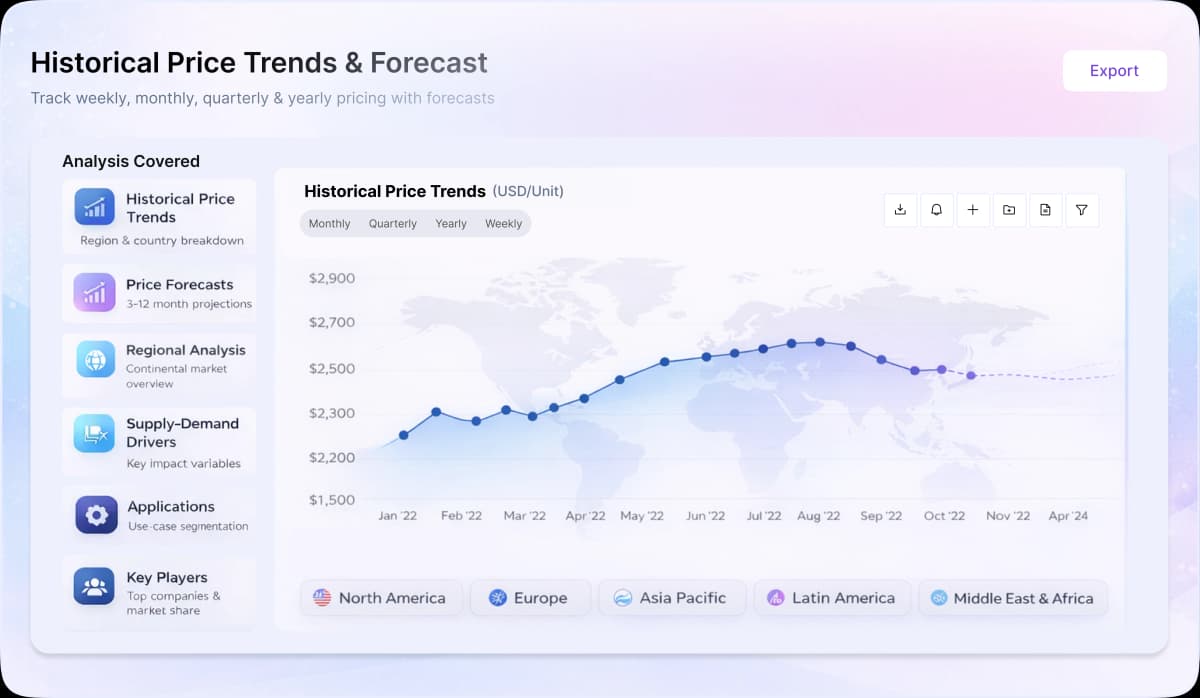
Turn price intelligence into action with the Procurement Resource Database. Log in or subscribe to unlock live price trends, historical charts, supplier databases, cost curves, and analyst-backed insights across chemicals, agriculture, energy, packaging, and more. Use these tools to benchmark your contracts, plan budgets with confidence, and stay ahead of market moves on every product you buy.
0
+Products
0
+Regions
0
+Subscriptions
Asia
In 2024, the Asian market for Trimethylolpropane experienced a fluctuating price trend across all four quarters. Early in the year, prices moved slightly upward due to a short-lived increase in procurement activity. However, the pace of demand slowed down soon after, especially from key downstream industries, which kept the overall price movement within a narrow range. The mid-year period was marked by occasional supply tightness caused by maintenance shutdowns at some facilities, briefly pushing prices up.
Despite this, ample availability and cautious buying behaviour led to a downward trend as the year progressed. By the final quarter, prices in countries like India displayed mild dips and remained stable due to balanced supply levels and moderate industry demand. The overall market tone in Asia was mixed but leaned slightly bearish by year-end.
Europe
In Europe, Trimethylolpropane prices stayed relatively steady for most of 2024. The market was supported by consistent demand from major consumer sectors, particularly in construction and coatings. There were no major supply disruptions, and logistics chains ran smoothly throughout the year. Although seasonal factors briefly influenced consumption patterns during colder months, the impact was minimal. Traders generally operated on short-term procurement cycles, buying based on immediate requirements rather than long-term contracts. This cautious approach, combined with a steady flow of goods, helped maintain price stability. Towards the end of the year, the market remained calm, with only minor fluctuations observed.
North America
The North American Trimethylolpropane market showed limited price movement throughout 2024. The region saw steady demand from core sectors such as automotive and resins, while overall production levels met the needs of the market effectively. Despite some minor disruptions caused by logistical challenges in the earlier part of the year, supply chains quickly adapted. Price changes were minimal, and the market showed resilience against external pressures. Seasonal shifts, including the onset of colder weather, had a minimal effect on consumption patterns. As the year drew to a close, the market maintained a balanced outlook, with stable prices and well-aligned supply-demand dynamics.
Trimethylolpropane (TMP) is a colourless to white solid widely used as a building block in the polymer industry. It is a triol- containing three hydroxyl groups: with a distinct odour. TMP is hygroscopic and is readily soluble in water and alcohol. Owing to its versatile nature, it is widely used in varnishes, plasticizers, surfactants, coatings, and lubricant products.
C6H14O3
Textiles, Paints/ Coatings, Adhesives/ Lubricants, Polymers, Plasticizers, Surfactants
TMP, 2-Ethyl-2-(hydroxymethyl)propane-1,3-diol
Lanxess, Jilin Petrochemical, Oxea, Mitsubishi Gas Chemical, Perstorp
CurrencyUS$ (Data can also be provided in local currency)
Supplier Database AvailabilityYes
Customization ScopeThe report can be customized as per the requirements of the customer
Post-Sale Analyst Support360-degree analyst support after report delivery
Note: Our supplier search experts can assist your procurement teams in compiling and validating a list of suppliers indicating they have products, services, and capabilities that meet your company's needs.
Our Price Analysis Methodology
AVP - Strategy and Solutions
Leading procurement research solutions across chemicals, materials, and food & beverages, with expertise in price forecasting and market analytics.

Experience how Procurement Resource transforms raw material price data into clear, decision ready intelligence. Optimise your performance with reliable, expert market data and analysis. Schedule your demo today to experience a live walk-through where our experts will showcase interactive price charts, forecasted prices, and insights driving the prices for your key commodities, tailored to your workflows. Contact us now!
Our Team will be happy to assist you
We are just a text away
Still Need Help?
Unlock full access to Procurement Resource's price databases, interactive charts, and short-term forecasts for thousands of commodities. Elevate your sourcing decisions by comparing prices across regions, downloading historical data, and layering in analyst-backed insights, all with our flexible plans that scale as your portfolio grows.
Still have any Questions
Contact Us



Price Trend Dashboard - What's Included
Price trends across a diverse portfolio of categories and products, spanning board to niche chemicals
Coverage extendable to grade-specific chemicals based on procurement requirements
Regular price tracking supported by robust historical datasets
News, policy updates, and key market drivers impacting price movements
Short-term and long-term price outlooks and forecasts
Supply–demand dynamics and capacity-driven market analysis

Track prices, market movements, supply-demand dynamics, and industry developments across hundreds of commodities through a centralized intelligence platform built for informed procurement decisions.

Understand market fluctuations using analyst-backed forecasts, historical pricing patterns, and evolving industry trends to strengthen sourcing strategies and budget planning.

Leverage cost models, pricing benchmarks, and procurement insights to evaluate purchasing opportunities, improve negotiations, and enhance operational efficiency.
Access region-specific price trends, trade activities, capacity changes, and supply chain developments influencing commodity markets worldwide.