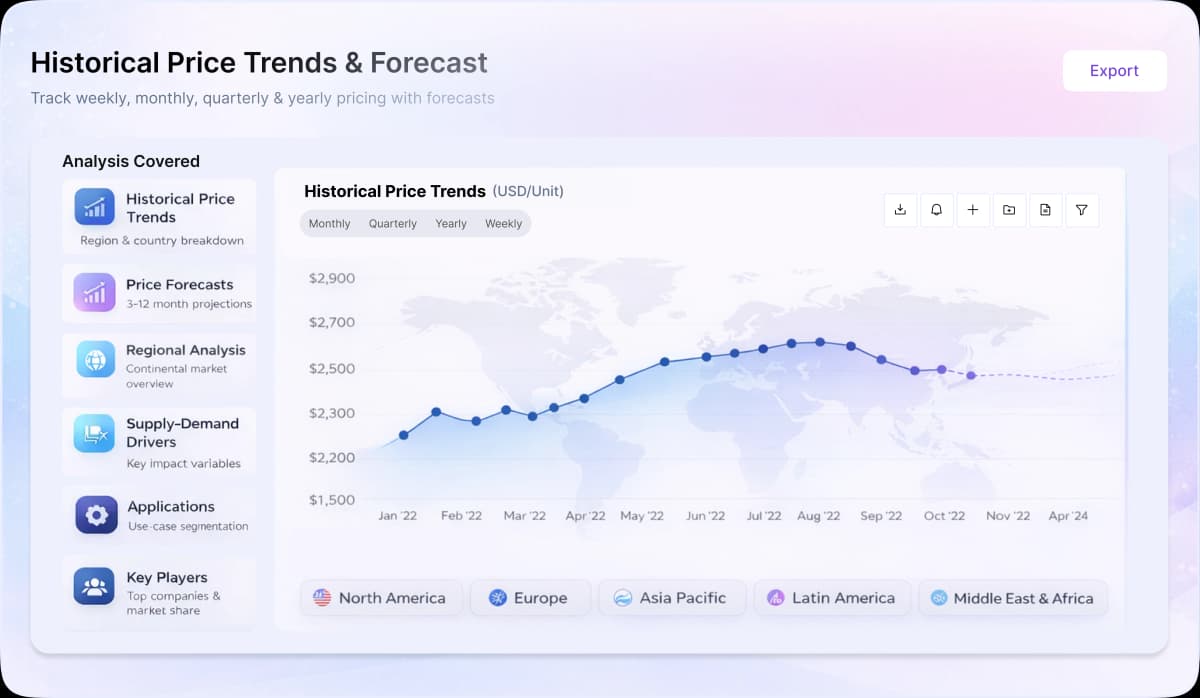
Vanilla prices in 2025 traced a volatile trajectory, shaped by shifting trade policies, supply chain realignments, and regulatory developments across key producing nations. According to the Vanilla price database, the imposition of reciprocal tariffs under U.S. Executive Order 14257 introduced fresh uncertainty into the vanilla market, particularly for buyers reliant on Madagascar, the world's dominant origin. The initially steep tariff proposals sent procurement teams reassessing sourcing strategies, with alternative origins including Uganda, Papua New Guinea, and Indonesia drawing heightened attention. However, logistical constraints and distinct flavor profiles limited direct substitution across most industrial applications.
As the Vanilla price curve started reflecting these disruptions, European extractors emerged as an unexpected beneficiary, leveraging their access to multiple origins and positioning competitively in markets across Asia, the Middle East, and Latin America. The Vanilla price graph for the period also captured a surge in forward purchasing by US importers ahead of tariff implementation, producing temporary inventory buildups. By year-end, Madagascar's government moved to liberalize vanilla prices following stock saturation across domestic and international channels, establishing reference export benchmarks to prevent sharp value erosion while preserving export eligibility standards.