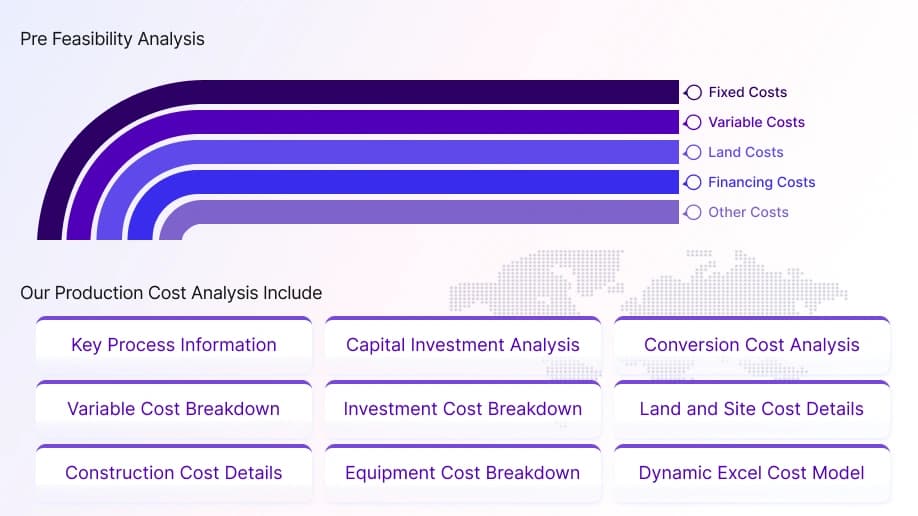
The report provides a detailed analysis essential for establishing an Alfacalcidol production plant. It encompasses all critical aspects necessary for Alfacalcidol production, including the cost of Alfacalcidol production, Alfacalcidol plant cost, Alfacalcidol production costs, and the overall Alfacalcidol production plant cost. Additionally, the study covers specific expenditures associated with setting up and operating an Alfacalcidol production plant. These encompass production processes, raw material requirements, utility requirements, infrastructure needs, machinery and technology requirements, manpower requirements, packaging requirements, transportation requirements, and more.
Alfacalcidol is a drug that functions in the body similarly to vitamin D. It is primarily used to treat hypocalcemia, or low calcium levels, and associated disorders in patients with chronic kidney disease. It is also used in treating osteodystrophy and secondary hyperparathyroidism. It also has potential benefits for osteomalacia and some forms of rickets.
The procurement of Alfacalcidol is influenced by its application in the pharmaceutical and medical industries as a vitamin D analog to treat hypocalcemia and chronic kidney disease. The widespread occurrence of chronic kidney disease (CKD) and hypocalcemia is significantly increasing the demand for Alfacalcidol. It witnesses a significant demand from the aging population as they are more likely to be affected by CKD and related disorders. Alfacalcidol is more successful than conventional vitamin D(3) in treating osteoporosis since it has been demonstrated to have bone-protective benefits independent of its calcium-related actions.
Its prominence as a therapeutic option for individuals prone to the risk of bone loss is increased by this special mechanism, which amplifies its market presence. Clinical research shows that Alfacalcidol considerably lowers the risk of fractures and increases bone mineral density (BMD), especially in groups with high rates of bone loss, such as patients on corticosteroids and postmenopausal women, thereby increasing its demand. There have been no serious adverse events reported with Alfacalcidol.
This favorable safety profile enhances its attractiveness as a treatment option for patients, especially those with underlying conditions, which contributes to its market growth. Overall, industrial Alfacalcidol procurement is influenced by its application in the pharmaceutical and medical industries, rising cases of CKD and hypocalcemia, the aging population, greater efficacy, fewer side effects, and regulatory approvals.
Raw Material for Alfacalcidol Production
According to the Alfacalcidol production plant project report, the key raw material used in the production of Alfacalcidol includes vitamin D3.
Production Process of Alfacalcidol
The extensive Alfacalcidol production cost report consists of the following major industrial production process:
- Production from vitamin D3: The production process of Alfacalcidol starts with the substitution of Vitamin D3 with p-methylbenzenesulfonyl chloride (TsCl) in the presence of pyridine to form an intermediate. The compound undergoes ring closing in the presence of sodium bicarbonate to give the key intermediate. The intermediate is subjected to further oxidation promoted by t-butyl hydrogen peroxide (tBuOOH) to form the alcohol. The alcohol is treated with acetic acid gives the ring-opening product. Finally, the product undergoes hydrolysis to produce Alfacalcidol.
Alfacalcidol, commercially known as One-alpha, is a white crystalline solid having the molecular formula C27H44O2 and a molecular weight of 400.6 g/mol. It has a melting point of around 136°C. It has a water solubility of <1 mg/mL and an estimated water solubility of around 0.00163 mg/mL. It has a log P value of 6.68. The value of its dissociation constant, pKa, is 14.39. It is an analog of [vitamin D] that is not endogenous. It is crucial to the metabolism of bones and calcium homeostasis. It is used to treat chronic kidney disease, hypocalcemia, and osteodystrophy.