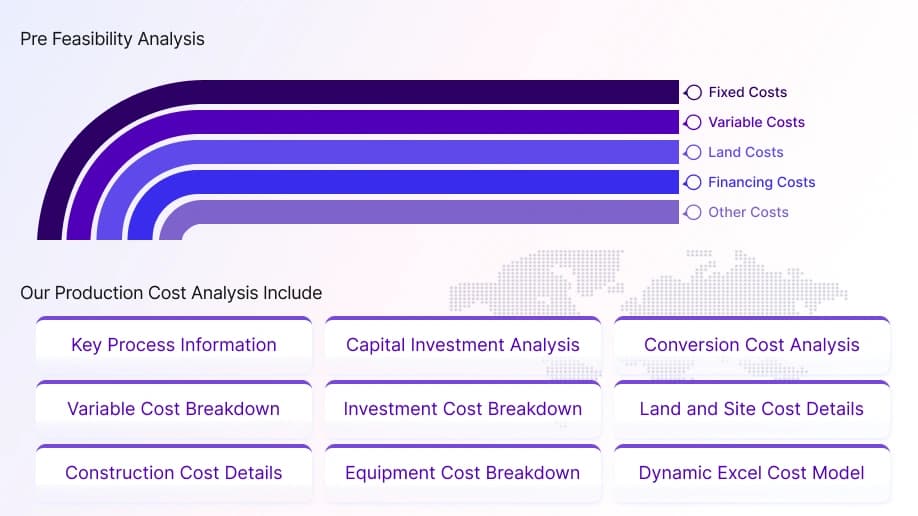
The report provides detailed analysis essential for establishing an alogliptin production plant. It encompasses all critical aspects necessary for alogliptin production, including the cost of alogliptin production, alogliptin plant cost, alogliptin production costs, and the overall alogliptin production plant cost. Additionally, the study covers specific expenditures associated with setting up and operating an alogliptin production plant. These encompass production processes, raw material requirements, utility requirements, infrastructure needs, machinery and technology requirements, manpower requirements, packaging requirements, transportation requirements, and more.
Alogliptin Market Analysis: Demand and Supply Analysis, and Sourcing
Alogliptin is an oral DPP-4 inhibitor used to treat type 2 diabetes. Chemically it is a uracil-based molecule with a chiral aminopiperidine and a benzonitrile group, sold as the benzoate salt. It works by blocking the DPP-4 enzyme, which raises incretin hormones and improves blood-sugar control. The drug lowers blood sugar with little weight gain and a low risk of low blood sugar. Being a branded, patent-era gliptin, it holds a specialty, growing, and global demand. Sold as Nesina, and in combinations, it faces generic entry later this decade. Today the molecule is largely on-patent, specialty in nature, and made by a few makers with chiral capability.
Buyers are a small group of branded and generic drug makers, along with specialty API developers. Demand runs through oral tablets, alone or combined with metformin or pioglitazone. Supply leans on India and China, where makers with chiral capability build the API and file documentation. An alogliptin demand and supply analysis has to weigh the chiral aminopiperidine cost, the multi-step synthesis, patent timing, and rising diabetes demand. On receipt, buyers check assay by HPLC, related substances, the chiral purity, residual solvents, and water content.
Summary of the Product, Grades, and Uses
Alogliptin carries the molecular formula C18H21N5O2 and a molar mass of 339.39 g/mol under CAS 850649-61-5. The marketed salt, alogliptin benzoate, carries the molecular formula C18H21N5O2·C7H6O2 and a molar mass of 461.52 g/mol under CAS 850649-62-6. It is a white to off-white crystalline powder that dissolves in water as the benzoate salt. Being a chiral drug, its activity rests in the R form, which is held above 99 percent in the product. The benzoate salt is the marketed form, since it gives a stable, formulable solid. In storage, it holds up well when kept cool, dry, sealed, and away from light.
Alogliptin reaches the market mainly as a single high-purity pharmaceutical grade of the benzoate. Pharmaceutical grade meets the innovator specification and emerging compendial monographs for oral use. Reference and impurity-standard grades serve analytical and method-development work at laboratories. It ships as a fine crystalline powder to suit tablet manufacture, alone or in combination products. Buyers check assay by HPLC, related substances, individual impurities, the chiral purity, residual solvents, and microbial limits against the specification.
Across the label, the roles center on type 2 diabetes. In diabetes care, once-daily tablets lower blood sugar with little weight gain and a low risk of low blood sugar. In combination therapy, it is paired with metformin, pioglitazone, or other agents in fixed-dose tablets. It is often added when metformin alone does not control blood sugar well enough. Across these uses, the value comes from once-daily dosing, a gentle side-effect profile, oral convenience, and the branded position. Diabetes demand is large and grows with aging and lifestyle trends. Combinations add use. Such lab work covers pharmacology assays, chiral checks, method development, and analytical work. Reference and research use is small, mostly analytical and pharmacology work in labs.
Main End-Uses of Alogliptin
The main use of alogliptin is as an oral diabetes drug, and this covers nearly all demand. It goes into tablets, alone or combined with metformin or pioglitazone, at a few strengths. Buyers are branded and generic formulators who run diabetes and metabolic lines. Used as a bulk active, one batch serves a large number of finished doses. On the buyer side, checks cover assay, related substances, the chiral purity, and dissolution. For a chiral DPP-4 inhibitor API, the sensitive attributes are the chiral purity, related substances, individual impurities, and assay.
Type 2 diabetes treatment is the largest setting. Once-daily tablets lower blood sugar for patients who need an option beyond metformin, with little weight gain. A large, growing diabetes population drives most of the demand. On uptake, the drivers are efficacy, tolerability, dosing ease, and cost. Here the value comes from once-daily dosing, the gentle profile, oral convenience, and the branded position. Diabetes therapy is a crowded field. Newer classes compete. Formulators value tight chiral and impurity control here, since the wrong enantiomer lowers quality.
Combination therapy is the second major setting. Fixed-dose tablets pair alogliptin with metformin or pioglitazone for patients who need more than one drug. In turn, this widens the use and supports steady demand. Here buyers weigh chiral purity, related substances, assay, dissolution, and reliable supply. On the specification side, the key attributes are the chiral purity, related substances, individual impurities, and assay. Reference and comparator use accounts for the small remainder of demand, covering pharmacology assays, method development, and analytical work in labs.
Alogliptin Market Risks
Alogliptin sits in the branded gliptin market, so its main risks are patent timing and the complex chiral synthesis rather than weak demand. Patent status shapes the whole market, since generic entry is set for later this decade. The multi-step chiral synthesis is demanding, so cost depends on yield and stereochemical control. Competition from other gliptins and from newer diabetes classes caps pricing and share. Supply leans on a few makers with chiral capability, so any developer stepping back or a quality problem moves the market. On balance, the main pressures are patent timing, synthesis complexity, competition, and thin supply. Underlying diabetes demand keeps growing. Most risk sits on timing and manufacturing.
Alogliptin manufacturing carries its own risks because the chiral synthesis and salt formation both demand tight control. The several steps have to run clean, or related substances build up across the route. The chiral aminopiperidine has to be set to the R form, or the wrong enantiomer lowers quality and yield. Related substances and individual impurities are tightly specified, so purification has to be thorough. The benzoate salt has to be formed and crystallized to a consistent, stable product. Most rejected batches trace back to the chiral purity, related substances, and residual-solvent failures.
Alogliptin Production Process and Main Cost Drivers
The alogliptin production process runs the full value chain, from the uracil and aminopiperidine building blocks through coupling, chiral steps, benzoate salt formation, purification, and drying.
- By Coupling of a Methyluracil Benzonitrile with a Chiral Aminopiperidine and Benzoate Salt Formation: The main inputs are a methyl-dioxopyrimidine benzonitrile intermediate, a chiral 3-aminopiperidine, benzoic acid, a base, organic solvents & purified water.
Alogliptin production opens with receipt and QC of the uracil-benzonitrile intermediate and the chiral aminopiperidine. The uracil-benzonitrile fragment is built with the methyl and benzonitrile groups that end up in the molecule. In effect, this fragment carries the pyrimidinedione core and the nitrile of the drug. The intermediate is purified before the coupling, since impurities carry forward otherwise.
Next, the fragment is coupled with the chiral 3-aminopiperidine, which joins the two halves and sets the chiral center of alogliptin. The base is then reacted with benzoic acid to form alogliptin benzoate, the marketed salt. The crude salt is worked up, then purified and crystallized under chiral and impurity control. The product is filtered, dried & milled to specification. Across the process, the critical controls are chiral purity, coupling completeness, related substances, and color. In the salt, the R form has to dominate, since the wrong enantiomer is an impurity. QC covers assay, related substances, the chiral purity, residual solvents & water content. The main levers on cost are the aminopiperidine and uracil intermediate price, coupling yield, chiral control, and purification recovery.
Main Factors Affecting Alogliptin Production Cost
Alogliptin production cost is shaped mainly by the chiral aminopiperidine and the yield of the multi-step synthesis. The chiral 3-aminopiperidine and the uracil-benzonitrile intermediate are the costliest inputs, since they are specialty building blocks. Because the route runs several steps, yield losses compound and shape the cost per kilogram. Benzoic acid, the base & solvents are smaller process costs. Energy for the reactions, purification & drying is a real utility item. On the testing side, chiral HPLC, related-substance, and residual-solvent tests make up a large share of the QC spend. On the running side, the biggest cost lines are the intermediates, the chiral chemistry, energy, and testing. Feedstock is the main driver. Chiral control comes next.
Unit cost also moves with chiral control and purification. A batch with poor chiral purity or heavy related substances takes extra purification and loses yield. Because the drug is chiral, the enantiomeric purity has to be held tightly through the salt step. Chiral testing and control add analytical cost that a non-chiral API does not carry. GMP documentation, comparability & regulatory upkeep are carried as fixed overhead. The multi-step synthesis, chiral steps & purification all carry heavy fixed overhead, so a plant running below capacity spreads that overhead over fewer kilograms and lands at a higher unit cost.
Raw Materials for Alogliptin Production Plant and its Procurement
Raw material sourcing for alogliptin centers on the chiral aminopiperidine and the uracil-benzonitrile intermediate. The chiral 3-aminopiperidine is the primary specialty feedstock, made through its own chiral synthesis at fine-chemical plants. It ships from a limited set of makers, since enantiopure aminopiperidines need specialized synthesis. The uracil-benzonitrile intermediate, benzoic acid, the base, organic solvents & purified water complete the input streams.
Cheaper aminopiperidine is not always the cheapest route to finished alogliptin. A feed with poor chiral purity or related impurities carries problems through the synthesis. Feedstock quality also shapes the chiral and related-substance profile, which is critical for a chiral drug. Taken together, aminopiperidine chiral purity, intermediate quality, coupling yield, solvent recovery & purification recovery drive most of the variable cost per kilogram.
Such sensitivities shape how an alogliptin plant buys and qualifies its inputs. Contracts specify chiral purity, related impurities, chiral markers & moisture, and every incoming lot is quarantined until QC release. Vendor qualification runs through supplier audits, review of the synthesis chain & lot-to-lot monitoring. On the incoming side, checks cover assay, chiral purity, related impurities, color, and moisture. Long-term agreements with two intermediate suppliers help steady cost, timing, quality, chiral supply, and lead time. Because the chiral aminopiperidine is specialized, dedicated supplier relationships matter more than spot buying, since few makers can supply it.
Sustainability and Regulatory Requirements
Alogliptin manufacture raises environmental concerns that center on solvent use, chiral-synthesis waste & organic effluent. Standard controls rely on solvent recovery, chemical effluent treatment, control of process waste, and control of organic streams before discharge. Solvent use is the sharpest concern, since the multi-step and chiral route consumes solvents, so recovery matters. Solvent recovery and energy integration cut both cost and footprint. On the sustainability side, the themes are solvent recovery, effluent treatment, waste control, and energy use. Tighter environmental rules in China have already closed weaker plants and lifted compliance spending across the industry. Solvent and effluent control is the sharpest issue. Full documentation is expected.
Regulatory obligations for alogliptin follow from its use as a branded and future-generic diabetes drug. In the US, the API sits under FDA cGMP per 21 CFR 210/211 and the innovator or filed drug-master-file specification. In Europe, an EU GMP site with appropriate active-substance registration is needed for regulated supply. ICH Q7 for active ingredients applies, along with limits on related substances and the chiral purity. Generic supply rests on drug master files and bioequivalence to the reference product. On the compliance side, the duties span cGMP, the filed specification, chiral and impurity limits, and solvent standards. Sites usually carry ISO 14001 and ISO 45001 certification, and batch release rests on assay, related substances, the chiral purity & microbial limits.
CAPEX and OPEX for an Alogliptin Production Plant
An alogliptin plant is a multi-step chiral-synthesis and purification facility. Plant investment starts with intermediate and reagent storage, a multi-step reaction section, and an intermediate purification section. From there come a chiral-coupling section, a benzoate salt-forming and purification step, and a crystallization, drying & milling suite. Utilities cover chilled brine, steam, purified water, solvent recovery & an effluent treatment plant. On the QC side, a laboratory block houses HPLC, chiral and related-substance testing, residual-solvent & water analysis. Civil works provide contained reactor bays, a solvent store, a drying and packing area, and a controlled-access warehouse. On the capital side, the big blocks are the reaction section, the chiral and salt-forming train, the purification section, and the drying suite. Chiral-controlled steps run through the process, since the enantiomeric purity matters.
Alogliptin operating cost comes from the same inputs and control points that shape the process. The variable side is led by the chiral aminopiperidine, the uracil intermediate, benzoic acid & solvents, alongside energy, labor, testing, effluent treatment, packaging & freight. Cost per kilogram then comes down to coupling yield, chiral control & purification recovery. The alogliptin plant setup cost depends on capacity, synthesis and purification scale, chiral-control scope, and grade range. Taken together, intermediate price, coupling yield, chiral control, energy use & compliance determine the running cost.
Plant Location and Investment Factors
A workable alogliptin site sits inside a fine-chemical cluster with chiral capability and strong analytical depth. Access to trained chiral-synthesis and QC staff is essential. India hosts most of the API development and drug-master-file work, close to generic drug makers. China adds intermediate and API capacity with a low cost base and chiral capability. Both regions offer supplier networks, chiral synthesis & regulatory-filing capability. The site also needs solvent handling, chiral capability & a full effluent treatment plant for chemical waste.
For an alogliptin plant, the main investment decision is whether to make the chiral aminopiperidine in-house or buy it and run only the coupling and finishing. Buying the aminopiperidine lowers capital but leaves the biggest cost exposed to the intermediate market. Making it in-house raises CAPEX but secures supply and captures more value. Timing against the generic-entry window is the other decision, since API demand should rise once the branded patents lapse. Plant scale has to match a growing, specialty market that may widen with generics, so the project rests on chiral capability and quality. For a maker preparing generic supply, chiral control & drug-master-file quality matter most. The market is specialty now. Generics may widen it.
Major Alogliptin Producing Regions
India and China are the core production regions for alogliptin today. India runs most of the API development, drug-master-file filings, and generic-preparation work, backed by strong chiral-synthesis clusters. Regional strength rests on chiral synthesis, analytical depth, regulatory filing, and a skilled cost base. China adds intermediate and API capacity with a low cost base and chiral capability. The United States and Europe host the innovator supply chain and branded formulation rather than bulk API. Across the map, the value chain spans the uracil-benzonitrile intermediate, the chiral aminopiperidine, coupling, and benzoate salt formation. A new plant would most likely start in an Indian fine-chemical cluster with chiral capability and filing capacity.
Key Alogliptin Producers
MSN Laboratories
- Ranks among India's leading API and complex-generic developers, active in alogliptin.
- Develops alogliptin benzoate and files documentation ahead of generic entry.
- Competes on backward integration, chiral capability & a competitive cost base.
- Regulatory work covers US FDA, EU GMP & multi-country filings.
CTX Lifesciences
- Operates as a global API maker, active in alogliptin benzoate, with a backward-integrated process.
- Produces alogliptin benzoate API for regulated markets.
- Competes on integration, quality & wide regulatory coverage.
- Regulatory record covers US FDA, EU GMP & multi-country approvals.
Honour Lab
- Ranks among India's API developers, with alogliptin benzoate in its range.
- Produces alogliptin benzoate and files documentation for regulated markets.
- Competes on chiral synthesis, capacity & a competitive cost base.
- Regulatory work covers US FDA and multi-country filings.
Indoco Remedies
- Manufactures a broad API and finished-dose range, with diabetes APIs including alogliptin, from India.
- Runs synthesis and formulation for regulated and emerging markets.
- Competes on integration, quality & wide regulatory coverage.
- Regulatory record covers US FDA, EU GMP & multi-country approvals.
Takeda
- Owns the innovator drug for alogliptin, sold as Nesina and in combination products.
- Directs the branded supply chain through specialized manufacturers.
- Competes on the branded position, patent estate & clinical record.
- Regulatory record covers US FDA, EU, Japan & multi-country approvals.
Chinese Chiral-API Producers
- Represent the chiral and complex API capacity in China's fine-chemical clusters.
- Produce alogliptin benzoate and intermediates for domestic and export markets.
- Compete on cheap intermediates, scale & a low cost base.
- Regulatory work covers Chinese and export standards for APIs.