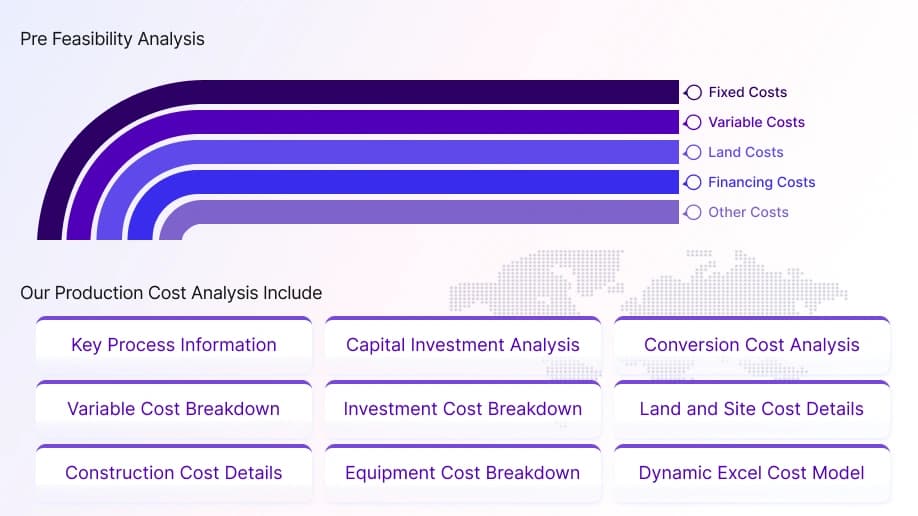
The report provides a detailed analysis essential for establishing an Azilsartan production plant. It encompasses all critical aspects necessary for Azilsartan production, including the cost of Azilsartan production, Azilsartan plant cost, Azilsartan production costs, and the overall Azilsartan production plant cost. Additionally, the study covers specific expenditures associated with setting up and operating an Azilsartan production plant. These encompass production processes, raw material requirements, utility requirements, infrastructure needs, machinery and technology requirements, manpower requirements, packaging requirements, transportation requirements, and more.
Azilsartan is a medication used to manage high blood pressure, also known as hypertension. It belongs to a group of drugs called angiotensin-receptor blockers (ARBs). It is an effective antihypertensive treatment for people eighteen years of age or older. It can be utilized alone or in conjunction with other antihypertensive drugs for enhanced efficacy. It functions by inhibiting the action of angiotensin II, which is a potent vasoconstrictor, thereby relaxing the blood vessels, improving the blood flow, and reducing the elevated blood pressure.
The procurement of Azilsartan is influenced by its application in the pharmaceutical and medical industries as an antihypertensive medication used to treat high blood pressure. The widespread incidence of hypertension and heart diseases, coupled with an aging global population, is significantly driving the demand for Azilsartan, an effective antihypertensive medication.
This demand is further supported by the superior blood pressure-lowering efficacy of Azilsartan as demonstrated in clinical trials, where it has outperformed predecessors like valsartan and olmesartan. Additionally, Azilsartan is gaining traction due to its potential to reduce mortality rates and manage cardiovascular diseases, particularly benefiting patients with heart failure and myocardial infarction.
Its compatibility with other first-line medications makes it a preferred choice for treating patients with concurrent diabetes mellitus and hypertension. Moreover, Azilsartan's effectiveness in slowing the progression of moderate-to-severe albuminuria and its role in preventing the recurrence of atrial fibrillation in patients with hypertension further amplify its market appeal. Overall, industrial Azilsartan procurement is influenced by its application in the pharmaceutical and medical industries as an antihypertensive medication, rising cases of hypertension, the aging population, better efficacy, fewer side effects, its use with other drugs, off-label uses, increasing healthcare awareness, cost-effectiveness, and regulatory approvals.
Raw Material for Azilsartan Production
According to the Azilsartan production plant project report, the key raw material used in the production of Azilsartan includes BEC methyl ester.
Manufacturing Process of Azilsartan
The extensive Azilsartan production cost report consists of the following major industrial production process:
- Production from BEC methyl ester: The production of Azilsartan involves several steps. In the first step, BEC methyl ester reacts with hydroxylamine hydrochloride in the presence of sodium methoxide to form amidoxime. Amidoxime is treated with ethyl chloroformate in the presence of a base, followed by cyclization in xylene at reflux to give an intermediate. Finally, the intermediate is subjected to hydrolysis with aqueous sodium hydroxide to produce Azilsartan.
Azilsartan, commercially known as Edarbi, is a colorless compound having the molecular formula C25H20N4O5 and a molecular weight of 456.4 g/mol. It has a melting point in the range of 212-214 °C. The value of its dissociation constant, pKa, is 6.1 at 0.1 N NaOH. It is easily soluble in methanol but insoluble in Water. It remains stable when kept in the suggested storage conditions. It is an angiotensin receptor blocker used to treat elevated blood pressure.