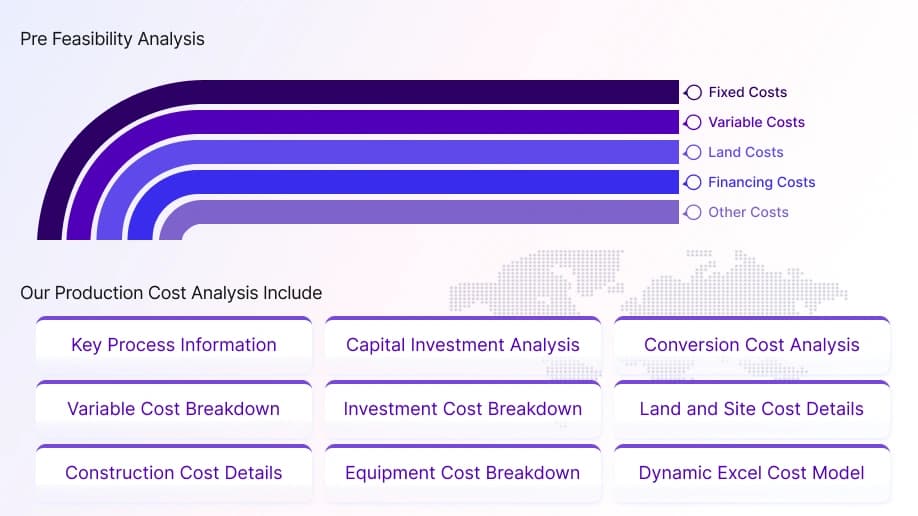
The report provides detailed analysis essential for establishing a boron carbide production plant. It encompasses all critical aspects necessary for boron carbide production, including the cost of boron carbide production, boron carbide plant cost, boron carbide production costs, and the overall boron carbide production plant cost. Additionally, the study covers specific expenditures associated with setting up and operating a boron carbide production plant. These encompass production processes, raw material requirements, utility requirements, infrastructure needs, machinery and technology requirements, manpower requirements, packaging requirements, transportation requirements, and more.
Boron Carbide Market, Demand, and Sourcing
Boron carbide is an artificial ceramic produced from a boron compound and carbon. It is one of the hardest commercial materials, but it is also extremely lightweight and resistant to chemicals. The material can absorb neutrons, which makes it useful in nuclear systems. Suppliers sell it as coarse grains, fine powder, paste, pressed parts, and sintered components. Bags, drums, or sealed packs are used to keep out moisture & dirt. Its low thermal expansion and ability to withstand high temperatures also support wear and refractory applications.
Commercial buyers purchase boron carbide as abrasive grain, ceramic powder & armor material, nuclear grade, or finished wear parts. Abrasive & technical-ceramic users take regular volumes for machining hard metals, sapphire, and advanced ceramics. Armor and neutron-absorption applications use relatively smaller volumes of boron carbide, but they require tighter specifications & extensive qualification, and consistent performance. These specialized grades generally command higher prices than standard abrasive-grade material. China supplies much of the standard commercial powder. Europe and North America are stronger in high-purity grades and fabricated parts. Boron raw material comes mainly from Turkey and the United States. A plant investor needs to check electricity prices, boric oxide purity, carbon quality, furnace design, recovery, milling, and classification. Buyers also look at particle-size distribution, free carbon, total boron, oxygen, metallic impurities, and batch consistency. Furnace grain, purified powder, and finished ceramic parts are normally priced separately because each needs a different amount of processing. The boron carbide production plant project report examines production requirements for abrasive, armor, and neutron-absorption grades. It covers raw materials, processing stages, quality standards, and plant setup & operating costs. The report also assesses industrial production economics, including energy use, equipment costs, product recovery, and grade-specific pricing.
Overview of the Product & Grades, and its Applications
Boron carbide has the formula B4C and a molar mass of about 55.25 grams per mole. It is a gray-black crystalline solid with a density of around 2.52 grams per cubic centimeter. Its hardness is generally above 9.3 on the Mohs scale and can reach close to 29 gigapascals. The material melts at about 2,450 degree Celsius and does not dissolve in water. Suppliers offer abrasive powder & ceramic powder, refractory antioxidant, natural-isotope nuclear grade, enriched boron-10 grade, and hot-pressed shapes. Fine powders are made with controlled surface area for sintering, whereas coarse products are sold in FEPA or customer grit sizes. Usual checks include boron content, total boron & carbon, free carbon, boric oxide, iron, particle size, and isotope composition. Buyers also review chemical analysis, laser particle tests, density, sintering behavior & lot records, and quality certificates. Armor customers test pressing & fracture behavior. Nuclear customers need approved quality systems, traceability, and the relevant ASTM material specifications.
Abrasive lapping and finishing use large quantities of boron carbide because the grain can cut tungsten carbide, sapphire, gemstones, glass, and advanced ceramics. A narrow grit range helps the user control removal rate and surface finish. Technical-ceramic makers use the powder in blast nozzles, seals, bearings, wear tiles, wire guides, and pump parts. Its low weight and high hardness help these parts last longer in abrasive service. Dense boron carbide tiles are also used in body, vehicle, and aircraft armor. They reduce weight when compared with many metal or ceramic alternatives. Nuclear systems use natural or enriched grades in control rods, shielding, pellets, plates, and neutron-absorbing composites. Refractory makers add fine powder to carbon-bonded bricks & slide-gate products to slow oxidation. High-purity powder may also be used to make boron halides, metal borides, boriding mixtures, and semiconductor-related materials. Each market needs its own level of purity, particle size, density, and documentation.
Key End-Uses of Boron Carbide
The largest group of applications for boron carbide commercially is in abrasives & wear-resistant ceramics. It is used for lapping & grinding, polishing, wire sawing, ultrasonic drilling, and blast nozzles. Demand is linked to hard-metal tools, technical ceramics, sapphire substrates, mining equipment, and systems for handling abrasive material. Buyers want repeatable cutting performance, sharp grains & low metal contamination, and consistent grain size. They may also test cutting speed, surface roughness, slurry behavior, and the way the grain breaks down during use. Wear part makers understand that sintering, green density, binder compatibility, and shrinkage are important.
Ballistic protection is a smaller but high-value market. Dense tiles combine low weight with very high hardness, so they are used in body armor and vehicle protection where weight matters. Nuclear applications are another important outlet. Natural or enriched boron carbide is used in power reactors, research reactors, storage systems, and radiation shielding. Buyers require controlled boron content, low impurities, isotope confirmation, steady pressing behavior, and full lot traceability. Approval usually takes longer than it does for standard abrasive grades. Armor programs also test tile size, density, bonding, and ballistic performance. Nuclear users may choose enriched boron-10 when a compact absorber needs stronger neutron capture.
Other uses include refractory antioxidants, boriding mixes, boron halide production, sputtering targets, rocket-related compositions, and metal-matrix composites. These applications normally use fine or specially purified powder rather than standard abrasive grain. Refractory demand follows steel production and maintenance work. Chemical-grade demand is linked to semiconductor materials and specialty borides. A plant serving several markets needs flexible milling, classification, blending, and packing equipment. Production campaigns also need to be planned around the grade and quantity ordered by each customer.
Boron Carbide Market Risks
Boron raw material comes from a concentrated supply base, and only a limited number of producers can supply qualified powder. Prices for boric acid & boric oxide move with mine output, refinery operation, energy, freight, and trade conditions. Electricity is another major cost because the furnace uses a large amount of power. Armor and nuclear orders can be irregular, as purchases often depend on long approval periods and government programs. Cheap powder can put pressure on standard abrasive prices, but users of high-specification grades are usually slow to change an approved supplier. Currency changes, shipping delays & export controls, and end-use checks can also affect delivery and regional pricing.
Production losses can occur when boron escapes from the furnace as vapor. Carbon purity, charge mixing, and temperature distribution affect free carbon & batch consistency. Iron or other metals may enter the product during crushing and milling. Acid purification creates corrosive wastewater that must be treated. Fine powder can also create dust, so enclosed equipment, ventilation, and worker protection are needed. A specialized batch may be rejected when the particle size, isotope result, or traceability record does not meet the customer's requirement.
Boron Carbide Production Process & Main Cost Drivers
The boron carbide production plant report analyzes the full production chain and explains the cost of furnace reduction, crushing, purification, milling, classification, testing, and packing.
- By Carbothermal Reduction in an Electric Furnace: The main inputs are boric oxide or boric acid, petroleum coke or graphite, and a measured amount of recycled furnace material.
Production starts with drying and mixing the boron source with low-ash carbon. The prepared charge is placed in an electric arc or resistance furnace. At high temperature, the carbothermal reaction forms a solid mass of boron carbide. The furnace product is cooled, removed, and broken into smaller pieces. Crushing separates usable carbide from unreacted or contaminated material. The product is then purified with chemicals, washed, dried, milled, air classified, blended, and checked before packing. Ceramic grades usually need finer milling before pressing and sintering. Boron feedstock, electricity, carbon purity, furnace recovery, purification loss, and particle-size finishing are the main factors affecting production cost.
Main Factors Affecting Boron Carbide Production Cost
Boric acid or boric oxide is the main raw-material expense. Its delivered cost depends on mining, conversion, purity & packaging, and freight. Petroleum coke or graphite also matters because ash, sulfur, and metals can lower the quality of the finished powder. Electric furnaces use a large amount of power, so electricity tariffs and a stable supply have a direct effect on cost. Electrodes, furnace linings, purification acids & process water, and filter materials add regular expenses. Poor furnace recovery raises the cost of every tonne because boron can be lost through volatilization or off-grade material.
Costs also depend on how much the furnace is utilized. A shutdown leaves fixed costs to be allocated over a lower level of output. Fine ceramic & nuclear grades require more milling, blending, testing, and paperwork than standard abrasive grain. Shipping of boron raw material or finished powder over long distances is an important freight cost. Operating costs include dust collection, furnace-gas handling, acid recovery, wastewater treatment, and residue disposal. Labor, cleaning time, and inventory also increase with small lots and frequent grade changes.
Raw Materials for Boron Carbide Production Plant and its Procurement
Boric acid and boric oxide are the main boron materials. Supply is linked to borate mining and refining, with Turkey and the United States holding large upstream positions. Converted boron compounds are also purchased from China, South America, and regional chemical suppliers. The price is dependent on ore extraction, refinery throughput, natural gas, electricity, packaging and sea freight. The number of acceptable suppliers is smaller, as high-purity products require low levels of sodium, calcium, iron and other metals. The carbon source can be petroleum coke, pitch coke, graphite or carbon black. Buyers look for high fixed carbon, low ash, low sulfur, and a stable particle size. Recycled furnace material can reduce fresh input use when its composition is tested and controlled. Contracts may include assay limits and deductions for excess moisture or impurities.
Hydrochloric acid or another mineral acid may be used to remove oxides & metallic residue. Its cost follows chlor-alkali production, energy, transport, and local availability. Water quality matters because it affects washing and the soluble impurities left in the powder. Finished material is packed in lined bags, fiber drums, steel drums, or sealed containers. Packaging cost depends on paper, polymer, metal, and handling requirements. Boron material, carbon, purification chemicals, power, and packaging together make up most of the boron carbide production cost.
Purchase contracts should state the assay, moisture, particle size, and metallic impurity limits for the boron source. Carbon suppliers need to show stable ash and sulfur levels from one delivery to the next. Enriched boron compounds and nuclear-grade packaging may have long lead times. Using more than one supplier reduces interruption risk, but each new source needs furnace trials & quality approval. Recovery can be improved by measuring reclaimed material, controlling the furnace charge, and keeping clean off-grade powder separate. A large plant near boric acid supply may also consider making boric oxide on site.
Sustainability & Regulatory Requirements
Electric furnaces are the main source of energy use in boron carbide production. Better furnace loading, steady electrode control, heat recovery, and higher operating rates can lower power use per tonne. Recycled furnace mix & clean off-grade powder reduce raw-material losses. Enclosed crushing, milling, and classification equipment helps control dust. Acid recovery and reuse of wash water can reduce wastewater. A plant may also lower its reported emissions by purchasing electricity from a lower-carbon source, where this is available.
Regulatory requirements cover chemical registration, worker exposure, furnace gases, dust, acids, wastewater, and solid waste. European sales may require REACH registration and suitable safety documents. The plant also needs local permits for air emissions, water discharge, waste handling, and worker safety. Fine powder areas require ventilation, respiratory protection, cleaning procedures, and an assessment of carbon-dust hazards. Nuclear grades need approved quality systems, isotope records, traceability, and the applicable ASTM specifications. Spent acid and wash solids must be stored, treated, and recorded as required by local rules.
CAPEX and OPEX for a Boron Carbide Production Plant
Plant investment covers raw-material dryers, mixers, briquetting equipment where used, electric arc or resistance furnaces, transformers, electrodes, cooling systems, and furnace unloading equipment. The downstream section normally includes jaw crushers, roll crushers, magnetic separators, acid-resistant purification tanks, filters, washers, dryers, jet mills, ball mills, air classifiers, sieves, blenders, and packing machines. Utilities include high-voltage power distribution, cooling water, compressed air, ventilation, dust collection & wastewater treatment, laboratory facilities, warehousing, and material handling. Nuclear, armor, or advanced ceramic grades may also need hot presses, sintering furnaces, isotope analyzers, oxygen analyzers, and cleaner packing areas. Civil works should keep furnace, acid, powder, and finished-product areas separate. The boron carbide plant setup cost depends mainly on furnace capacity, power infrastructure, crushing & milling equipment, purification systems, laboratory needs, dust control, and wastewater treatment. OPEX includes boron material, carbon, electricity & electrodes, acids, water, filter media, liners, maintenance & testing, packaging, freight, waste treatment, and labor. Furnace uptime, recovery, and the grade mix decide the final boron carbide production cost.
Plant Location and Investment Factors
A suitable site needs a dependable supply of boric acid or boric oxide, low-ash carbon, and electricity. Power price and grid stability are especially important because the furnace operates at high load. The local grid must also have enough high-voltage capacity for the transformers. Water is needed for cooling, purification, and washing. Industrial zoning should allow furnace emissions, acid use, dust-control equipment, and residue handling. Rail or port access can reduce the cost of incoming boron material and support export shipments. Skilled furnace and ceramic workers help with commissioning and quality control. Nearby acid suppliers and approved waste contractors make regular plant operation easier.
Investors need to decide which grades the plant will make and how much finishing will be done on site. Abrasive grain requires strong furnace, crushing, and classification capacity. Nuclear, armor, and ceramic powder need finer milling, better testing, pressing support, and stricter records. A larger unit can lower cost when the furnace stays well used, but it also needs more working capital and steady orders. On-site boric oxide production may suit a large plant with secure boric acid supply. A location close to boron conversion, affordable power, and technical-ceramic buyers can reduce freight and delivery time.
Major Boron Carbide Producing Regions
China is the main commercial powder-producing region. It has large electric-furnace capacity, established abrasive processing, ceramic production, and export suppliers. Henan, Liaoning, Heilongjiang, and other northern industrial areas have smelting, milling, and component plants. Germany and other European countries are stronger in high-purity powders, refractory additives, nuclear materials, and engineered ceramic parts. The United States has specialized milling, nuclear qualification, armor development, and custom-component capacity. Ukraine has also supplied furnace material and abrasive grades through established producers and partnerships. India has experience in abrasive powder and dense ceramic development, with scope for larger industrial investment. Turkey and the United States remain important suppliers of upstream boron raw material. Japan and South Korea buy high-purity grades for ceramics, electronics, and nuclear programs. A plant serving premium grades normally combines controlled powder preparation with advanced forming, testing, and customer-specific records. The boron carbide production plant project report assesses feedstock availability, power requirements, equipment, testing needs, labor costs, and regional market demand.
Key Boron Carbide Producers
3M Advanced Ceramics
- Supplies high-purity powder, enriched grades, refractory additives, and finished ceramic shapes.
- Its operations in Germany and the United States serve industrial and nuclear buyers in several markets.
- The company is positioned in premium grades that need isotope control, high purity, and custom fabrication.
- ISO systems and ASTM-related nuclear records support customer approval.
Saint-Gobain Performance Ceramics & Refractories
- Makes hot-pressed and sintered boron carbide parts under the Norbide product range.
- Plants in North America and Europe serve armor, nuclear, abrasive, and wear applications.
- Its offer is centered on dense engineered parts and customer-specific shapes.
- Ceramic processing, material testing, and dimensional control support product quality.
UK Abrasives, Inc.
- Carries out jet milling, air classification, blending, testing, and packing of boron carbide powder.
- The Northbrook, Illinois, site finishes furnace material supplied by production partners.
- Its grades cover abrasive, ceramic, refractory, and qualified nuclear uses.
- Nuclear quality procedures allow the company to meet customer particle, chemistry, and packing requirements.
Zhengzhou Haixu Abrasives Co., Ltd.
- Supplies boron carbide powder for abrasive, ceramic, armor, refractory, and nuclear-related uses.
- Its main operations are in Zhengzhou and Xingyang, Henan Province, China.
- Local furnacing and a wide grit range support its competitive position.
- Product specifications include FEPA, ISO, JIS, ASTM, and relevant Chinese standards.
Henan Sicheng Abrasives Tech Co., Ltd.
- Makes crystals and powders for nuclear, defense, semiconductor, refractory, and ceramic applications.
- Operations are based in Zhengzhou, Henan Province, with sales to overseas customers.
- The product range covers standard powder & selected high-purity ceramic grades.
- Factory testing, particle control, and grade customization are its main quality strengths.
Mudanjiang Qianjin Boron Carbide Co., Ltd.
- Operates boron carbide smelting, powder processing, and dust-recovery equipment.
- Production is linked to Mudanjiang, Heilongjiang, and a relocated plant in Sichuan, China.
- Integrated furnacing and long operating experience support its low-to-mid market position.
- ISO-based procedures cover in-house testing, particle checks, and batch consistency.