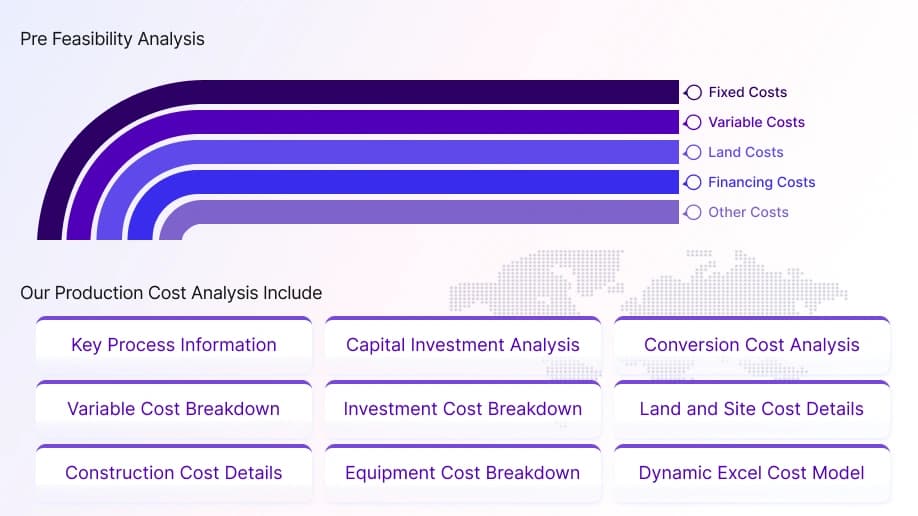
The report provides a detailed analysis essential for establishing a butter production plant. It encompasses all critical aspects necessary for butter production, including the cost of butter production, butter plant cost, butter production costs, and the overall butter production plant cost. Additionally, the study covers specific expenditures associated with setting up and operating a butter production plant. These encompass production processes, raw material requirements, utility requirements, infrastructure needs, machinery and technology requirements, manpower requirements, packaging requirements, transportation requirements, and more.
Butter is a dairy product derived from milk cream. It is an organic product widely used as a spread and cooking fat in the food and beverages industry. Owing to its rich, creamy mouthfeel as well as sublime flavor, it is the most preferred fat for culinary uses like making sauces to baking, or just as a spread. It is used for cooking applications like sautéing vegetables and improving flavor; in sauces, it adds complexity to the flavor, and in baked goods, it adds to the flavor and texture and imparts flakiness. Moreover, it is used in cosmetics varieties, providing moisturizing and whitening effects.
The market for butter is majorly driven by its demand as a dairy fat for edible and processed products. Its primary usage for preparing processed and packaged food products, including baked and fried items such as cake, cookies, biscuits, doughnuts, and more, boosts its demand in the food industries. Similarly, its utilization in the production of confectionaries, desserts, spreads, sauces, etc., fuels its demand in the food market. Moreover, its application in the preparation of beverage varieties, with a slight flavor of butter, adds to the factors increasing its demand in the market.
The utilization of butter in cosmetics and skincare products propels its demand in the global market. Industrial butter procurement is mainly dependent upon its demand as a dairy product in the food, beverages, and cosmetics industries, along with its prices and distribution across various regions. Hence, the variation in its demand as a dairy fat-based product in food, beverages, and cosmetics, along with the shifts in its prices and supply, directly influence its procurement on a large scale.
Raw Material for Butter Production
According to the butter production plant project report, the key raw material for butter production includes milk cream.
Production Process of Butter
The extensive butter production cost report consists of the major industrial production process:
- From Milk Cream: Butter is a dairy product obtained by churning the cream obtained by processing milk.
Butter is a high-energy solid food comprising an emulsion of fat globules, water, and inorganic salts that are made by churning the cream using cow's milk. It is found in various forms, including sweet cream, unsalted, salted, and clarified (Ghee). Butter appears yellow-to-white in color and is a vital edible fat. It is produced using milk and is the most highly concentrated form of fluid milk. It has a softly rich and creamy texture with a slight hint of sweetness.
It has a high butterfat content; however, it's low in protein. It also has significant amounts of vitamin A and some amounts of calcium, phosphorus, and vitamin D. Its respective melting and smoke points are 98.6F and 350F. It should be stored at room temperature, refrigerator, or freezer, and has a shelf life of 1-3 months if refrigerated and up to 1 year if frozen.
Butter comprises around 80–82 percent milk fat, 16–17 percent water, as well as 1–2 percent milk solids other than fat (also known as curd). There are more than 120 different compounds contributing to the unique flavor of butter, but the five main factors adding to the flavor profile include fatty acids, lactones, methyl ketones, diacetyl, and dimethyl sulfide. Chemically, butter fat includes a mix of triglycerides, especially the ones derived from fatty acids, like palmitic, oleic, myristic, and stearic acids.