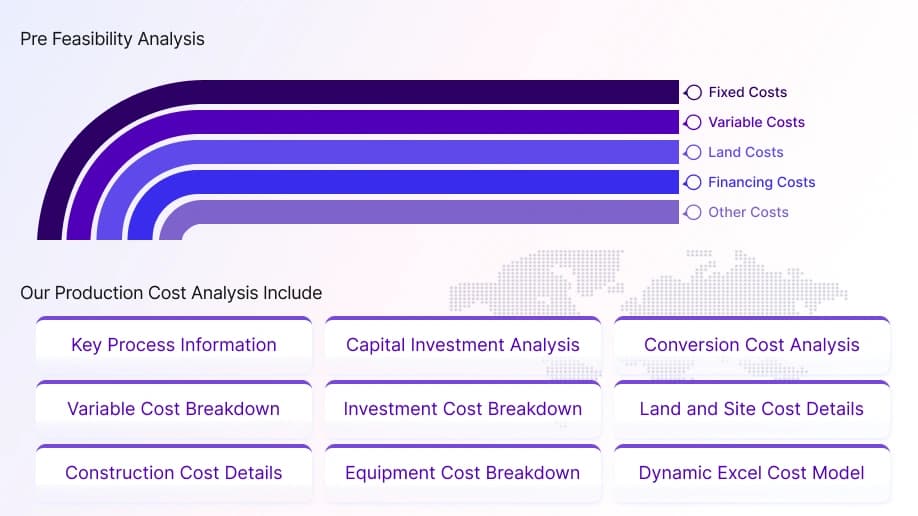
The report provides a detailed analysis essential for establishing a butyl acetate production plant. It encompasses all critical aspects necessary for butyl acetate production, including the cost of butyl acetate production, butyl acetate plant cost, butyl acetate production costs, and the overall butyl acetate production plant cost. Additionally, the study covers specific expenditures associated with setting up and operating a butyl acetate production plant. These encompass production processes, raw material requirements, utility requirements, infrastructure needs, machinery and technology requirements, manpower requirements, packaging requirements, transportation requirements, and more.
Butyl Acetate is an organic compound that serves as a versatile solvent and is widely used for the manufacture of paints, varnishes, lacquers, hardened coatings, and inks. Butyl acetate is also utilized in the food sector as a flavoring agent and as a fragrance element in cosmetics and personal care products. It is well-known for its fast-drying qualities and hence, it serves as an excellent solvent for a wide range of polymers and resins. Moreover, it is also used in the production of plastic adhesives, artificial leather, sealants, and topcoats, and in the cosmetics and pharmaceutical industries. It is often employed in the manufacture of synthetic resins, polymers, photographic film, nail polish removers, perfumes, etc. Additionally, it is a suitable solvent for many different types of pigments and dyes, and it helps to increase ink flow and viscosity.
The market for butyl acetate is majorly driven by its applications as a solvent in the production of lacquers, paints, varnishes, hardened coatings, inks, sealants, and adhesives, which contributes to its market expansion and increases its demand in the paints & coatings, printing, and chemicals and materials industries. It is also extensively used in perfumes, nail polish remover, fabrics, and leather, which further accentuates its demand in the cosmetics, textile, and leather industries, respectively.
Moreover, it is commonly used as an extraction agent or a solvent in the pharmaceutical industries for processing coatings and oils and as a synthetic fruit flavoring in foods such as ice cream, candy, and baked goods in the food sector, which propels its market growth. Additionally, the availability and cost of production of butyl acetate’s feedstock (Butanol and Acetic acid), butyl acetate market prices, and distribution, which includes trading and shipping, logistics, environmental regulations, safety standards, etc., are some of the elements that influence industrial butyl acetate procurement.
Raw Material for Butyl Acetate Production
According to the Butyl Acetate production plant project report, the major raw materials for Butyl Acetate production include Butanol-Acetic Acid.
Manufacturing Process of Butyl Acetate
The extensive Butyl Acetate production cost report consists of the following industrial production process:
- Production from Acetic Acid: The process involves an esterification reaction between acetic acid and butanol in the presence of a catalyst, sulphuric acid, which leads to the formation of butyl acetate.
Butyl acetate is a chemical compound. It is a colourless, flammable liquid with a pleasant odour that is widely employed as a solvent in a variety of industrial applications. It belongs to the ester family of chemicals, which are generated when an alcohol reacts with carboxylic acid. The molecular weight of butyl acetate is 116.16 g/mol and its density is 0.88 g/cm3 at 20°C (68°F). It is soluble in water, alcohols, ethers, and most organic solvents. It is a relatively thin and low-viscosity liquid. The vapor pressure of butyl acetate is 4.06 kPa at 25°C (77°F). It is flammable, with a flash point of 25°C (77°F).