
Prakhar Panchbhaiya
Assistant Manager: Business Insights and Content
Supporting procurement teams with category intelligence, market research, price trends, supply-demand analysis, and strategic sourcing insights across key industries.
Last Updated: October, 2026

Trusted by 200+ Clients
The report provides detailed analysis essential for establishing a butyl salicylate production plant. It encompasses all critical aspects necessary for butyl salicylate production, including the cost of butyl salicylate production, butyl salicylate plant cost, butyl salicylate production costs, and the overall butyl salicylate production plant cost. Additionally, the study covers specific expenditures associated with setting up and operating a butyl salicylate production plant. These encompass production processes, raw material requirements, utility requirements, infrastructure needs, machinery and technology requirements, manpower requirements, packaging requirements, transportation requirements, and more.
Butyl salicylate is a colorless aroma ester that smells of clover, orchid, and herbs. Fragrance houses, flavor houses, soap manufacturers, and cosmetic formulators buy it in small lots. Demand for butyl salicylate follows the flavor and fragrance trade. The global flavors and fragrances market stands at USD 30.52 billion in the base year. The outlook points to USD 49.24 billion by 2035, an annual growth rate of 4.90 percent. Soap, detergents, toiletries, and cosmetics take over 55 percent of fragrance applications. Europe holds over a quarter of the trade, and Asia Pacific grows on scented personal care demand in India and China.
Butyl salicylate itself is a small-volume ingredient. Fragrance data sheets cite use up to 0.1 percent in the fragrance concentrate, and flavor ceilings run from 0.07 to 1.5 ppm. No dedicated price series exists for the ester, so a butyl salicylate demand and supply analysis must start from its two inputs. Salicylic acid is the larger input.
Supply sits with fine chemical and aroma chemical sellers in Japan, China, and the United States. The ester is listed at 99.0 percent minimum by GC, and Sinochem Nanjing offers bulk supply from China. Most catalog sellers do not publish capacity, so buyers rely on quotes. A butyl salicylate plant setup cost model could anchor those quotes.
Butyl salicylate, also called butyl 2-hydroxybenzoate, is the n-butyl ester of salicylic acid. The formula is C11H14O3 and the molecular weight is 194.23 g/mol. Registry numbers include CAS 2052-14-4, EC 218-142-9, FEMA 3650 & JECFA 901. Isobutyl salicylate is a separate product, with CAS 87-19-4, EC 201-729-9, and FEMA 2213 as its own numbers.
Fragrance grade material is a colorless, clear, floral-smelling liquid, assayed at 98.00 to 100.00 percent. Supplier data give a boiling point of 260 to 271 degree Celsius, a flash point above 100 degree Celsius, a melting point near minus 5.9 degree Celsius, and a density of 1.08 g/mL. Specific gravity is 1.070 to 1.080 at 25 degree Celsius, refractive index is 1.508 to 1.520 at 20 degree Celsius. Acid value stays at 1.0 mg KOH/g or below.
The odor is floral, with clover, orchid, herbal, and faint wintergreen notes. Reported detection threshold is 5 to 7 ppb, so a trace shows up in a blend. The liquid dissolves in alcohol and has low water solubility. Butyl salicylate occurs naturally in mountain papaya and red grape skin.
Butyl salicylate is available in different grades depending on its intended use. Fragrance grade is assessed for odor and assay, while flavor grade must meet the identity requirements set by FEMA and JECFA. Reagent grade generally requires a minimum purity of 99.0% by gas chromatography (GC). Suppliers offer reagent-grade butyl salicylate in 25 mL and 500 mL packs.
Fragrance forms the largest outlet for butyl salicylate. Perfumers use it in clover, orchid & fantasy floral accords for fine fragrance, soap, detergents, toiletries and body care. Fragrance data sheets cite use up to 0.1 percent in the concentrate and a leave-on limit of 0.2 percent, with the IFRA 49th Amendment as the reference.
Flavor adds a second major demand segment. FEMA lists butyl salicylate as GRAS under number 3650. Maximum use levels run 1.0 ppm in baked goods, nonalcoholic beverages, frozen dairy, and gelatins. Soft candy allows 1.5 ppm, and chewing gum allows 0.07 ppm. JECFA found no safety concern at current intake, and EFSA lists the ester in the flavoring group evaluation FGE.20.
Estimated daily intake is 0.012 µg per capita in the EU, 0.0007 µg per capita in the United States, and low in both. Vendor pages also cite nail polish, nitrocellulose lacquer solvents, leather work, and cosmetic or pharmaceutical intermediates. Buyers could treat those as minor outlets next to flavor and fragrance.
Butyl salicylate sells into a small, formula-driven niche, so its risks start with input cost, substitution, and regulation. Salicylic acid makes up 76 to 90 percent of stoichiometric raw material cost, and its price moves with phenol.
Salicylate esters face competition from other fragrance ingredients, including isobutyl, benzyl, hexyl, and cis-3-hexenyl salicylate, as well as other floral aroma chemicals. If prices rise or regulations change, perfumers may switch to these alternatives. A change in the formula used by a major fragrance company could also reduce demand.
Regulatory requirements are another concern. Safety data sheets identify possible oral toxicity and skin and eye irritation, while an older EU listing classified the ester as harmful. Limits on its use in leave-on products, concentrates, candy, and chewing gum also affect how much can be added to a formula. Any tighter restrictions from IFRA or EFSA could reduce its use further.
Production risks are generally manageable, but some precautions are needed. N-butanol is flammable, and the acid catalyst can corrode carbon steel equipment. Excessive heating can also darken the ester and affect its color or odor, making the batch unsuitable. Supply is another concern because only a limited number of suppliers publish information about their production capacity. Raw material prices can also affect production costs. A butyl salicylate production cost model should carry both bands.
The butyl salicylate production process charges salicylic acid and n-butanol, esterifies them over an acid catalyst, removes water as an azeotrope, and purifies the ester by washing and distillation.
On the plant floor, butyl salicylate production runs as a Fischer esterification. Salicylic acid reacts with n-butanol, gives butyl salicylate and water, reverses easily, and stalls near equilibrium unless water leaves. Excess n-butanol and continuous water removal push it forward. A reflux column, a decanter, and a condenser strip the water as a butanol-water azeotrope, and the butanol layer returns to the reactor.
Process descriptions place the reaction at about 130 to 160 degree Celsius, with sulfuric acid, p-toluenesulfonic acid, or a solid acid resin as catalyst. Literature reports run the esterification of n-butanol and salicylic acid under azeotropic conditions. Solid acid resins have been studied for salicylic acid esters, and they can be filtered off instead of neutralized.
After the reaction, the crude is cooled, washed with mild alkali, then washed to neutral, which removes the catalyst and unreacted salicylic acid as sodium salicylate. Excess n-butanol is stripped and recycled. Vacuum distillation takes the ester to 98 percent or higher, GC confirms the assay, and an acid value of 1.0 mg KOH/g or below confirms the wash.
Salicylic acid itself comes from the Kolbe-Schmitt route, where sodium phenoxide takes up carbon dioxide at about 125 degree Celsius and about 100 atm. Sulfuric acid then frees the acid. n-Butanol comes from the oxo hydroformylation of propylene.
At 1:1 stoichiometry, each ton of ester needs 0.711 t of salicylic acid and 0.382 t of n-butanol, and 0.093 t of water leaves. Vendor process notes put real use at 0.72 to 0.80 t of salicylic acid and 0.45 to 0.60 t of n-butanol per ton of product. The gap over stoichiometry covers yield loss, color rejects, and butanol that is not recovered. Quality gates cover assay by GC, acid value, color, water, specific gravity, refractive index, and odor.
Butyl salicylate production cost follows the salicylic acid price. Salicylic acid takes 76 to 90 percent of the total cost. N-butanol makes up a smaller part of the raw material cost, but its use still affects overall expenses. Using too much increases consumption, while efficient distillation helps recover the unused material. Water removal and vacuum distillation account for much of the energy use because the ester has a boiling point above 260 degree Celsius at normal pressure.
Product yield and color also affect how much can be sold. Excessive heating, long holding times, or acid carry-over can darken the ester or change its odor, causing it to fail quality checks. Off-spec fractions may need to be recycled or sold for technical use. Each fragrance-grade batch is tested for purity by gas chromatography (GC), color, and odor. Flavor-grade material also undergoes identity and residual solvent checks.
Since production volumes are relatively small, batch reactors designed to handle acidic materials are generally more suitable than a continuous production line. The same equipment may also be used to make other salicylate esters, such as methyl, benzyl, hexyl, and isobutyl salicylate. Fixed operating costs include labor, maintenance, safety systems, quality testing, and general overheads.
Raw material sourcing for butyl salicylate centers on salicylic acid and n-butanol, with a catalyst, an alkali wash, utilities, and nitrogen behind them. Salicylic acid, at 138.12 g/mol, is a white solid made from phenol, sodium hydroxide, carbon dioxide, and sulfuric acid. n-Butanol, at 74.12 g/mol, is a C4 alcohol made from propylene, carbon monoxide, and hydrogen by hydroformylation.
Salicylic acid pricing splits into two tiers. German material averaged USD 5,600/MT on tighter specialty capacity, and Chinese material averaged USD 1,550/MT on ample commodity supply. Indian and US material sat between USD 2,550/MT and USD 3,850/MT. A fragrance or flavor grade ester needs clean, low-color acid. Buyers could weigh Chinese, Indian, US, and German acid on price and color.
n-Butanol prices span USD 800/MT in China to USD 1,470/MT in India. Chinese capacity has grown by more than ten percent a year, which keeps the Chinese price soft. Propylene cost sits behind the price in every region.
Smaller inputs include sulfuric acid, p-toluenesulfonic acid, sodium carbonate for the wash, nitrogen, and process water. Buyers of the ester could hold two or three qualified sources. Contracts could name an assay floor of 98 percent, an acid value ceiling of 1.0 mg KOH/g, a water limit, and a color limit. Plant buyers could link salicylic acid and n-butanol contracts to the quarterly price series.
According to the butyl salicylate production cost reports, butyl salicylate production raises environmental concerns around n-butanol vapor, acidic wash water, sodium salicylate in effluent, and spent catalyst. Condensers, a closed butanol recycle, and a vent scrubber cut vapor loss, and wash water goes to effluent treatment. Solid acid catalysts reduce the neutralization load.
Chemical control leads the compliance plan. The ester carries EC number 218-142-9 on the European inventory. Supplier data list a Warning signal word with H302, H315 & H319, and an older EU listing shows Xn, R22 and R36/37/38. Fragrance data also list German water hazard class WGK 3. A rat oral LD50 of 1,700 to 1,836 mg/kg sets the acute toxicity read.
Food and fragrance rules form a second block. FEMA GRAS status under number 3650, JECFA number 901 with no safety concern at current intake, EFSA flavoring group FGE.20, and the 0.07 to 1.5 ppm use ceilings govern flavor use.
Safety measures are also important during production. Since n-butanol is flammable, the plant needs proper grounding, vapor control, flame arrestors, and hot-work permits. Workers should wear suitable eye and skin protection to reduce the risk of irritation, as indicated by hazard statements H315 and H319.
A butyl salicylate plant is a batch esterification, washing, and distillation unit with modest pressure needs. Plant investment starts with acid-resistant esterification reactors fitted with reflux columns and decanters. The next stage uses neutralization and washing vessels, phase separators, a column to recover butanol, vacuum distillation equipment, and collection tanks. Storage covers salicylic acid, n-butanol, product, and off-spec tanks, plus drum filling. Utilities cover steam, cooling water, vacuum, nitrogen, power, and effluent treatment. Civil works provide a flameproof process hall, a warehouse, a drum store, and a QC laboratory with GC.
A line of 1,000 t/y needs about 711 t/y of salicylic acid and 382 t/y of n-butanol at stoichiometry. It makes about 93 t/y of water. Reactor volume follows batch cycle time, and column size follows butanol recycle.
According to the butyl salicylate production plant project report, butyl salicylate operating cost comes from the same inputs. Variable cost is led by salicylic acid, then n-butanol make-up, catalyst, sodium carbonate, and utilities. Fixed cost covers labor, maintenance, safety systems, QC testing, and overhead. Butyl salicylate plant setup cost depends on reactor material, column count, vacuum capacity, tank volume, and the share of flavor grade. Main cost lines are salicylic acid, energy, and butanol loss.
Any workable butyl salicylate production plant sits near salicylic acid supply, n-butanol supply, a labor pool for batch operation, and a buyer base in flavor and fragrance. China offers the lowest input prices, at USD 1,550/MT for salicylic acid and USD 800/MT for n-butanol. Sinochem Nanjing and Hebei Mojin Biotechnology already sell the ester from China. Europe holds over a quarter of the flavor and fragrance trade, but German salicylic acid costs USD 4,050/MT more than Chinese acid.
Several factors need to be considered when planning the plant. The first is the product grade, as fragrance and flavor grades require more quality checks than technical grade. The second is the source of salicylic acid, which may be imported or purchased from a nearby Kolbe-Schmitt plant. The product range also matters, as the same equipment may be used to produce methyl, benzyl, hexyl, or isobutyl salicylate. Regulatory requirements must be considered too, including REACH registration in Europe, IFRA standards for fragrance applications, and FEMA requirements for flavor use. The plant also needs enough capacity for wastewater treatment and vapor control. Finally, the expected share of exports will help determine the production scale and packaging requirements.
Japan, China, and the United States form the core regions named by butyl salicylate sellers. Japan hosts Tokyo Chemical Industry, and Inoue Perfumery also lists the ester. China hosts Sinochem Nanjing in Jiangsu, Hebei Mojin Biotechnology in Hebei, and has the lowest input costs. The United States hosts Penta International in New Jersey, BOC Sciences in New York, and TCI America.
Demand regions differ from supply regions. Europe is the largest flavor and fragrance trade, with Germany at over a fifth of the regional total. Germany is also the highest priced salicylic acid market. India adds growing personal care demand and salicylic acid supply.
China holds the lowest input cost, and Chinese sellers compete for export orders. A new plant could start near low-cost salicylic acid, with export access, and a grade slate matched to buyers.
Tokyo Chemical Industry
Sinochem Nanjing
Hebei Mojin Biotechnology
Penta International
Inoue Perfumery
BOC Sciences
Butyl Salicylate Production Cost Report
Choose What's Right for You
Pay Via



| Particulars | Details |
|---|---|
| Product Name | Butyl Salicylate |
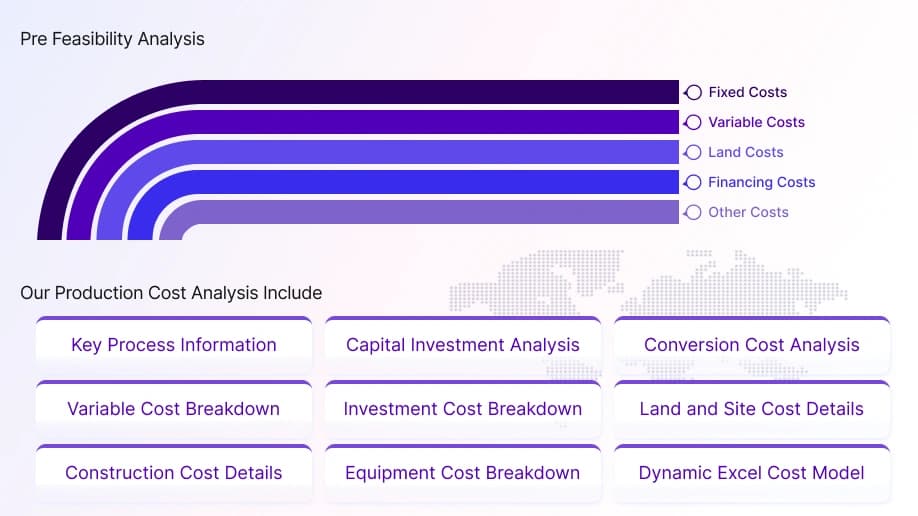
| Scope | Production Process: Process Flow, Material Flow, Material Balance Raw Material and Product Specifications: Raw Material Consumption, Product and Co-product Generation Land and Site Cost: Offsites/Civil Works, Equipment Cost, Auxiliary Equipment Costs, Contingency, Engineering and Consulting Charges, Working Capital Variable Cost: Raw Material, Utilities, Other Variable Costs Fixed Cost: Labor Requirements and Wages, Overhead Expenses, Maintenance Charges, Other Fixed Costs Financing Costs: Interest on Working Capital, Interest on Loans Other Costs: Depreciation Charges, General Sales and Admin Cost |
| Currency | US$ (Data can also be provided in the local currency) | Customization Scope | The report can be customized as per the requirement of the customer |
| Post-Sale Analysts Report | 10-12 weeks of post-purchase analyst support after report delivery for any queries from the deliverable |
| Delivery Format | PDF and Excel format through email (editable version in PPT/Word format of the report can be also provided on special request) |
At Procurement Resource, we focus on improving the should-cost of production for butyl salicylate and map every stage of the route, from salicylic acid and n-butanol charging through acid-catalyzed esterification, azeotropic water removal, mild alkali washing, butanol stripping, vacuum distillation, filtration & drum filling. The cost model resolves each input separately, including salicylic acid, n-butanol, sulfuric acid or p-toluenesulfonic acid, sodium carbonate, nitrogen, steam, cooling water, vacuum, power, QC testing & effluent treatment. We evaluate CAPEX and OPEX as cost per ton of butyl salicylate, isolating the salicylic acid share, the n-butanol loss & the energy share, since these items drive the cash cost of an aroma ester.
Alongside the cost build-up, the report identifies technology providers for acid-resistant reactors, reflux and decanter systems, vacuum distillation trains & vapor recovery units, and offers a supplier database for salicylic acid, n-butanol, acid catalysts & sodium carbonate. It sets out a feasible plant layout covering the esterification hall, the wash and separation area, the distillation bay, the tank farm, the drum filling line, the warehouse & the quality laboratory. By modeling conversion, butanol recovery, distillation cut and batch cycle time, the analysis shows where the cash production cost can be reduced. It supports decisions on fragrance, flavor or reagent grade, batch size, plant scale, site selection among China, Japan, India & the United States, and the registration plan for REACH, IFRA and FEMA.
Assistant Manager: Business Insights and Content
Supporting procurement teams with category intelligence, market research, price trends, supply-demand analysis, and strategic sourcing insights across key industries.
Need more help?

Still Need Help?
Compare & Choose the Right Report Version for You
How to Order Your Report?